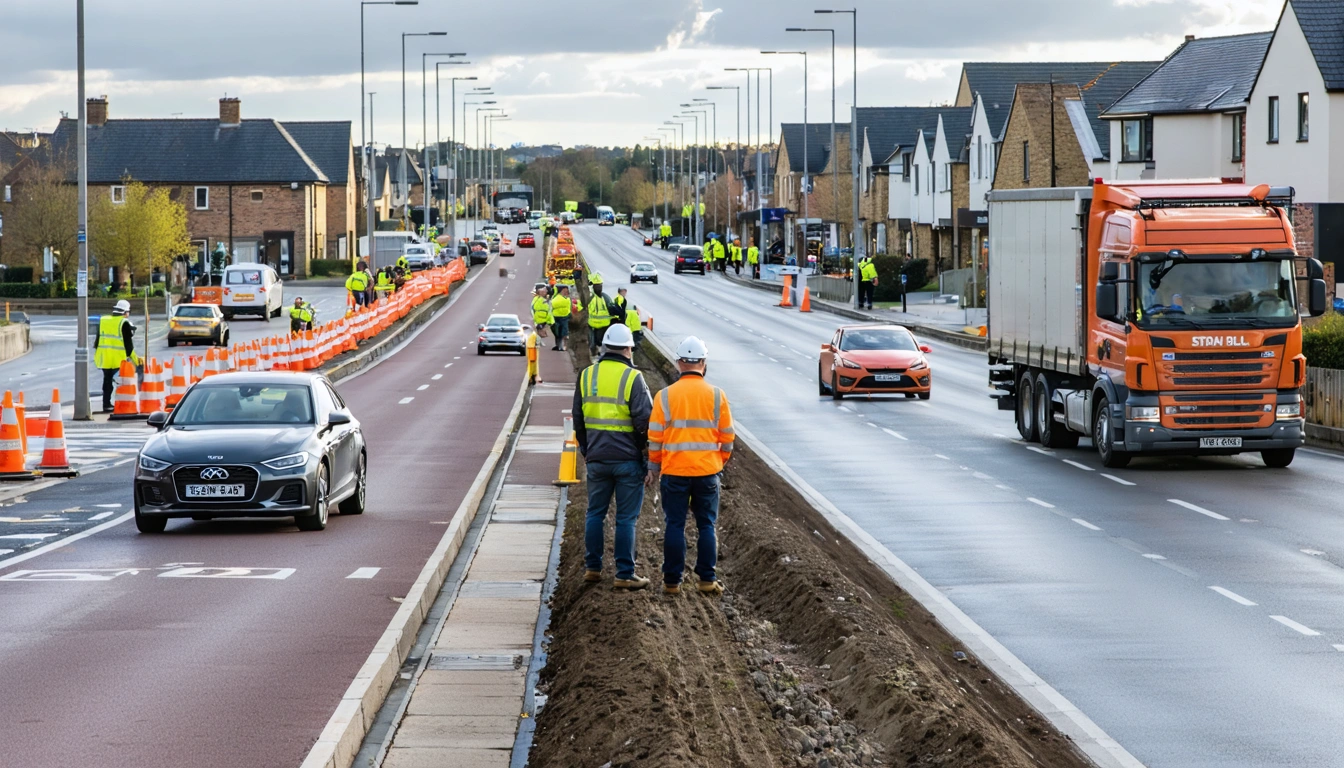
Across England and Wales, new housing, retail parks, business developments and regeneration schemes often depend on changes to the public highway. New junctions, pedestrian crossings, cycle routes and road widening may be essential, but delivering them can bring months of lane closures, diversions and congestion.
Many of these projects are governed by a Section 278 agreement, commonly known as an S278 agreement. Although largely invisible to the public, this legal mechanism plays a major role in shaping local streets and determining how disruption, cost and safety are managed during highway construction.
What Is a Section 278 Agreement?
A Section 278 agreement is a legally binding agreement made under Section 278 of the Highways Act 1980. It allows a developer to carry out works on, or make permanent alterations to, an existing public highway. The agreement is normally entered into between the developer and the relevant highway authority, which may be a county council, unitary authority or another body responsible for the road.
The central principle is that highway improvements required because of a development should generally be funded by the developer rather than the public. The highway authority retains oversight because the affected road remains a public asset and must continue to meet appropriate standards for safety, construction and long term maintenance.
Typical Works Covered by S278
S278 works can range from relatively small access improvements to major junction remodelling. Common examples include creating a new site entrance, installing traffic signals, adding turning lanes, widening a carriageway, relocating street lighting, upgrading drainage and constructing pedestrian or cycling facilities.
The precise scope is usually informed by planning conditions, transport assessments and discussions with the highway authority. Detailed drawings, technical approvals, safety audits and construction arrangements must often be agreed before work can begin. Developers may also be required to provide financial security and cover the authority’s inspection, design review and administration costs.
How S278 Differs From Planning Permission
Planning permission and an S278 agreement serve different purposes. Planning permission establishes whether a development can proceed and may require highway improvements as part of that approval. The S278 agreement then provides the legal and technical framework for carrying out those improvements within the public highway.
Receiving planning consent does not automatically authorise a contractor to start digging up the road. Highway works normally cannot begin until the agreement has been completed, technical designs have been approved and any required traffic management arrangements are in place. This distinction can become a major source of delay when development programmes assume that roadworks can start immediately after planning approval.
Why Essential Highway Works Create Serious Disruption
Most S278 projects are intended to make development access safer and help the highway network accommodate additional journeys. During construction, however, the same works can temporarily reduce road capacity. Lane closures, temporary signals, lower speed limits and restricted turning movements can quickly cause queues, particularly on routes that were already operating close to capacity.
The disruption may extend far beyond the immediate construction site. Drivers often divert through residential streets, buses can lose timetable reliability and emergency services may need alternative access arrangements. Local businesses can also experience reduced passing trade or more difficult deliveries, even when formal access remains available.
Traffic Management and the Domino Effect
Traffic management is necessary to protect road users and construction workers, but its effects are not always confined to one junction. Temporary signals can interrupt normal traffic flow, while a closed lane may cause queues to block nearby roundabouts, crossings or side roads. A delay at one work site can therefore create a wider network problem during busy periods.
Conditions can become more difficult when several developments are delivering highway works at the same time. Utility repairs, council maintenance and unrelated construction projects may also compete for road space. Without careful coordination, individually manageable schemes can combine to produce prolonged congestion across an entire town.
Why S278 Timetables Often Change
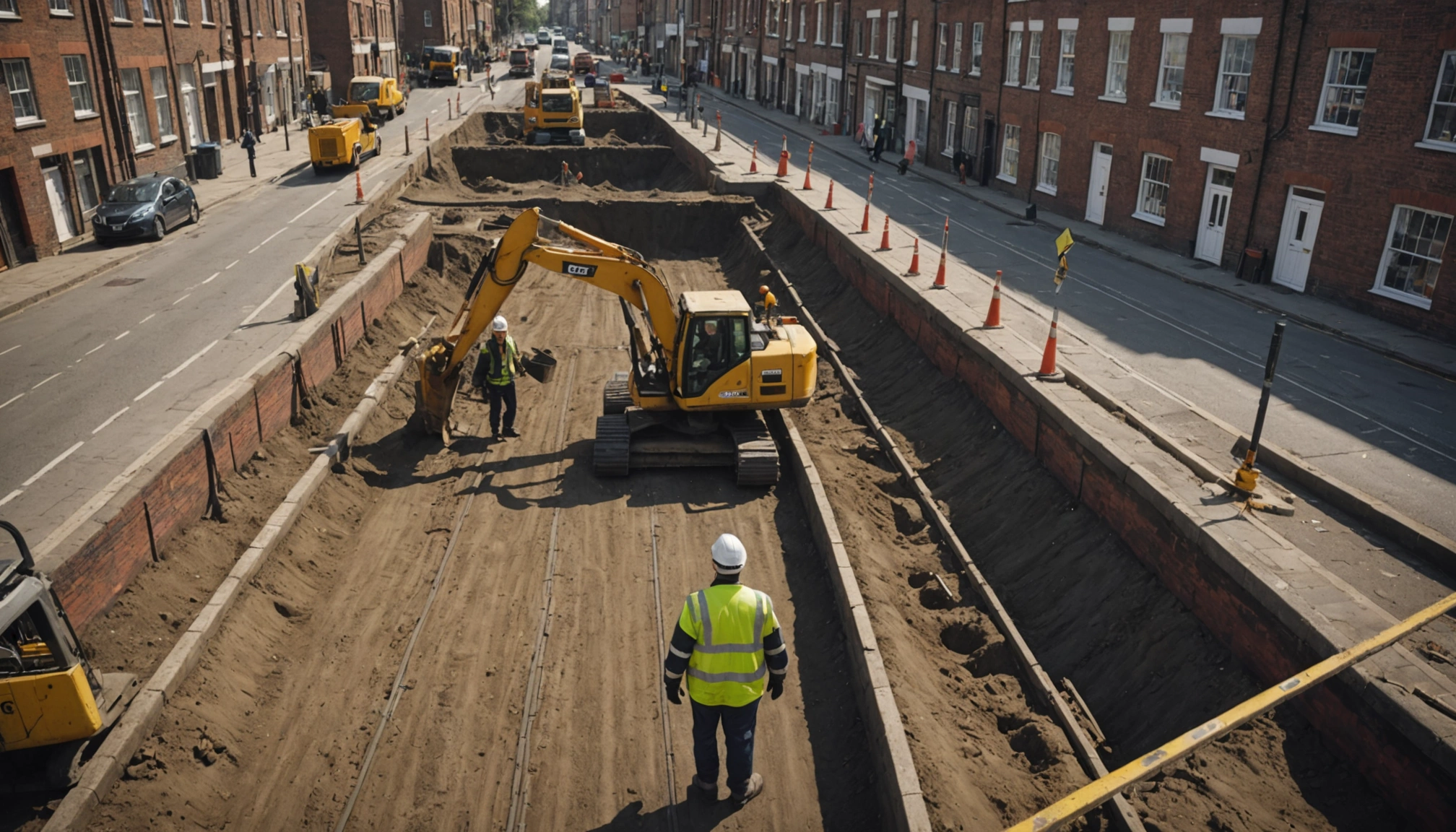
Highway construction takes place in a complex environment containing drainage systems, utility cables, gas pipes and other buried infrastructure. Records may be incomplete or inaccurate, meaning contractors sometimes uncover unexpected conditions after excavation begins. Design changes, utility diversions and additional approvals can then extend the programme.
Weather, material availability and restrictions on working hours can also affect delivery. Highway authorities may prohibit certain activities during peak travel periods or important local events. While these controls can reduce immediate inconvenience, they may lengthen the overall construction period and leave temporary traffic measures in place for longer.
How an S278 Scheme Moves From Design to Construction
A S278 project normally passes through several technical and legal stages before construction begins. The exact process varies between highway authorities, but developers are generally expected to submit detailed designs, demonstrate compliance with relevant standards and resolve any conflicts with existing highway infrastructure.
Technical Approval and Safety Audits
The highway authority reviews matters such as road geometry, visibility, drainage, traffic signals, street lighting, signs, markings, pedestrian access and cycling provision. It may request design changes if the proposals could create safety risks, maintenance problems or unacceptable effects on traffic flow.
Road safety audits are often required at key stages. Independent auditors examine how different users might interact with the completed scheme, including drivers, pedestrians, cyclists, motorcyclists and people with disabilities.
Legal Completion and Financial Security
Once the technical details are sufficiently developed, the parties negotiate and complete the legal agreement. This document defines the approved works, construction obligations, inspection arrangements, programme requirements and responsibilities for defects.
The developer may have to provide a bond or another form of financial security. This protects the authority if the developer becomes insolvent, abandons the project or fails to complete the highway works.
Permits and Traffic Management Approval
Signing the agreement is not always the final step before work starts. Contractors may also need road space bookings, excavation permits, temporary traffic regulation orders and approval for traffic management layouts.
The authority may specify permitted working hours, restrictions during busy seasons and requirements for maintaining access. On a major route, approval may depend on coordination with bus operators, emergency services, neighbouring authorities and other organisations planning works nearby.
Who Is Responsible When Problems Arise?
Public frustration is often directed at the council because the disruption is taking place on a public road. In practice, responsibility is divided among several parties.
The Developer’s Role
The developer is generally responsible for progressing the agreement, appointing competent designers and contractors, paying the relevant costs and delivering the approved works. It must also comply with planning obligations, legal conditions and any restrictions imposed by the highway authority.
If the development programme changes, the developer may seek to alter the construction sequence. Such changes cannot simply be imposed where they affect the public highway.
The Highway Authority’s Role
The authority must protect the safety and integrity of the highway. Its officers review designs, inspect construction and decide whether completed works meet the required standard.
Approval does not necessarily mean that the authority designed the scheme or is paying for it. It means that the authority has assessed the proposals through its statutory and technical processes.
The Contractor’s Role
The contractor manages day to day activity on site, including worker safety, temporary barriers, excavation, surfacing and traffic management. Poorly maintained signs, unnecessary lane closures or inactive work areas can quickly damage public confidence, even where the wider project remains on schedule.
Contractors may sometimes leave restrictions in place when no visible work is occurring because excavations remain unsafe, materials are curing or the road cannot yet be reopened securely.
Who Pays for S278 Works?
The developer normally pays the direct construction cost and the authority’s reasonable expenses for reviewing, administering and inspecting the works. Other charges may include legal fees, road safety audits, traffic signal design, laboratory testing, utility diversions and future maintenance contributions.
Costs can rise significantly when unexpected utility equipment is discovered or when work must be completed at night to reduce daytime disruption. Changes requested after technical approval may also trigger further design reviews and legal costs.
Commuted Sums and Future Maintenance
A highway authority may require a commuted sum where new infrastructure is expected to create additional maintenance liabilities. This could apply to specialist paving, traffic signals, landscaping, drainage equipment or other features that are more expensive to maintain than standard highway assets.
The payment is intended to cover some or all of the future cost passed to the public authority after the works are accepted. The method of calculating these sums varies, so they can become a significant point of negotiation.
The Hidden Cost to the Community
Although the developer pays for construction, road users and local organisations may still experience indirect costs. Longer journeys increase fuel use, delayed buses affect employees and students, and unreliable deliveries can disrupt businesses.

These effects are difficult to eliminate entirely, but they should be considered when construction programmes and traffic management plans are developed. The cheapest construction method is not always the option with the lowest overall impact on the town.
Can Traffic Chaos Be Reduced?
Some disruption is unavoidable when a live highway is being altered. However, careful planning can reduce both the severity and duration of congestion. The most effective measures are often agreed before contractors arrive on site.
Coordinating Road Space
Highway authorities can compare proposed S278 works with utility projects, resurfacing programmes and other developments. This allows conflicting works to be rescheduled or, in some cases, combined.
Developers can also be required to phase their works around nearby schemes. For example, a junction improvement on one side of a town may need to finish before another development closes a lane on the principal diversion route.
Choosing Appropriate Working Methods
Longer working hours, weekend activity or night construction can shorten the overall programme, although these options may increase noise and cost. Authorities must balance the needs of road users with the effects on nearby homes and businesses.
Temporary road layouts should preserve as much capacity as safely possible. This can include adjusting signal timings, maintaining key turning movements, suspending selected parking bays or scheduling deliveries outside peak periods.
Providing Accurate Public Information
Clear communication helps people plan around disruption. Notices should explain when work will begin, which movements will be restricted, how long each phase is expected to last and where updates will be published.
Updates are particularly important when programmes slip. Repeating an outdated completion date can create more frustration than acknowledging a delay and explaining the revised sequence.
Why Roads Sometimes Appear Finished but Remain Restricted
A road may look complete while still awaiting testing, safety checks or remedial work. Traffic signals may need commissioning, road markings may depend on dry weather and new surfacing may require inspection.
In other cases, the main carriageway is complete but associated drainage, footway or lighting work remains outstanding. The authority may be unwilling to accept the works until the whole approved scheme meets the required standard.
The Defects and Maintenance Period
After substantial completion, an S278 scheme commonly enters a maintenance period during which the developer remains responsible for defects. The duration depends on the agreement and the type of work involved.
Once the authority is satisfied that the scheme complies with the agreement and any defects have been resolved, the altered highway can be formally incorporated into its maintenance responsibilities.
What Residents and Businesses Can Do
People affected by S278 works can ask the highway authority or developer for the approved programme, traffic management details and contact information for the site team.
Immediate hazards, such as fallen barriers, obscured signs or dangerous pedestrian routes, should be reported promptly through the authority’s highway reporting process or the emergency contact displayed at the site.
Scrutinising Delays and Changes
Residents can ask whether delays are caused by utility conflicts, design revisions, weather, contractor performance or outstanding approvals. They can also request updated completion dates and clarification about who is responsible for corrective action.
Constructive scrutiny cannot remove every delay, but transparent explanations and realistic programmes can improve accountability. S278 agreements are essential tools for delivering growth, yet their success depends on technical quality, effective coordination and serious attention to the communities living with the disruption.