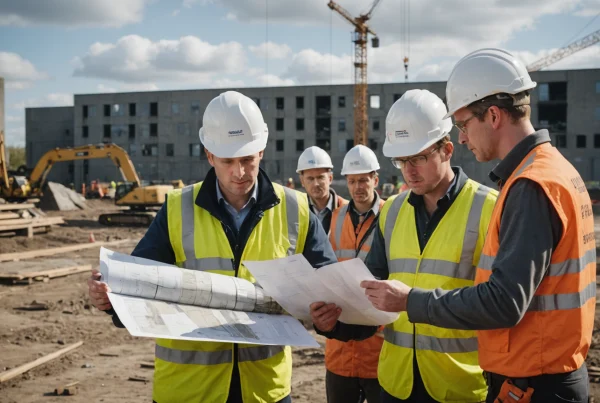
Effective groundworks begin long before concrete is poured or foundations are installed. Site clearance, excavation and ground preparation create the conditions for safe construction, helping to control risks associated with unstable soil, buried services, contaminated material, poor drainage and restricted access.
Although these activities are often grouped together, each stage has a distinct purpose and must be carefully planned. Taking shortcuts can lead to delays, unexpected costs and structural problems later in the project. A well-managed approach gives contractors a clear, stable and accurately formed platform on which to build.
Understanding the Ground Before Work Begins
No two construction sites behave in exactly the same way. Soil type, previous land use, groundwater conditions, surrounding structures and existing utilities can all influence how clearance and excavation should be undertaken. An early site assessment allows the project team to identify these constraints before heavy machinery arrives.
This assessment should combine available records with physical investigation. Historical maps, utility plans and previous site reports can provide useful background information, but they should not be treated as definitive. Conditions on the ground must be verified through suitable surveys, trial holes, service detection and, where necessary, a formal ground investigation.
Ground conditions and geotechnical information
Ground investigation helps establish the composition, strength and stability of the soil beneath the site. It may reveal made ground, soft clay, loose granular material, rock, a high water table or contamination associated with former industrial use. These findings influence excavation depths, temporary support requirements, drainage measures and the type of material needed for backfilling.
Reliable geotechnical information also reduces uncertainty when selecting plant and planning construction sequences. For example, hard ground may require specialist breaking equipment, while waterlogged soil may need dewatering or temporary access measures before excavation can proceed safely.
Existing services and site constraints
Buried electricity cables, gas pipes, water mains, drainage systems and telecommunications infrastructure present significant hazards during groundworks. Current service drawings should be reviewed alongside on-site detection and marking. Where the position or depth of a service remains uncertain, carefully controlled trial excavations may be required.
Other constraints can be just as important. Limited access, neighbouring buildings, public highways, overhead cables, protected trees and local noise restrictions may affect the choice of machinery and working hours. Recognising these issues early allows safer methods and realistic programmes to be developed.
Planning and Carrying Out Site Clearance
Site clearance prepares the working area by removing obstacles and unsuitable surface materials. Depending on the site, this can include vegetation, redundant foundations, old drainage, abandoned services, demolition debris, topsoil and general waste. Clearance should be selective rather than indiscriminate, with features that must remain clearly identified and protected.
The work should follow an agreed sequence based on surveys, environmental requirements and the planned movement of plant. Defined access routes, exclusion zones and material storage areas help maintain an organised site. They also reduce the likelihood of machinery damaging retained structures, compacting areas unnecessarily or tracking contaminated soil into clean zones.
Vegetation, topsoil and reusable materials
Trees, hedges and vegetation should only be removed after checking for ecological restrictions and planning conditions. Nesting birds, protected species and tree preservation requirements can affect when and how work takes place.
Topsoil is commonly stripped before excavation because it contains organic matter and is unsuitable beneath structural foundations or hardstanding. If it is clean and suitable for reuse, it should be stored separately from subsoil and construction waste.
Waste classification and responsible disposal
Materials generated during clearance must be assessed before they are reused, transported or disposed of. Concrete, brick, asphalt, timber, soil and mixed waste may require separate handling.
A clear materials management approach can identify opportunities to crush suitable concrete, reuse clean excavated soil or recover other resources on site. Where disposal is necessary, records should demonstrate that materials have been transferred to an appropriately authorised facility using the correct waste documentation.
Excavation Methods and Safe Working Practices
Once the site has been cleared and working areas established, excavation can begin. The method should reflect the ground conditions, excavation depth, available space and proximity of services or structures.
Excavation is not simply a matter of removing soil to a specified depth. The sides, base and surrounding ground must remain stable throughout the work.
Choosing suitable excavation plant
Plant selection has a direct effect on productivity, accuracy and safety. Large excavators can move substantial quantities of material efficiently, but they may be unsuitable on constrained sites or close to existing structures.
The attachment is equally important. Standard digging buckets are effective for general excavation, grading buckets help trim formation levels, and hydraulic breakers may be needed for rock or redundant concrete.
Machine size should also be considered in relation to bearing capacity. Heavy plant can rut or destabilise weak ground, particularly after prolonged rain. Temporary haul roads, working platforms or ground protection mats may be required to provide safe access and prevent machinery becoming bogged down.

Excavation support and edge protection
Unsupported excavation faces can collapse without warning. The risk depends on soil type, depth, moisture content, loading near the edge and how long the excavation remains open.
Where the ground cannot stand safely at the required angle, the excavation may need battering, benching or a designed support system. Trench boxes, hydraulic shoring and sheet piles are among the options available.
Excavated material, machinery and construction products should be kept back from the edge. These loads add pressure to the excavation face and increase the chance of collapse.
Managing water during excavation
Water can soften formation levels, erode excavation faces and make access unsafe. Sources may include groundwater, leaking services, surface runoff or rainfall collecting in low areas.
Simple measures can include perimeter grips, temporary drainage channels and sump pumping. More demanding groundwater conditions may require wellpoint dewatering or another engineered system. Any discharge must be managed appropriately, especially where water contains sediment or suspected contaminants.
Pumping without understanding the surrounding ground can create further problems. Excessive groundwater removal may draw fine material from the soil or cause settlement beyond the excavation.
Protecting Buried Services During Groundworks
Service avoidance must remain active throughout excavation rather than being treated as a one-off survey exercise. Drawings can be incomplete, depths can vary and services may deviate from their recorded routes.
Mechanical excavation near a known service should follow an agreed safe digging method. Hand tools, vacuum excavation or carefully controlled trial holes may be used to confirm the exact position and depth.
Unknown pipes, cables, ducts or voids should be treated cautiously. Work should stop in the immediate area until the feature has been identified and the method reviewed.
Achieving the Correct Formation Level
The formation is the prepared surface on which foundations, slabs, roads or other construction layers will be built. Its level, profile and condition must meet the design requirements.
Modern setting-out equipment can improve accuracy, but regular checks remain important. Laser levels, total stations and machine control systems help operators work efficiently, although they do not replace competent supervision.
Avoiding damage to the formation
Some soils deteriorate quickly when exposed to rain, frost or repeated trafficking. Clay formations can soften and smear under plant, while granular soils may loosen if they are disturbed excessively.
Final trimming may be delayed until shortly before the next construction stage. In sensitive ground, a sacrificial layer can be left in place and removed once the team is ready to install blinding, stone or concrete.
Dealing with soft spots and unsuitable material
Localised soft areas can indicate disturbed ground, buried topsoil, leaking drainage, old pits or poorly compacted fill. They should not simply be hidden beneath the next layer.
Where poor ground is extensive, the response may involve geotextiles, geogrids, ground improvement or a revised foundation solution. The cause and extent of the problem should be established before corrective work begins.
Backfilling and Compaction
Backfill provides support around foundations, drainage, retaining structures and services. Its performance depends on using the right material, placing it in controlled layers and applying enough compactive effort.
Selecting suitable fill material
Suitable fill should comply with the project specification and be appropriate for its location. Well-graded granular material is commonly used where drainage and reliable compaction are important.
Moisture content has a major influence on compaction. Material that is too dry may not bind effectively, while saturated fill can deform under the compactor.

Layer thickness and compaction equipment
Fill should be spread in layers suited to the material and the compaction equipment. Vibrating rollers are effective across larger areas, while trench rollers and plate compactors are useful in confined spaces.
Particular attention is required around pipes and chambers. Bedding and surround materials should be placed evenly to avoid displacement or point loading. Compaction should proceed carefully on both sides so that the installation remains correctly aligned.
Testing compacted fill
Visual inspection alone cannot confirm that fill has achieved the required density or bearing performance. Depending on the specification, testing may include in situ density tests, plate load tests or other field assessments.
Testing frequency should reflect the importance of the construction and the variability of the material. A consistent pass result gives confidence that the prepared ground will perform as intended beneath slabs, pavements and foundations.
Preparing Ground for Different Types of Construction
Ground preparation should respond to what will be built above it. A formation suitable for landscaping may be inadequate beneath a heavily loaded yard, while a drainage trench requires different controls from a building footprint.
Building foundations and floor slabs
Foundation excavations must achieve the specified depth and reach competent bearing material. Loose soil, standing water and debris should be removed before reinforcement or concrete is placed.
Floor slab preparation commonly includes compacted sub-base, membranes, insulation and service penetrations. Each layer should be checked before it is covered. Poorly compacted stone or unrecorded changes to underground services can be difficult and expensive to correct once the slab has been poured.
Roads, yards and hardstanding
Road and hardstanding construction depends on a stable subgrade and correctly built pavement layers. Weak subgrade may need to be excavated, stabilised or reinforced before sub-base is placed.
Construction traffic should be considered when specifying temporary and permanent layers. Heavy vehicles can damage partially completed areas, contaminate clean stone with mud and create ruts that retain water.
Drainage and utility trenches
Trenches should provide sufficient working space while avoiding unnecessary excavation. The base must be trimmed to the correct gradient, with suitable bedding placed to support pipes evenly along their length.
After installation and inspection, surround and backfill materials should be placed carefully. Marker tape, protective slabs and detectable warning systems may be required above particular utilities.
Quality Control and Project Records
A practical inspection and test plan helps ensure that each stage is checked before subsequent work conceals it. Hold points may cover formation approval, excavation depth, drainage installation, fill classification, layer thickness and compaction results.
Useful records include survey data, photographs, waste transfer documentation, material delivery tickets and test certificates. Any unexpected conditions or departures from the design should be recorded alongside the agreed corrective action.
Common Groundworks Mistakes to Avoid
Many groundworks problems result from poor sequencing rather than difficult engineering. Clearing too much land at once exposes soil to weather, while excavating before service locations are confirmed creates avoidable risk.
Compaction is another frequent weakness. Layers that are too thick, poorly controlled moisture and inappropriate equipment can produce fill that looks sound at the surface but settles later.
Finally, the programme should allow time for inspections, testing and corrective work. Ground conditions do not always match the information available before construction. A realistic plan provides enough flexibility to investigate unexpected material, revise the method and complete remedial work safely.
Coordinating Site Clearance, Excavation and Preparation
The strongest results come from treating these operations as one coordinated process. Clearance decisions affect material reuse, excavation influences drainage and access, and formation quality determines how well later construction performs.
Careful planning does not remove every uncertainty below ground, but it makes unexpected conditions easier to manage. By verifying services, controlling water, protecting formations and documenting quality, contractors can create a stable platform for the work that follows and reduce the likelihood of costly problems later.