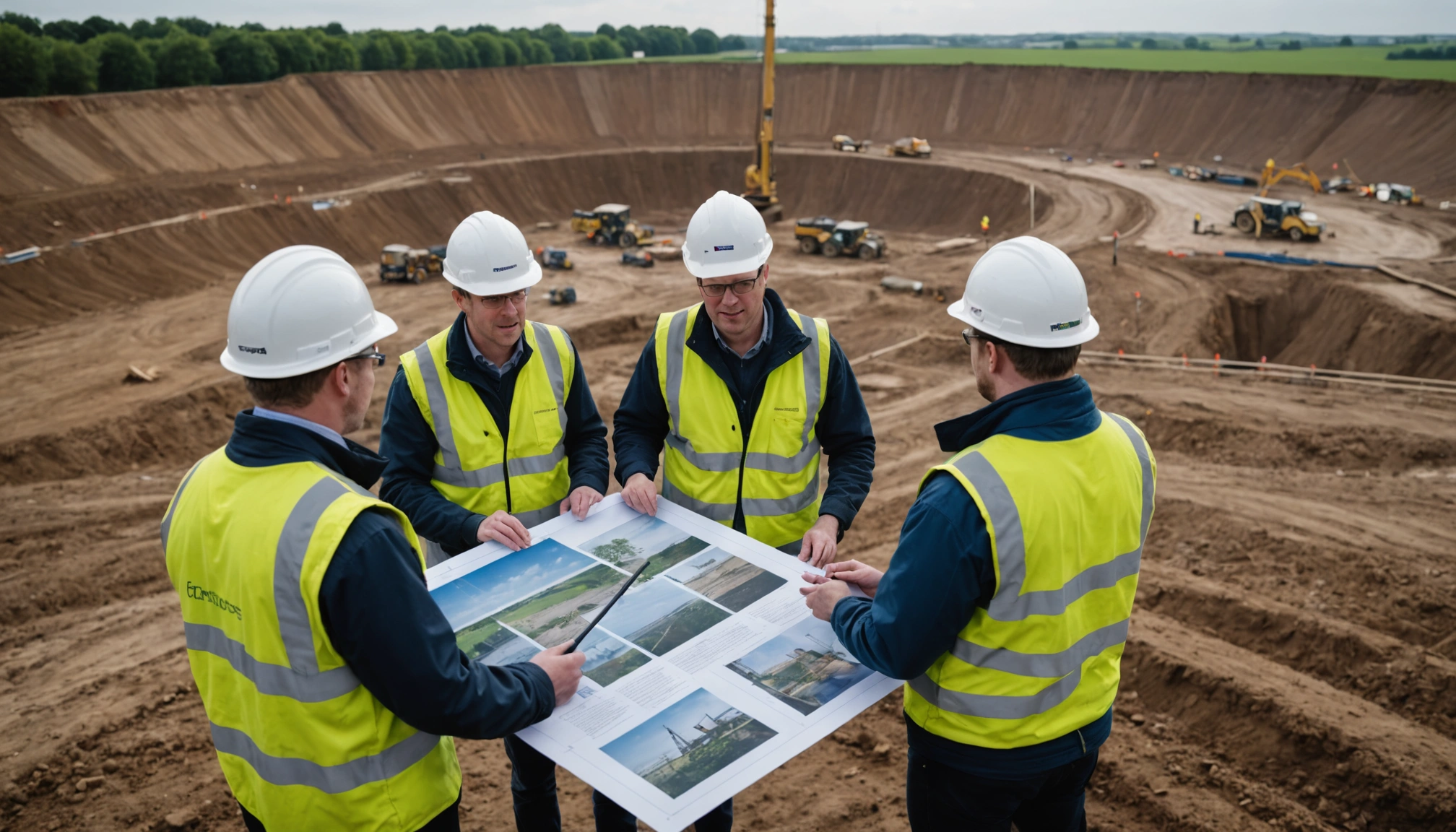
The East Midlands offers developers a compelling mix of growing cities, well-connected towns and substantial regeneration opportunities. Yet beneath a promising site, ground conditions can vary considerably. Historic industry, former mineral workings, river valleys and changing geology all influence how land behaves once excavation and construction begin.
In my experience, the greatest problems arise when ground risk is treated as a technical detail rather than an early commercial consideration. Conditions below ground can affect foundation design, drainage, earthworks, programme length and overall project cost. Understanding the likely risks before designs are fixed gives developers far more control over a scheme.
Why local ground conditions deserve early attention
The geology of the East Midlands is far from uniform. Depending on the location, a development may encounter clay, sandstone, limestone, alluvial deposits or ground altered by mining and previous construction. Conditions can also change within a single site, meaning that assumptions based on a neighbouring project are not always reliable.
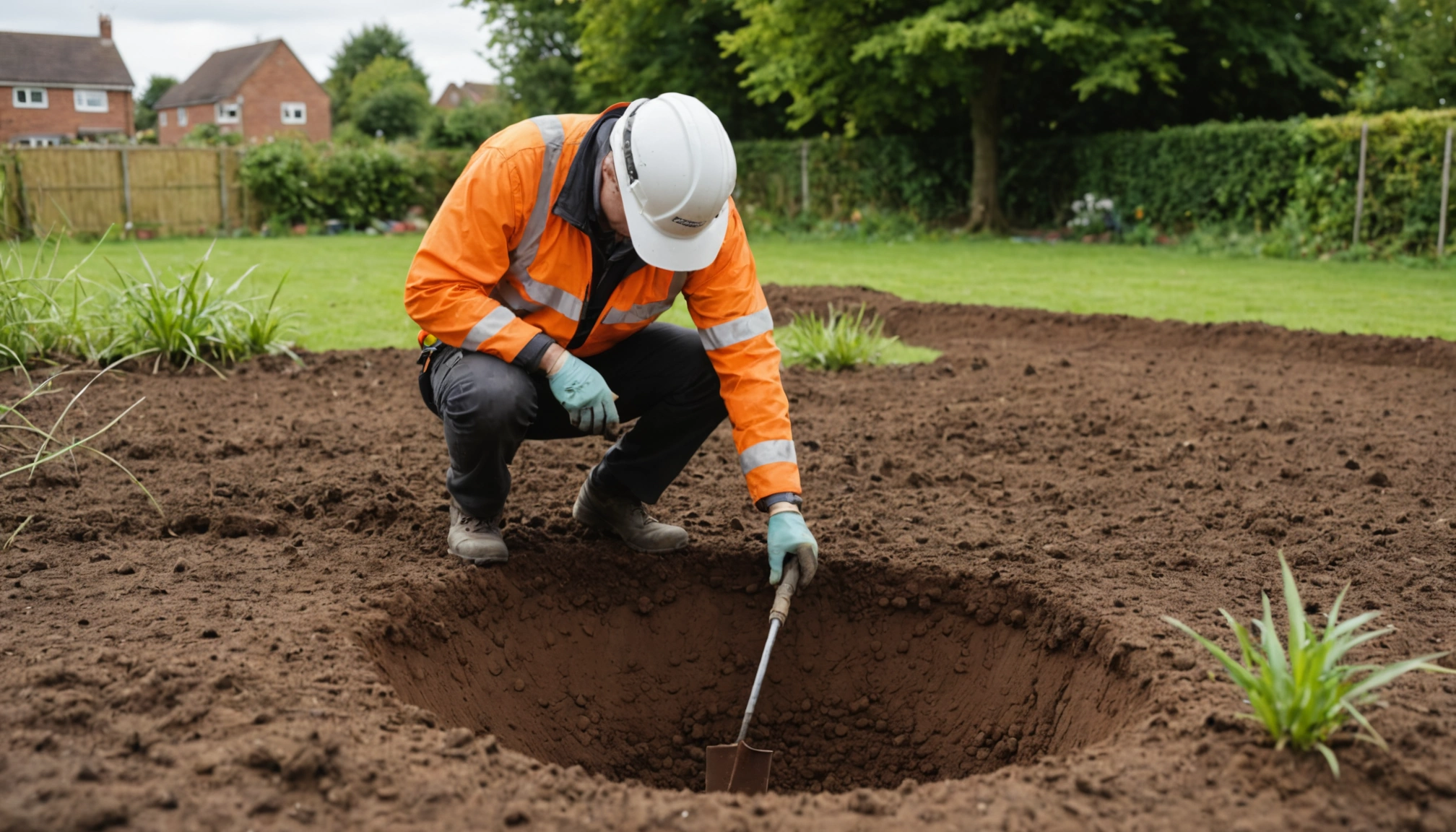
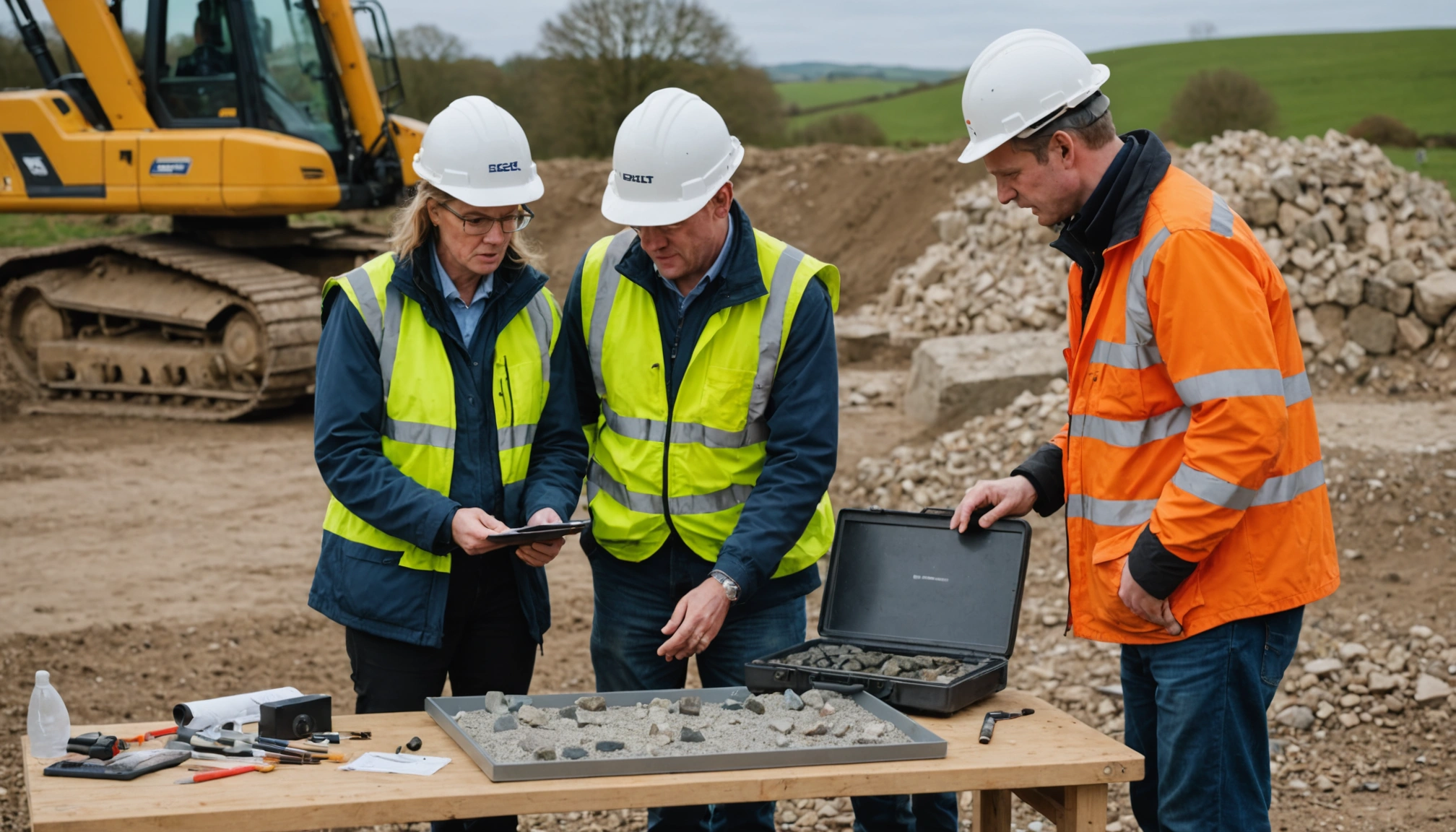
A proportionate site investigation should therefore be planned early enough to influence design decisions. Desk studies, historical mapping, boreholes, trial pits and laboratory testing can help establish soil strength, groundwater conditions, contamination risks and the depth of suitable bearing strata. This evidence allows the project team to select foundations based on actual site conditions rather than broad regional expectations.
Early investigation also supports more accurate budgeting. If difficult ground is discovered after work has started, the consequences can include redesign, additional excavation, imported fill, specialist treatment and delays while revised approvals are obtained. Spending sensibly on ground information at the outset is usually more economical than reacting to an unexpected problem during construction.
1. Made ground on previously developed land
Made ground is one of the most common conditions developers encounter across the East Midlands, particularly on urban regeneration sites and former industrial land. It is material that has been placed, disturbed or reworked by human activity. Typical examples include demolition rubble, ash, brick, concrete fragments, excavated soil and general fill.
The main concern is inconsistency. One trial pit might expose compact granular material, while another reveals loose fill, buried obstructions or soft pockets. This variability can lead to differential settlement, where parts of a structure move by different amounts. Even relatively light buildings can suffer cracking or serviceability problems if foundations rely on poorly compacted or unpredictable material.
What developers should establish
The investigation needs to determine the depth, composition and engineering behaviour of the made ground. It should also identify whether the material contains contaminants or substances that could attack buried concrete and services. On older industrial sites, visual inspection alone is not enough because apparently stable fill may conceal tanks, foundations, voids or waste deposits.
Depending on the findings, the solution may involve removing and replacing unsuitable material, improving the ground, adopting reinforced foundations or transferring loads to stronger natural strata using piles. The correct response depends on the proposed building, the depth of the fill and the degree of variation across the site. A well-planned earthworks strategy can sometimes allow suitable excavated material to be reused, reducing disposal costs and vehicle movements without compromising performance.
2. Shrinkable clay and seasonal ground movement
Clay soils are found across parts of the East Midlands and can create foundation problems when their moisture content changes. Some clays shrink as they dry and swell when they become wet again. This movement is rarely dramatic over a few days, but repeated seasonal changes can affect shallow foundations, ground-bearing slabs and external hard landscaping.
Trees are a major factor because their roots draw moisture from the soil. A mature tree can influence the ground well beyond the spread of its branches, particularly during prolonged dry weather. Removing a tree does not automatically remove the risk either. Previously dried clay may absorb moisture and increase in volume over time, a process commonly known as heave.
Designing around clay and vegetation
A ground investigation should identify the type and volume change potential of the clay rather than simply recording its presence. The design team also needs an accurate survey of existing trees, recently removed trees and significant planting on neighbouring land. Species, maturity, distance from the proposed building and water demand can all influence the required foundation depth.
Where shrinkable clay is present, foundations may need to extend below the zone affected by seasonal moisture variation and tree roots. Suspended floor construction may be preferable to a ground-bearing slab where movement is expected. Compressible materials can also be required beside or beneath foundation elements to accommodate potential heave without transferring excessive pressure to the structure.
Future landscaping deserves attention at the design stage. Planting a high water demand tree close to a completed building can introduce a risk that did not exist when the foundations were designed. Coordinating the structural, geotechnical and landscape proposals helps avoid that preventable conflict.
3. Former coal mining and hidden workings
The coalfield areas of Nottinghamshire, Derbyshire and parts of Leicestershire contain a long history of mining. Some workings are well documented, while older shallow excavations and localised entries may be less certain. A site that appears undisturbed at the surface can therefore be affected by underground features that influence both safety and buildability.
Potential hazards include mine shafts, adits, shallow workings, collapsed ground and loose material above old excavations. Ground movement can occur when unsupported workings deteriorate or when overlying material migrates into a void. Mine gas may also require assessment, particularly where pathways allow gases to reach the surface or enter a building.
Moving from mining search to site-specific evidence
A mining report is an essential starting point in an affected area, but it should not always be treated as the final answer. Historical records can indicate whether workings or entries may be present, although they cannot guarantee the exact condition beneath every part of a site. Where a meaningful risk is identified, intrusive investigation may be needed to confirm the depth and extent of workings.
Rotary boreholes, probing and other specialist techniques can help locate disturbed ground or voids. If treatment is required, old workings may be filled with grout, while mine entries can require excavation, capping or a stand-off zone. The foundation solution may then be designed to bridge local weaknesses or transfer loads below affected strata.
Developers should allow sufficient time for specialist design, approvals and treatment. Mining risk can affect the site layout as well as the foundations, particularly if a shaft or exclusion zone falls beneath a proposed building, road or drainage feature. Establishing the constraints before planning the final layout can preserve more practical options.
4. Limestone, solution features and variable rockhead
Limestone can provide strong founding material, but it should not be assumed to form a flat, continuous platform beneath the site. Weathering and natural dissolution can create an irregular rock surface, open joints, cavities and zones filled with weaker soil. In some areas, historic quarrying may add another layer of uncertainty.
This variability matters because foundations placed partly on rock and partly on soil can behave differently. One section may settle very little while another compresses under the same load. Excavation can also become difficult to predict, with soft material in one location and hard rock a short distance away.
Investigating an irregular rock profile
A suitable investigation should establish the depth and quality of the rock across the proposed development footprint. Widely spaced exploratory holes may miss narrow solution features or localised changes in rockhead, so the investigation layout needs to reflect the size and sensitivity of the proposed structures.
Where cavities or weak infilled features are found, options may include excavation and replacement, grouting, reinforced foundations or piling to competent material. The foundation design should consider differential movement rather than focusing only on the apparent bearing strength of the limestone.
Rock also affects utilities and drainage. Trenching through shallow limestone can require heavier excavation equipment, specialist breaking methods and additional time. Conversely, fractures and cavities may allow water to move quickly through the ground. These conditions need to be understood before infiltration drainage is adopted, particularly where concentrated discharge could affect solution features or neighbouring land.
5. River alluvium, soft soils and high groundwater
Development near the Trent, Soar, Derwent, Nene and their tributaries can encounter alluvium deposited by historic river activity. These deposits may include layers of clay, silt, sand, gravel and organic material. Their engineering properties can change over short distances, reflecting former channels, floodplains and changing patterns of deposition.
Soft alluvial soils can have low bearing capacity and may compress significantly when new loads are applied. Organic layers are especially troublesome because they can continue to consolidate over a long period. A conventional shallow foundation may therefore satisfy an initial bearing calculation while still experiencing unacceptable settlement later.
Groundwater is often relatively shallow in river valleys. Excavations can fill quickly, trench sides may become unstable and granular layers can allow water to flow into the works. These conditions affect more than foundation design.
Controlling settlement and water during construction
The investigation should define the thickness and compressibility of the soft deposits, as well as seasonal groundwater levels. Monitoring through standpipes or piezometers may be needed because a single water reading taken during drilling provides only a snapshot.
Possible foundation solutions include piles taken through the soft material to stronger strata, ground improvement or carefully designed raft foundations. For roads and external areas, staged filling, geogrids or preloading may be appropriate where settlement can be allowed to occur before construction is completed.
Temporary dewatering must be planned with care. Pumping water from an excavation can alter groundwater levels outside the site and, in some circumstances, contribute to settlement of nearby ground or structures.
6. Sand, gravel and unstable excavations
Granular soils such as sand and gravel occur in river terraces and other deposits across the region. When dense and well confined, they can provide useful bearing material.
Unlike cohesive clay, unsupported sand may collapse with little warning. Trenches that appear stable near the surface can become unsafe when groundwater enters or when nearby plant introduces vibration.
Planning safe and buildable temporary works
Foundation trenches, drainage runs and service excavations may require shoring, trench boxes, battered slopes or staged excavation. The correct method depends on depth, available working space, groundwater and the proximity of existing roads, services and structures.
Groundwater control can involve sump pumping, wellpoints or more specialised systems. However, simply placing a pump in a flooded trench may draw fine particles out of the surrounding soil and worsen instability.
Granular ground can also complicate piling. Bore stability, casing requirements and groundwater pressure influence the choice of piling method. These issues should be discussed with the geotechnical and piling teams early, as the least expensive pile on paper may not be the most reliable or efficient option in the actual ground conditions.
7. Contamination and aggressive ground chemistry
The East Midlands has a substantial industrial legacy, including engineering works, railway land, gasworks, collieries, foundries, fuel storage sites and manufacturing premises. Redeveloping this land can deliver valuable homes and commercial space, but previous uses may leave contaminants in the soil or groundwater.
Potential contaminants include hydrocarbons, heavy metals, solvents, asbestos fragments, ash and sulphates. The risk depends on the source, the route by which contamination can travel and who or what may be exposed.
Protecting people, structures and services
Investigation should combine historical research with targeted sampling. Testing only convenient locations can miss former tanks, process areas or waste pits. The sampling strategy should reflect the site history, proposed layout and likely pathways.
Remediation may involve removing contaminated soil, treating it in place, installing clean cover systems or introducing gas protection measures. Concrete specifications may also need adjustment where sulphates or acidic ground could attack buried elements.
A materials management plan can help distinguish reusable site-won soil from material requiring treatment or disposal. This reduces unnecessary waste while maintaining clear controls over where excavated material is placed.
Contamination, ground gas and aggressive chemistry should be considered alongside the structural design rather than as separate environmental matters. When these risks are investigated early, developers can coordinate remediation, foundations, drainage and earthworks into one practical construction strategy.