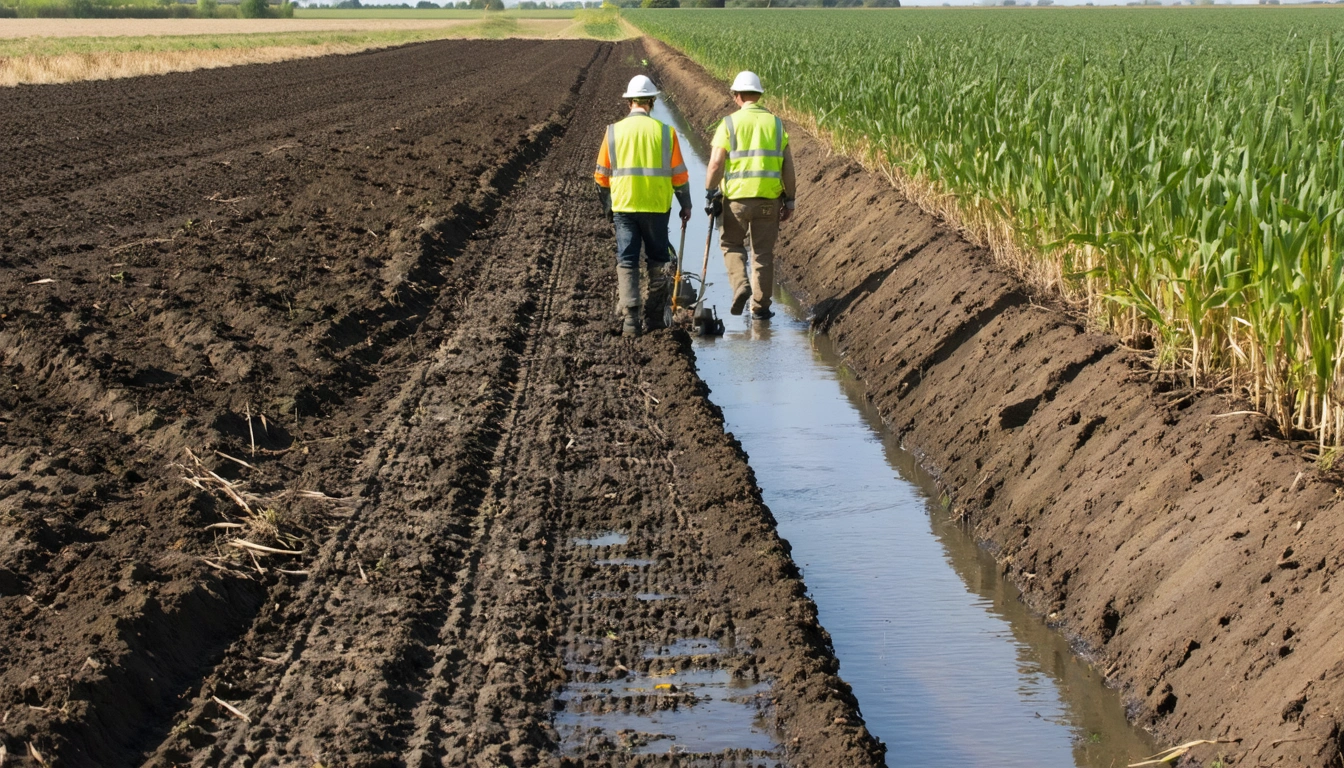
Across the Fens, drainage is essential to farming, transport, settlements, and flood protection. Yet the same systems that keep this low lying landscape productive can also contribute to peat shrinkage, soil carbon loss, subsidence, and declining water quality. Civil engineers and land managers therefore face a difficult task: controlling water without accelerating the deterioration of the ground beneath critical infrastructure.
A biochar drainage trial is exploring whether engineered carbon materials can help address several of these pressures at once. By incorporating biochar into selected drainage features, researchers can investigate whether it improves water retention, filters pollutants, supports healthier soils, and reduces the burden placed on conventional drainage infrastructure.
Why water management in the Fens needs a new approach
Much of the Fenland landscape consists of peat and other highly compressible soils. Historic drainage made large areas suitable for agriculture and development, but exposing peat to air also encouraged oxidation. As organic soil breaks down, the land surface gradually falls, increasing the difference between ground level and the water held in rivers, channels, and embanked watercourses.
This subsidence creates a long term engineering challenge. Pumps may need to lift water through greater heights, drainage channels require regular maintenance, and embankments can become more important as surrounding land levels decline. Roads, foundations, buried utilities, culverts, and other assets may also experience movement when soil conditions change unevenly.
The limits of faster drainage
Conventional drainage design often focuses on moving excess water away from land as efficiently as possible. That objective remains vital during prolonged rainfall and extreme weather, but rapid conveyance can transfer pressure downstream. It can also reduce opportunities for water to infiltrate, settle, or release sediment and nutrients before entering larger channels.
A more resilient strategy combines conveyance with storage, filtration, and controlled release. In the Fens, this means considering how field drains, ditches, retention areas, pumping stations, and soil management practices operate as one connected system. Biochar is attracting attention because its porous structure may support several of these functions within a relatively small footprint.
How biochar could support drainage infrastructure
Biochar is a stable, carbon rich material produced by heating biomass in a low oxygen environment. Its physical properties vary according to the original feedstock and the production process, so it cannot be treated as a single uniform engineering product. Particle size, pore structure, strength, contaminant content, and hydraulic behaviour must all be assessed before biochar is specified for drainage applications.
Within a trial, biochar may be mixed into soil, incorporated into filter media, placed in a treatment trench, or used as part of a layered drainage feature. The purpose is not simply to absorb water. Engineers are interested in how the material affects infiltration, temporary storage, flow rates, sediment capture, nutrient retention, and the condition of adjacent peat soils.
Potential benefits for water quality and flow control
The internal surface area of biochar can allow certain dissolved substances to attach to the material. Depending on its composition and operating conditions, this may help reduce the movement of nutrients or other pollutants through drainage water. Such treatment could be useful where runoff from agricultural land contributes to poor water quality in ditches and downstream watercourses.
Biochar amended media may also alter how quickly water passes through soil or a drainage feature. If designed correctly, this could slow peak flows while preserving enough permeability to prevent waterlogging. The balance is critical because excessive retention may harm crops or infrastructure, while insufficient retention would provide little improvement over a conventional fast drainage system.
What the trial must measure
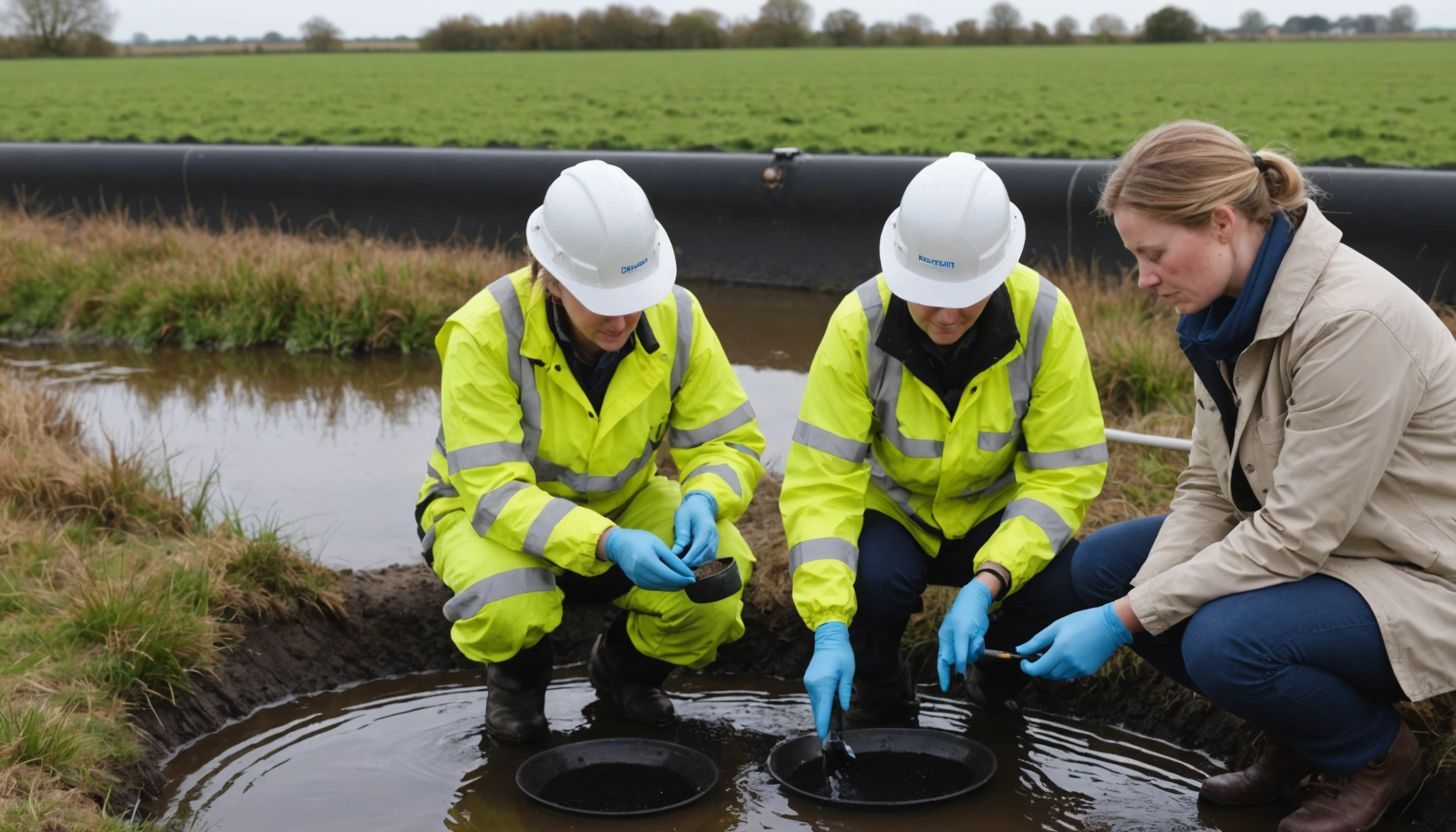
A credible civil engineering trial needs to compare biochar treated areas with suitable control locations over changing seasons. Monitoring should include rainfall, soil moisture, groundwater levels, discharge rates, water quality, sediment movement, and changes in soil elevation. Laboratory testing can complement field observations by identifying how the biochar performs under controlled hydraulic and chemical conditions.
Durability is equally important. Engineers need evidence about whether the material breaks down, becomes clogged, moves into receiving waters, or loses its treatment capacity over time. Maintenance requirements, installation methods, whole life cost, and the carbon impact of producing and transporting the biochar must also be evaluated before the approach can be considered for wider use across Fenland drainage networks.
Designing a representative Fenland trial
The value of the trial will depend on how closely it reflects real drainage conditions. Fenland catchments vary considerably in peat depth, soil chemistry, land use, ditch geometry, pumping regime, and groundwater behaviour. A test at a single location may demonstrate a mechanism, but it cannot establish that the same design will work across the wider landscape.
A phased programme can reduce this uncertainty. Small laboratory columns can first be used to screen different biochar products and blends. Pilot installations can then test promising materials under controlled field conditions, followed by larger demonstrations connected to operational drainage networks. Each phase should have clear performance criteria so that unsuitable materials are identified before substantial infrastructure is installed.
Selecting the right biochar
Feedstock selection is an important engineering decision. Biochar produced from clean forestry residues may behave differently from material made from straw, reed cuttings, or other agricultural byproducts. Production temperature can affect pore size, surface chemistry, alkalinity, and mechanical stability. These differences influence both hydraulic performance and the substances that the material can retain.
Before installation, samples should be tested for contaminants, nutrient content, pH, density, particle size distribution, and resistance to physical breakdown. The material must also be compatible with the receiving soil and water. A highly alkaline biochar, for example, could alter local chemistry in ways that affect nutrient availability or aquatic ecology.
Using locally available biomass could reduce transport impacts and create a productive use for residues. However, local sourcing is only beneficial if feedstocks are traceable and production quality is consistent. Engineering specifications should set measurable limits rather than relying on the general label of biochar.
Choosing an installation format
Different drainage problems require different configurations. A biochar amended soil strip may help intercept shallow runoff from a field, while a replaceable filter unit could treat water entering a ditch through a drain outlet. Treatment trenches may provide greater storage and contact time, but they also require excavation and careful control of flow paths.
Layered media can combine biochar with sand, gravel, or mineral sorbents. Coarser materials can maintain drainage capacity, while finer and more reactive layers provide filtration. Geotextiles may help separate layers and limit particle migration, although they can introduce an additional clogging surface.
Managing the risk of unintended consequences
Biochar should not be assumed to deliver benefits under every condition. Its ability to retain nutrients can vary as water chemistry changes, and some retained compounds may be released later.
These risks make hydraulic safety a primary design requirement. A treatment feature should not restrict critical drainage during a major rainfall event. Designs may need a controlled overflow or bypass that allows high flows to pass while lower, more frequent flows receive treatment.
Protecting peat rather than simply relocating water
A successful intervention must be evaluated beyond the treatment feature itself. Holding more water in one part of a field could raise local groundwater levels, reduce peat oxidation, and limit shrinkage.
Seasonal operation may offer greater control. Water could be retained during dry periods when peat is vulnerable to oxidation, then released before wetter months to restore storage capacity.
Accounting for extreme weather
Fenland drainage systems must cope with both intense rainfall and prolonged drought. During wet periods, treatment media may become saturated and receive high sediment loads.
Trial protocols should therefore include stress testing. Performance during a typical season is useful, but observations after storms, pump failures, prolonged dry weather, and rapid water level changes are more likely to reveal engineering weaknesses.
Connecting the trial to existing drainage assets
Biochar features are most likely to succeed when they complement existing infrastructure rather than operate as isolated additions. Strategic placement can reduce sediment and nutrient loads before water reaches culverts, pumps, and main drains.
Digital monitoring could support this integration. Water level sensors, flow meters, weather stations, and automated samplers can show when a feature is approaching its capacity.
Maintenance and access requirements
Every installation needs a practical maintenance plan. Designers should identify how sediment will be removed, how often media will be sampled, and whether saturated biochar can be replaced without excavating the entire feature.
Inspection indicators can make performance easier to manage. These may include rising water levels at the inlet, reduced discharge, visible erosion, media settlement, or increasing pollutant concentrations at the outlet.
End of life handling also requires attention. Used biochar may contain concentrated nutrients or contaminants. Testing should determine whether it can be regenerated, applied safely to suitable land, processed further, or disposed of through a controlled route.
Evaluating carbon and whole life value
Biochar is often presented as a carbon storage material because some of the carbon in its biomass feedstock is converted into a relatively stable form.
The greatest potential benefit may come from combining stored biochar carbon with reduced peat loss. If higher or more stable soil moisture slows oxidation, the avoided emissions could be significant.
Comparing costs with conventional options
Whole life cost analysis should compare the biochar system with realistic alternatives. These might include larger pumps, deeper drains, constructed wetlands, sediment traps, mineral filter media, controlled drainage, or changes in land management.
Some benefits may not appear directly in a drainage authority budget. Improved water quality, reduced soil loss, lower greenhouse gas emissions, and better drought resilience may benefit farmers, communities, regulators, and the wider environment.
From pilot project to engineering standard
Scaling up will require repeatable evidence. Trial records should document material specifications, installation procedures, weather conditions, hydraulic loading, monitoring methods, failures, and maintenance interventions. Publishing negative as well as positive results will help future projects avoid unsuitable designs.
Standard performance measures would allow different sites to be compared. Useful metrics include peak flow reduction, volume retained, pollutant removal per unit of media, change in groundwater level, sediment captured, service life, maintenance cost, and carbon impact.
Governance and local participation
Fenland water management involves drainage authorities, local councils, environmental regulators, landowners, farmers, infrastructure operators, and communities. Early participation can help identify operational constraints, sensitive receptors, acceptable water levels, and suitable maintenance arrangements.
Local knowledge can improve trial design by identifying historic flooding patterns, difficult soils, blocked drainage routes, and seasonal farming constraints. Engagement also helps explain that biochar is not a replacement for pumps, embankments, or routine maintenance, but a possible component of a broader water management strategy.
Building confidence through adaptive management
Any wider rollout should proceed in stages, with designs adjusted as monitoring evidence develops. Performance thresholds can determine whether an installation is retained, modified, expanded, or removed.
If the trial demonstrates reliable hydraulic performance, measurable water quality improvements, manageable maintenance, and genuine carbon benefits, biochar could become a useful addition to Fenland drainage practice.