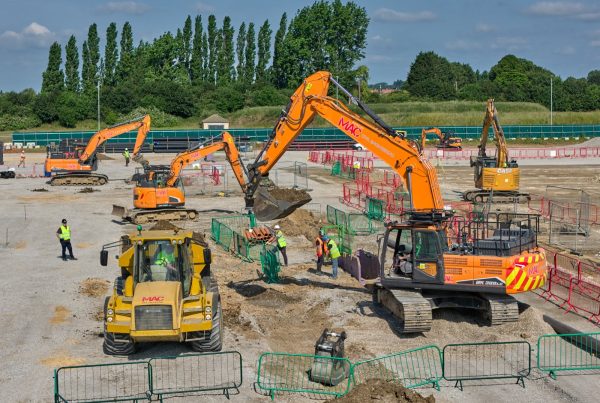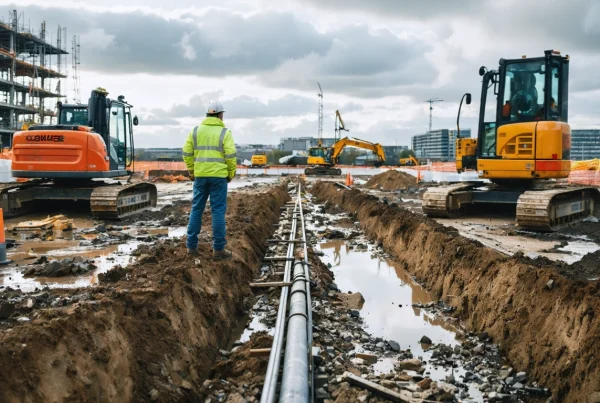
A £2.3 million investment in East Ayrshire is set to strengthen local wastewater infrastructure and reduce the risk of sewer flooding. The civil engineering programme reflects the growing need to protect homes, businesses and public spaces from overloaded sewer networks during periods of intense rainfall.
Sewer flooding can cause extensive property damage, disrupt communities and create environmental and public health concerns. Tackling the problem requires more than replacing individual pipes. Engineers must understand how rainfall, surface water, network capacity and local development combine to place pressure on the wastewater system.
Why sewer flooding requires targeted investment
Sewer networks are designed to carry wastewater safely to treatment facilities, but some systems also receive rainwater from roofs, roads and other impermeable surfaces. During heavy rainfall, the volume entering a combined sewer can exceed its available capacity. Water may then back up through drains, escape from manholes or enter properties at vulnerable points.
East Ayrshire includes established communities where parts of the underground network were built to serve smaller populations and lower levels of paved development. As towns have expanded, additional buildings, roads and hard surfaces have increased runoff. More frequent episodes of intense rainfall can place further pressure on pipes, pumping stations and storage assets.
The £2.3 million investment provides an opportunity to address known constraints through focused civil engineering work. Depending on local site conditions, potential measures may include increasing sewer capacity, creating additional stormwater storage, improving flow control and reducing unnecessary surface water entering the wastewater network.
Understanding the consequences for communities
Internal sewer flooding is among the most serious service failures a wastewater network can experience. Contaminated water can damage floors, walls, furniture and electrical systems, while affected residents may need to leave their homes during cleaning and repairs. Even when flooding remains outside, it can restrict access, damage gardens and create unpleasant conditions.
Repeated incidents also have a wider social impact. Residents may experience anxiety whenever severe weather is forecast, while businesses can face interrupted trading and costly restoration work. Investment in flood resilience therefore delivers benefits that extend beyond drainage performance, including improved public confidence and greater protection for local property.
How civil engineers develop an effective solution
Before construction begins, engineers must establish where excess water is entering the system and how flows move through the network. This investigation can involve hydraulic modelling, sewer inspections, flow monitoring, rainfall analysis and surveys of manholes, pipes and nearby watercourses. Historical flooding reports also help identify recurring patterns and priority locations.
Hydraulic models allow project teams to simulate how the sewer network performs under different rainfall conditions. Engineers can test possible interventions virtually, compare reductions in flood risk and assess whether improvements in one area could transfer pressure elsewhere. This process supports a solution that addresses the wider network rather than treating only the most visible symptoms.
Balancing capacity, storage and flow management
Increasing pipe capacity is one option, but installing larger sewers is not always the most practical or efficient response. Deep excavations can be disruptive, particularly where streets contain other buried utilities. Engineers may instead use underground storage structures to hold peak flows temporarily before releasing them back into the network when capacity becomes available.
Flow control devices can regulate how quickly wastewater moves between different parts of the system, while pumping improvements may help transfer flows more reliably. Where feasible, separating surface water from combined sewers can also reduce pressure by directing clean runoff toward an appropriate drainage route. The final design must account for ground conditions, environmental requirements, construction access, safety and long term maintenance.
Delivering construction in established communities
Once a preferred design has been selected, the project moves into detailed design and construction planning. This stage translates hydraulic requirements into buildable structures, pipe alignments, access arrangements and temporary works. Engineers must confirm the location of existing utilities, assess ground conditions and identify how excavation could affect nearby roads, buildings and watercourses.
Working in developed areas presents particular challenges. Sewer improvements may need to take place beneath busy streets or close to homes and commercial premises. Construction teams must maintain safe access wherever possible while managing traffic, noise, dust and working hours. Phased construction can reduce disruption by limiting the length of open excavation and allowing completed sections to return to normal use sooner.

Managing excavation and underground risks
Trial holes and utility surveys help establish the exact position of water mains, gas pipes, electricity cables and telecommunications infrastructure. This information is essential because historic records do not always reflect the precise location or depth of buried services. Where conflicts are identified, designers may adjust the route, protect the existing utility or coordinate a temporary diversion.
Groundwater and unstable soils can add complexity to deep sewer construction. Temporary support systems may be required to prevent excavation collapse, while groundwater control measures can keep working areas safe and dry. Engineers also assess whether excavation could cause settlement that might affect nearby properties or road surfaces.
In suitable locations, trenchless construction methods can reduce the amount of surface excavation. Techniques such as pipe jacking allow sections of sewer to be installed between shafts rather than through a continuous open trench. Although these methods require specialist equipment and careful ground investigation, they can help limit disruption at road crossings and other constrained sites.
Maintaining wastewater services during the works
The existing sewer network usually needs to remain operational while improvements are installed. Temporary bypass pumping may be used to divert flows around a work area, allowing engineers to connect new pipes or modify existing chambers safely. Pumping systems must be sized for expected flows and supported by monitoring, backup equipment and emergency response arrangements.
Connections to the live network are often scheduled carefully to reduce operational risk. Weather forecasts can influence timing because intense rainfall may rapidly increase flows in combined sewers. Clear coordination between contractors, network operators and emergency teams is therefore an important part of safe delivery.
Reducing surface water at source
Traditional sewer upgrades focus on moving or storing more water, but effective flood management can also reduce the volume entering the system. Sustainable drainage measures slow runoff, encourage infiltration and create temporary storage close to where rain falls. This can lower peak flows and delay the arrival of surface water at constrained sections of sewer.
Possible measures include permeable paving, rain gardens, detention basins and planted drainage channels. Roof water may also be disconnected from a combined sewer where a safe alternative route is available. These interventions must be designed around local soil permeability, groundwater levels, land ownership and maintenance responsibilities.
Combining grey and green infrastructure
A robust solution may combine conventional underground assets with surface based drainage features. For example, an enlarged sewer could address an existing capacity restriction while a detention area manages runoff from nearby hard surfaces. Together, the measures may provide greater resilience than either intervention could achieve alone.
Green drainage features can offer additional benefits when they are appropriate for the site. Planted areas may improve local amenity, support biodiversity and filter pollutants from road runoff. However, these features still require engineering controls, including safe overflow routes, appropriate planting, erosion protection and reliable arrangements for inspection and maintenance.
Protecting the environment during delivery
Wastewater projects must be planned to prevent construction activity from creating new environmental risks. Excavated material, silty water, concrete washout and fuel can affect nearby drains and watercourses if they are not properly controlled. Site teams therefore use designated storage areas, sediment controls, spill response equipment and monitored water management procedures.
Where work takes place near a river, burn or habitat area, ecological surveys may influence the construction programme and working methods. Measures can include protected access routes, restrictions during sensitive seasons and careful reinstatement of disturbed land. Any temporary or permanent discharge must also meet the relevant environmental requirements.
Considering embodied carbon and resource use
Civil engineering projects increasingly assess the carbon associated with materials, transport, excavation and plant. Designers can reduce impacts by optimising pipe sizes, limiting unnecessary excavation and selecting lower carbon materials where these meet structural and durability requirements. Reusing suitable excavated material on site may also reduce waste disposal and vehicle movements.
Whole life performance remains important. A solution that uses fewer materials initially may not be preferable if it requires frequent repair or energy intensive operation.
Testing whether the investment delivers its objectives
Completion of construction is not the end of the engineering process. New pipes and chambers are inspected to confirm that they have been installed correctly and remain free from defects or debris.
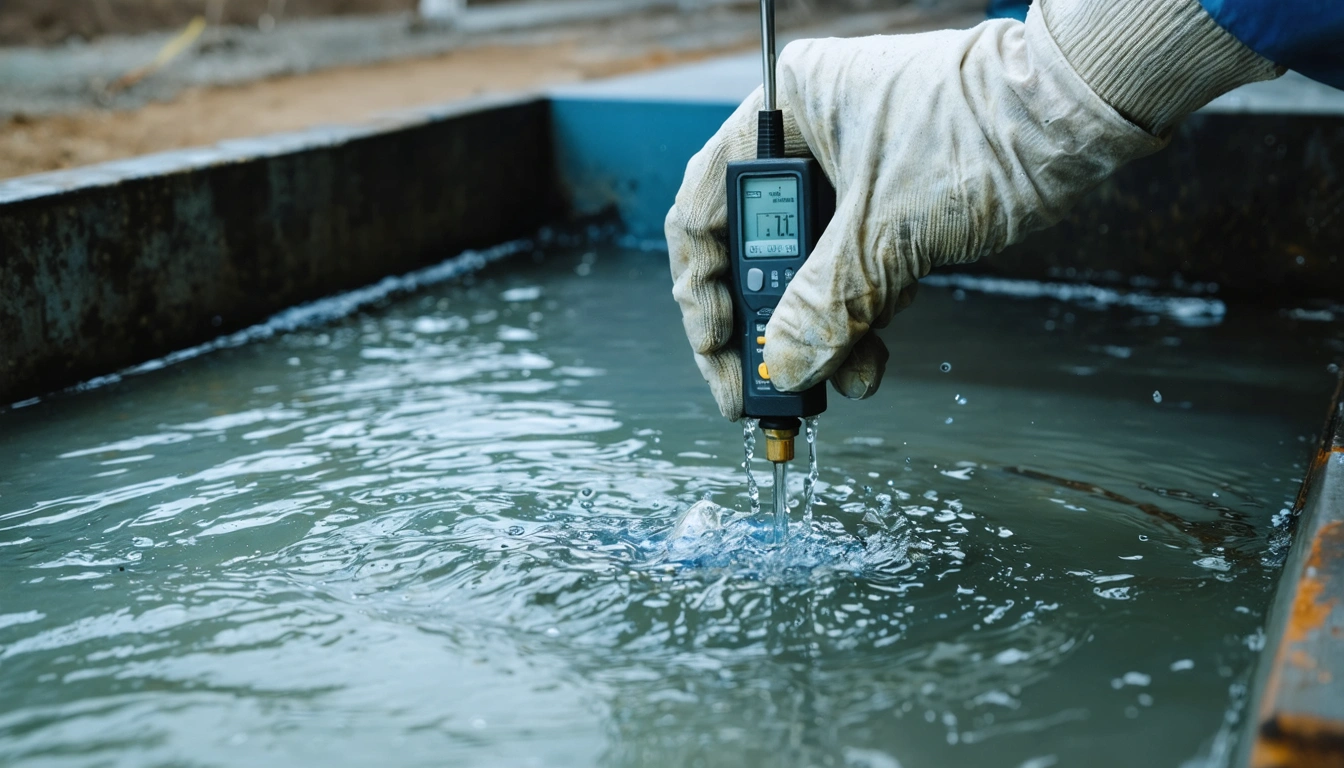
Post construction flow monitoring can show how the upgraded network responds during rainfall. The data can be compared with model predictions to verify that storage fills and empties as intended, pumps operate at the required levels and downstream flows remain within acceptable limits.
Measuring benefits beyond completed assets
The most meaningful measure of success is a reduction in the likelihood and severity of sewer flooding. This can be assessed through network data, incident reports, customer contacts and observations during significant rainfall.
Other useful indicators include fewer emergency callouts, improved operational reliability and reduced volumes of surface water handled by the wastewater network. Community feedback can also identify practical issues such as persistent ponding, odour or access problems that may not be immediately visible through hydraulic data alone.
Designing for future climate and development
The upgraded infrastructure must serve East Ayrshire for many years, so design decisions cannot rely only on historic rainfall and current demand. Engineers use rainfall allowances and development forecasts to test how the network may perform under future conditions.
Providing resilience does not always mean constructing every asset to the largest possible size. A phased or adaptable design may reserve space for additional storage, allow pumps to be upgraded or create connection points for future drainage measures.
Preventing new pressure on the network
Planning and drainage strategies have an important role in protecting the benefits of the £2.3 million programme. New development should manage surface water appropriately rather than automatically directing additional runoff into constrained combined sewers.
Property level resilience may provide another layer of protection at locations where risk cannot be eliminated completely. Non return valves, raised electrical fittings and flood resistant materials can reduce damage in suitable circumstances, although these measures require property specific assessment.
Maintaining long term performance
Sewer capacity can be reduced by sediment, debris, root intrusion, grease and structural deterioration. A planned inspection and cleaning programme is therefore essential if the new infrastructure is to retain its intended performance.
Pumps, telemetry and level sensors require routine testing as well as arrangements for responding to alarms. Data from these systems can help operators detect unusual flow patterns, blockages or equipment failure before they result in flooding.
The East Ayrshire investment demonstrates how targeted civil engineering can address immediate flood concerns while improving the resilience of a wider wastewater network. Its lasting value will depend on careful design, controlled construction, verified performance and consistent maintenance.