Have you ever wondered what happens to rainwater after it hits the ground in a bustling city?
It’s easy to overlook the complex systems that whisk water away, preventing floods and keeping our streets navigable. Yet, the art and science of drainage have never been more critical, especially in the UK, where unpredictable weather patterns and urban expansion challenge conventional methods. Understanding these systems is not just for engineers; it matters to anyone who has ever worried about a flooded basement or a waterlogged park.
As urban areas continue to grow, so does the pressure on existing drainage infrastructure. That’s why innovations in this field are crucial. By adopting new materials, smarter designsand sustainable practices, engineers are not only managing water more effectively but also paving the way for cities that can weather the storms of the future. Let’s explore how these innovative drainage solutions are transforming landscapes across the UK, ensuring that both city dwellers and the environment stay high and dry.
Understanding the Challenges of UK Drainage Systems
The United Kingdom’s drainage systems are a testament to the country’s rich engineering heritage, yet they face a multitude of challenges that demand innovative solutions. The complexity of these systems arises from a combination of ancient infrastructure, diverse geographical features, and evolving urban landscapes.Many drainage networks in the UK were constructed during the Victorian era,a time when urbanisation was rapidly expanding. These systems were designed to meet the demands of their time, but as cities have grown and technology has advanced, the limitations of such antiquated designs have become increasingly apparent.
The aging infrastructure often struggles to cope with the modern demands placed upon it, leading to increased instances of flooding and water management issues.furthermore, the geographical diversity across the UK presents unique challenges for drainage engineering.From the rugged highlands of Scotland to the flat plains of East Anglia, each region requires tailored drainage solutions that can effectively manage water flow and prevent flooding. The varied topography means that a one-size-fits-all approach is ineffective, necessitating bespoke engineering strategies that account for local conditions.Engineers must consider factors such as soil permeability, rainfall patterns and natural watercourses when designing or upgrading drainage systems to ensure they are resilient and efficient.The impact of climate change is another significant challenge affecting UK drainage systems.
With increasingly unpredictable weather patterns and incidents of extreme rainfall becoming more frequent, existing systems are often ill-equipped to handle sudden surges in water volume. This has led to a greater focus on sustainable urban drainage systems (SUDS), which aim to mimic natural water processes and reduce the burden on traditional drainage networks.SUDS frequently enough incorporate features like green roofs,permeable pavements, and rain gardens to manage surface water locally and mitigate the risk of flooding.Urbanization and population growth further exacerbate the challenges faced by UK drainage systems.As cities expand and more land is developed, natural drainage areas are reduced, increasing the risk of surface runoff and overwhelming existing infrastructure. This urban sprawl necessitates the integration of innovative drainage solutions that can accommodate increased volumes of water while minimising environmental impact.
Engineers must balance the need for effective drainage with sustainable development practices, ensuring that new urban areas are designed with resilience to future climate and population changes.The regulatory landscape in the UK also plays a crucial role in shaping drainage solutions. Compliance with environmental regulations and planning policies requires careful consideration during the design and implementation of drainage projects. Engineers must navigate a complex web of legislation, ensuring that projects meet stringent standards for environmental protection and water management.This often involves collaboration with local authorities, environmental agenciesand stakeholders to develop solutions that not only address technical challenges but also align with broader sustainability goals.
Advanced Materials and Their Role in Drainage Solutions
In recent years,the development of advanced materials has considerably influenced the design and implementation of drainage solutions across the UK.These materials, characterised by their durability, sustainability and adaptability, have enabled engineers to address challenges posed by urbanization and climate change more effectively. Traditional drainage systems, frequently enough made from concrete or clay, are being supplemented or replaced with materials that offer improved resilience and longevity. The shift towards advanced materials is not only driven by the need for more efficient water management but also by the increasing demand for environmentally sustainable practices in construction.
One of the most notable advancements is the use of geosynthetics, which include a variety of products such as geotextiles, geomembranes and geogrids. These materials are engineered to enhance the performance of drainage systems by providing superior filtration, separationand reinforcement capabilities. Geosynthetics are particularly beneficial in areas with poor soil conditions, as they improve soil stability and prevent erosion. Their lightweight nature and ease of installation make them an attractive option for projects where traditional materials might be impractical or cost-prohibitive.
Permeable concrete is another innovative material gaining traction in drainage solutions. Unlike conventional concrete, permeable concrete allows water to pass through its surface, reducing runoff and promoting groundwater recharge. This characteristic makes it an excellent choice for urban areas with limited green spaces,where managing stormwater is a critical concern. The use of permeable concrete not only helps mitigate flooding but also reduces the burden on existing drainage infrastructure, extending its lifespan and efficiency.
furthermore, the introduction of polymer-based drainage products has opened new possibilities for drainage system design. Polymers offer a high degree of flexibility and chemical resistance, making them ideal for applications in harsh environments where traditional materials might degrade. These polymer systems are often modular, allowing for easy customisation and scalability to meet specific project requirements. Their lightweight construction also reduces transportation and installation costs,providing both economic and logistical advantages.
advanced materials are also playing a crucial role in the development of smart drainage systems, which incorporate sensors and data analytics to optimize performance. Materials that are compatible with these technologies are becoming increasingly significant, as they enable real-time monitoring and adaptive management of drainage networks. This integration of advanced materials and technology represents a significant step forward in the pursuit of efficient and sustainable water management solutions. As the UK continues to face evolving environmental challenges, the role of advanced materials in drainage solutions will undoubtedly grow, paving the way for more resilient and adaptable infrastructure.
Sustainable Practices in Modern Drainage Engineering
In recent years,the field of drainage engineering in the UK has seen a significant shift towards sustainable practices,driven by both environmental concerns and regulatory requirements. This shift emphasizes the importance of managing water resources responsibly,mitigating flood risks,and protecting aquatic ecosystems. The integration of green infrastructure, such as permeable pavements, green roofsand rain gardens, has become increasingly common in urban planning. These features not only enhance the aesthetic appeal of urban areas but also play a crucial role in reducing surface runoff and promoting groundwater recharge.
Moreover, the adoption of sustainable urban drainage systems (SuDS) has become a cornerstone of modern drainage design. SuDS are designed to mimic natural water processes, aiming to manage rainfall close to where it falls and reduce the volume and speed of water entering the drainage system. This approach helps to prevent urban flooding and reduces the burden on traditional drainage infrastructure. Techniques such as swales, detention basinsand retention ponds are employed to store and slowly release stormwater, thereby minimising the impact on downstream water bodies.
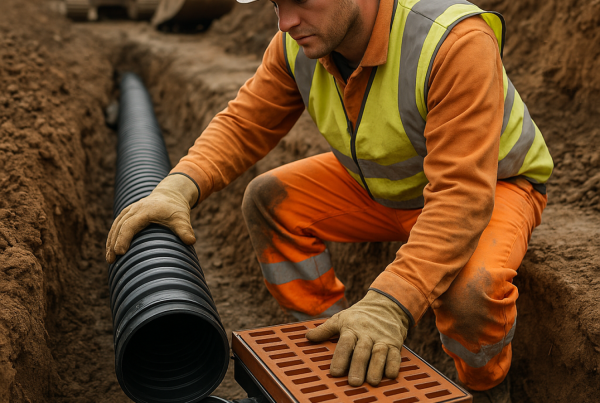
Another critical aspect of sustainable drainage engineering is the use of advanced materials and technologies that enhance the efficiency and longevity of drainage systems. Innovations in materials science have led to the development of more durable and environmentally friendly materials, such as high-density polyethylene (HDPE) pipes, which offer excellent resistance to corrosion and chemical damage. In addition, the incorporation of smart technology, such as sensors and IoT devices, allows for real-time monitoring of drainage systems, enabling quick responses to potential issues and optimising maintenance schedules.
The role of community engagement and education in promoting sustainable drainage practices cannot be overstated. Public awareness campaigns and educational programs are essential in fostering a culture of sustainability and encouraging responsible water use. By involving local communities in the planning and implementation of drainage projects, engineers can ensure that solutions are tailored to meet local needs and that residents are invested in the long-term success of these initiatives. This collaborative approach not only enhances the effectiveness of drainage solutions but also strengthens community resilience to climate change impacts.
Policy and regulation play a pivotal role in driving the adoption of sustainable drainage practices.The UK government has implemented various policies aimed at promoting sustainability in infrastructure projects, including mandatory requirements for SuDS in new developments. These regulatory frameworks provide clear guidelines for engineers and developers, ensuring that sustainable drainage solutions are integrated into the planning and construction of urban areas. By aligning engineering practices with environmental objectives, the UK is paving the way for a more resilient and sustainable future in drainage engineering.
Technological Innovations Shaping the Future of Drainage
In recent years, the landscape of drainage engineering in the UK has been significantly transformed by technological advancements, which are reshaping how engineers approach the challenges of water management. One of the most significant innovations is the use of smart drainage systems, which incorporate sensors and IoT technology to monitor water flow in real-time. These systems can predict potential blockages or flooding through data analytics, allowing for preemptive maintenance and more efficient management of resources. By leveraging such technology, engineers can ensure that drainage systems are not only reactive but also proactive,adapting to changing weather patterns and urban demands.
The integration of sustainable urban drainage systems (SuDS) has been a pivotal shift towards environmentally friendly solutions. SuDS mimic natural processes to manage rainfall close to where it falls, which reduces the burden on traditional drainage infrastructure. This approach often involves green roofs, permeable pavements, and constructed wetlands, which not only handle stormwater more effectively but also enhance urban biodiversity and aesthetics.As UK cities become more densely populated, the deployment of suds represents a crucial step in managing urban water sustainably while mitigating the urban heat island effect.
Another groundbreaking development is the use of advanced materials in drainage construction.High-density polyethylene (HDPE) and polypropylene materials are increasingly used due to their durability and resistance to chemical corrosion. These materials extend the lifespan of drainage systems, reducing maintenance costs and environmental impact. Furthermore, the advent of self-healing concrete, which uses bacteria to seal cracks automatically, promises to revolutionize drainage infrastructure by significantly enhancing its longevity and resilience against wear and tear.
The request of geospatial technology in drainage planning has also become indispensable. Geographic Data Systems (GIS) allow engineers to create detailed maps and models of drainage networks, facilitating better planning and decision-making. With the ability to simulate various scenarios,GIS helps in identifying potential problem areas and optimizes the allocation of resources. This technology equips engineers with a complete understanding of both the existing drainage systems and the potential impacts of new developments, ensuring that infrastructure projects are both efficient and sustainable.
The use of machine learning and artificial intelligence in drainage management is gaining traction. these technologies are capable of processing vast amounts of data to identify patterns and predict future drainage issues. As an example, machine learning algorithms can analyze historical weather data and drainage performance to forecast flooding events with greater accuracy. By providing early warnings, these systems enable timely interventions, reducing the risk of damage and enhancing community resilience. As these technologies continue to evolve, they hold the promise of transforming the future of drainage management in the UK, making it smarter, more efficientand better equipped to handle the challenges of climate change.
Case Studies of Successful Drainage Projects in the UK
In recent years, the United Kingdom has witnessed several remarkable drainage projects that have not only transformed local landscapes but also set new benchmarks in engineering excellence. One of the most notable projects is the Thames Tideway Tunnel in London, frequently enough referred to as the “super sewer.” This ambitious undertaking aims to address the longstanding issue of sewage overflow into the River Thames, a problem exacerbated by the city’s Victorian-era sewer system struggling to cope with modern demands. By constructing a massive tunnel beneath the river, engineers have managed to redirect excess sewage and significantly reduce pollution levels, thereby improving the water quality and overall ecosystem health of the Thames.
Another notable example of effective drainage engineering can be found in Manchester’s Hulme district. The area’s transformation was driven by the need to manage surface water more sustainably in response to frequent flooding incidents. The project incorporated sustainable urban drainage systems (SuDS), which include permeable pavements, green roofsand rain gardens.These features not only mitigate flooding risks but also enhance urban biodiversity and provide green spaces for community use. The success of Hulme’s drainage project has inspired similar initiatives across the UK, demonstrating the potential of integrating nature-based solutions in urban planning.
In Scotland,the Glasgow Smart canal project stands out as an innovative approach leveraging technology to manage urban water challenges.This project involves converting a stretch of the 18th-century Forth and Clyde Canal into a modern smart water management system. By utilising sensor technology and real-time data analytics,the canal’s water levels can be dynamically adjusted to prevent flooding in nearby areas. This smart system has not only safeguarded properties from water damage but also revitalised the canal, making it a focal point for recreation and wildlife.
The Somerset Levels and Moors, a low-lying area prone to flooding, has seen significant improvements through the Somerset Rivers Authority’s (SRA) initiatives. In response to devastating floods in 2014, the SRA implemented a series of strategic measures, including enhanced river dredging and the construction of additional water storage areas. These efforts have been instrumental in managing flood risks and protecting agricultural lands, which are a vital part of the region’s economy. The collaborative approach involving local communities, government bodies, and environmental organizations has been key to the project’s success.
Lastly,the concept of ”blue-green” infrastructure has been effectively realized in the city of Newcastle. Through the Blue-green Cities Research Project, newcastle has implemented a variety of measures designed to manage water sustainably while enhancing urban environments. These include the creation of new wetland areas, the installation of green roofs and the development of urban spaces that can temporarily store excess rainwater.The project has successfully demonstrated how urban water management can be seamlessly integrated with city planning to create more resilient and livable urban areas. These case studies collectively highlight the UK’s innovative approaches to drainage engineering, showcasing a blend of traditional techniques and modern technology to address contemporary challenges.
To Conclude
In UK engineering, innovative drainage solutions are not just about managing water effectively; they are about safeguarding communities and fostering sustainable development. As we’ve seen,creativity and practical application drive the advancements in this field,ensuring that our infrastructure can withstand the challenges posed by climate change and urban expansion. By integrating new technologies and embracing sustainable practices, engineers are turning potential problems into opportunities for growth and resilience.
Looking forward, one practical step is to prioritise the integration of green infrastructure in urban planning. By doing so,we can enhance the natural water cycle and reduce the burden on traditional drainage systems. This approach not only mitigates flood risks but also enriches urban environments, offering both ecological and social benefits.As we continue to innovate, collaboration between engineers, planners, and communities will be key to crafting solutions that are as effective as they are forward-thinking.