A Section 104 adoption inspection is a critical stage in transferring newly constructed sewers to the relevant water company.
Passing is not simply a matter of confirming that water flows through the pipes. Inspectors assess whether the drainage network has been built safely, accurately and in accordance with the approved design, technical standards and adoption agreement.
Failures can lead to remedial works, repeat surveys, additional fees and delays to development completion. Understanding the common causes of rejection helps developers, contractors and site teams address problems before the formal inspection takes place.
What inspectors expect from an adoptable drainage system
An adoptable drainage system must match the approved drawings and meet the standards specified by the adopting authority. Inspectors will consider pipe condition, line and level, structural integrity, access arrangements, workmanship and the overall performance of the network. They may also review construction records and compare the completed installation with the agreed design.
CCTV drainage surveys are central to this process, but recorded footage is only one part of the evidence. Manholes, chambers, covers, benching, connections and flow channels may all receive close scrutiny. Even where the underground pipework appears sound, poor chamber construction or incomplete documentation can prevent adoption.
Importantly, adoption standards are generally more demanding than proving that a drainage system is operational. A sewer might carry flow without an obvious blockage while still containing defects that reduce its lifespan, create maintenance risks or allow groundwater infiltration. Early quality checks are therefore far more effective than waiting for the adoption inspection to reveal accumulated issues.
The first defects that commonly cause rejection
1. Debris, silt and construction waste inside the pipework
One of the most avoidable reasons for failure is leaving construction debris within the drainage network. Concrete residue, mortar, stones, timber, plastic offcuts and compacted silt can restrict flow or conceal damage during a CCTV survey. Inspectors need a clear view of the full internal pipe surface, so obscured sections may be recorded as unsuitable for assessment.
Debris can enter open pipe ends during construction or wash into chambers before covers are installed. A thorough pre inspection clean should include jetting where appropriate, removal of material from manholes and checks that downstream sections have not collected displaced waste. Cleaning should be followed by another inspection rather than assumed to have solved the problem.
2. Displaced joints and poor pipe alignment
Pipes must be laid to the correct line and gradient, with joints properly seated throughout the run. Displaced joints may create steps inside the pipe, restrict flow and provide routes for groundwater infiltration. Significant displacement can also indicate inadequate installation, movement within the trench or poor control of bedding and backfill.
Misalignment is often visible during CCTV inspection when the camera records open joints, abrupt changes in direction or sections that appear out of line. Remedial action depends on the severity and location of the defect. Minor issues may be repairable using an approved local technique, while serious movement can require excavation and reconstruction of the affected section.
Preventing joint and alignment defects begins before the pipe is covered. Site teams should check each connection, confirm levels regularly and ensure that bedding provides continuous support. Backfill must then be placed and compacted carefully so that pipes are not pushed out of position after installation.
3. Cracked, fractured or deformed pipes
Structural damage is an immediate concern during an adoption inspection because it can shorten the service life of the sewer and increase the risk of leakage or collapse. CCTV footage may reveal longitudinal cracks, circumferential fractures, broken pipe walls or deformation within flexible pipes.
Damage can occur when unsuitable bedding materials create point loads beneath the pipe. It may also result from excessive compaction, construction traffic passing over pipes with insufficient cover or careless use of excavation equipment. Flexible pipes can become distorted if side support is inadequate or backfill is not compacted evenly.
The appropriate remedy will depend on the pipe material, defect classification and requirements of the adopting authority. Although lining or local repair may be acceptable in some circumstances, newly constructed drainage should not automatically be treated as though it were an ageing network. Excavation and replacement may be required where the defect suggests poor installation or continuing structural risk.
4. Incorrect gradients and standing water
A sewer can appear visually intact but still fail if it has not been installed to the approved gradient. Sections that are too flat may allow solids to settle, while excessively steep gradients can cause liquid to run ahead of solid material. Both situations can contribute to recurring maintenance problems.

Standing water, often described as ponding, is a common indication of poor level control or local settlement. A small amount of water may have a straightforward explanation, but persistent or substantial ponding can obscure the pipe invert and prevent a complete inspection. It may also suggest that the pipe has developed a sag.
Checking levels only at the upstream and downstream chambers is not always enough. Intermediate checks should be taken as installation progresses, particularly on long runs and shallow gradients. Where ponding is identified, the contractor may need to carry out a level survey to establish the extent of the problem before deciding whether reconstruction is necessary.
5. Groundwater infiltration and leaking joints
Visible infiltration shows that groundwater is entering the drainage system through a joint, connection, crack or chamber wall. Even a relatively small leak can be unacceptable because continuous infiltration consumes network capacity and increases the volume of water requiring treatment.
Leaks may appear on CCTV footage as running water, droplets, staining or fine material being washed into the pipe. Infiltration can be particularly noticeable after prolonged rainfall or where the groundwater table is high. However, a dry weather survey does not necessarily prove that every joint is watertight.
Sealing visible leakage without addressing its cause can lead to repeat failure. The investigation should consider damaged seals, contaminated joint surfaces, poorly fitted connectors and movement caused by inadequate bedding. Chambers should also be checked because water can enter through lifting holes, pipe penetrations, incomplete seals or defective construction joints.
6. Protruding connections and poorly formed junctions
Connections into an adoptable sewer must be made using the specified fittings and should finish neatly against the internal pipe wall. A lateral connection that protrudes into the main sewer reduces its effective diameter, catches debris and obstructs cleaning or inspection equipment.
Problems often arise when connections are cut into an installed pipe without sufficient control. Openings may be oversized, rough or incorrectly positioned, while the connecting pipe may extend too far into the sewer. Makeshift connections and excessive sealing material are also likely to attract attention during inspection.
Every connection should be checked before it is buried and recorded accurately for the as built information. If a protrusion is found during the pre adoption survey, trimming may be possible using specialist equipment. More extensive defects can require the junction to be exposed and rebuilt with an approved connector.
Manhole and chamber defects that prevent adoption
The condition of the pipes is only part of the inspection. Access chambers must be safe, durable and suitable for future maintenance. Defects at chamber level are particularly frustrating because many can be prevented through basic workmanship checks before the covers and surrounding surfaces are completed.
7. Poor benching and channel construction
Benching should direct water cleanly towards the channel without creating ledges, depressions or rough surfaces where debris can collect. It should have an appropriate fall, a smooth finish and a secure bond to the chamber structure. Crumbling mortar, exposed aggregate and standing water on the benching commonly lead to remedial requests.
The channel itself must provide a continuous flow path through the chamber. Sharp changes in direction, uneven inverts and badly formed connections can create turbulence or accumulation points. Where several incoming pipes meet, each flow should be guided into the outgoing channel rather than discharged across flat benching.
Cosmetic patching is unlikely to be sufficient if the underlying material is loose or incorrectly shaped. Defective areas should be removed back to a sound surface and reconstructed using suitable materials. The repaired chamber should then be cleaned and inspected again after the material has cured.
8. Incorrect manhole dimensions, access or covers
Manholes must be built to the approved dimensions and provide sufficient working space for inspection and maintenance. Restricted access, incorrectly positioned openings or missing access features can make entry unsafe and prevent equipment from reaching the sewer.
Covers and frames must also match the specified loading class and finished ground level. Rocking covers, damaged frames and poorly supported units may fail under traffic or allow surface water into the system. In roads and other trafficked areas, the quality of the surrounding reinstatement is also important because settlement can destabilise an otherwise suitable cover.
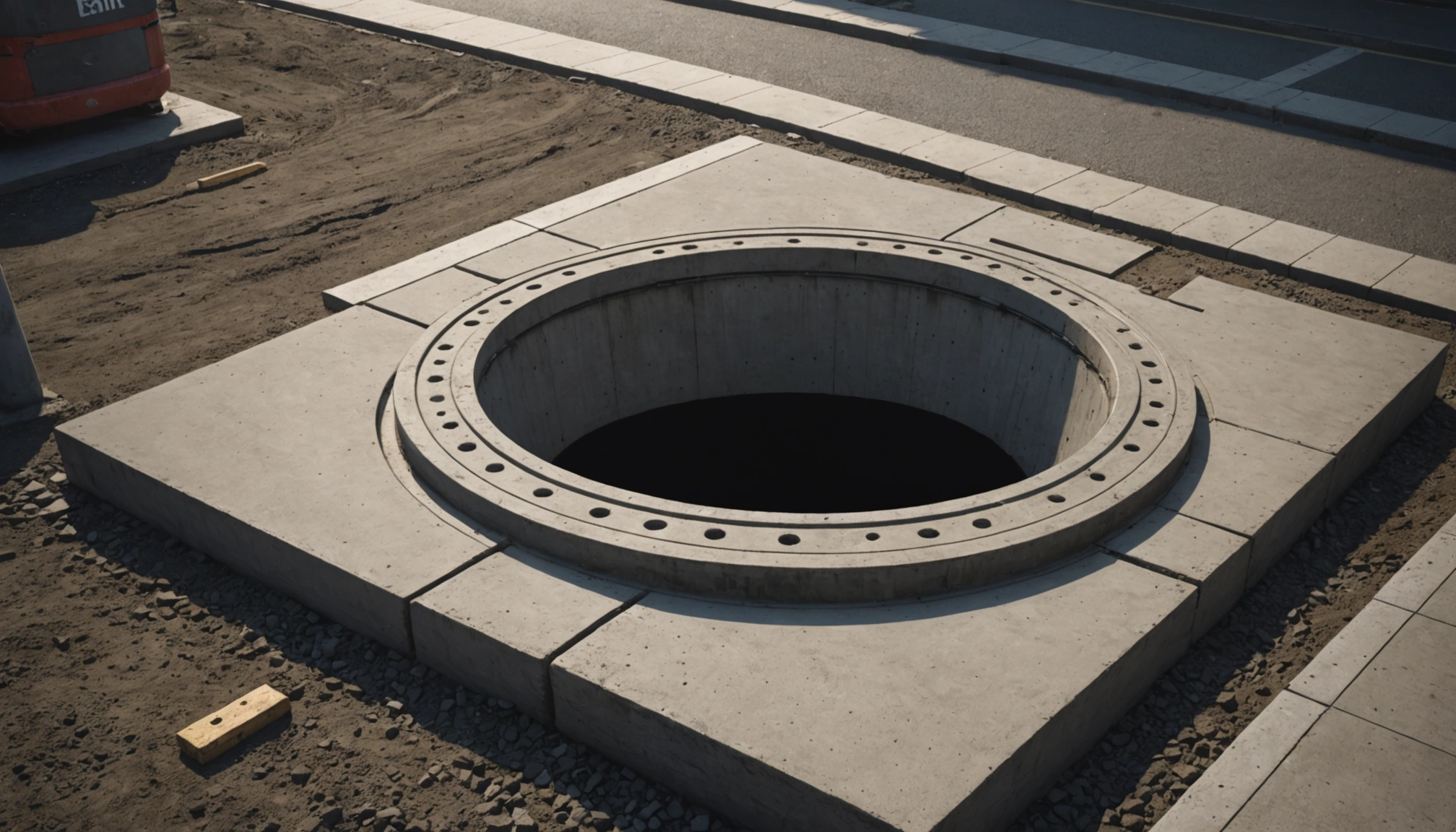
Common chamber details that should be checked include step irons or access systems where specified, cover orientation, chamber depth, neck construction and the security of the frame. Teams should not assume that a standard chamber arrangement will be accepted in every location. The approved design and the adopting authority’s requirements should always be consulted.
9. Unsealed pipe entries and defective chamber walls
Pipe penetrations need to be properly formed and sealed so that the chamber remains structurally sound and watertight. Gaps around incoming pipes can admit groundwater, allow surrounding material to migrate into the chamber and weaken support around the connection.
Chamber walls may also be rejected because of open joints, cracking, honeycombing or incomplete seals between rings. Where precast concrete units are used, the joints should be clean, correctly seated and finished in accordance with the relevant specification. Brickwork, where permitted, should be fully pointed and free from loose or damaged sections.
A quick visual check from ground level can miss defects beneath the cover slab or behind pipe entries. A systematic chamber inspection should examine the walls, joints, seals, channel, benching and soffit. Water staining and deposits can help identify intermittent leakage even when no active flow is visible.
Design compliance and evidence failures
Some drainage systems fail adoption despite acceptable workmanship because what has been built does not correspond with what was approved. Others are delayed because the contractor cannot supply enough reliable information to demonstrate compliance.
10. Unapproved design changes and incorrect connections
Site conditions often force changes during construction, but informal alterations can create serious adoption difficulties. A pipe may have been diverted around another service, a chamber omitted or a connection moved without the revised arrangement being submitted for approval.
Inspectors may compare chamber locations, pipe sizes, gradients, flow directions and connection details with the approved drawings. A network that functions perfectly can still be rejected if material changes have not been agreed.
Changes should therefore be documented as they occur, with technical approval obtained where required. Survey information should be captured before features are covered. Relying on memory at the end of a project often produces inaccurate drawings and makes buried discrepancies expensive to investigate.
11. Incomplete CCTV footage, records and as built information
Poor evidence can delay adoption even when the physical drainage is satisfactory. CCTV footage should provide a continuous, clear view of each relevant sewer run, with accurate references for the pipe, chamber locations, direction of travel and distance.
The footage and report must also correspond. Incorrect manhole references, inconsistent pipe diameters and unexplained changes in direction undermine confidence in the survey. Where defects are recorded, their positions and classifications should be clear enough for remedial teams to find and address them.
As built drawings should reflect the completed installation rather than repeat the original design. They may need to show pipe routes, levels, diameters, materials, gradients, chamber references and connection positions.
How to prepare drainage for an S104 adoption inspection
The most reliable approach is to treat adoption as a process that begins during installation, not as a final check after every surface has been completed.
Before requesting the formal inspection, site teams should confirm that construction work around the drainage is complete and that no further debris is likely to enter the network.