Ever wondered what lies beneath the roads and buildings we see every day? Groundworks form the backbone of civil engineering in the UK, yet they often go unnoticed by the general public.
Understanding groundworks is crucial for anyone involved in construction. Without a solid foundation, even the most extraordinary structures risk collapse.This article explores the essential role groundworks play in ensuring stability and safety.

Understanding Groundwork Essentials
Groundworks involve preparing the land before construction begins. This includes clearing the site, excavating soil and laying foundations. Proper groundwork ensures the building’s weight is evenly distributed, preventing future structural issues.
Soil analysis is vital. Engineers assess soil type to decide the best foundation method. Clay, sand or gravel each require different approaches. For example, clay may need deeper foundations to avoid shifting over time.
Drainage is another key element. Poor drainage can lead to water accumulation, which weakens foundations. Installing effective drainage systems prevents this. Builders often use perforated pipes to channel water away from the structure.
Utilities installation happens during groundwork. Workers lay pipes and cables for water, electricity and gas before the main construction starts. This planning avoids future disruptions and ensures essential services are in place from day one.
Safety is paramount. Excavation sites present risks like collapses or flooding. Engineers implement safety measures, such as shoring, to support trenches. Regular inspections help maintain a safe working environment for all involved.

Soil Types and Their Impact
Soil types significantly influence how we approach construction projects. Clay soils can expand and contract, leading to foundation movement. Engineers often recommend deeper foundations to mitigate thes risks and ensure stability.
Sandy soils present different challenges. They drain quickly but lack cohesion. Builders may use special techniques like compaction to increase stability. This prevents shifting and ensures a solid base for structures above. Chalky soils, common in areas like the South Downs, require careful handling. Their porous nature demands efficient drainage solutions. Builders often lay perforated pipes to manage water flow and prevent erosion.
Gravelly soils offer good drainage but can be unstable without proper readiness. Engineers might use geotextiles to strengthen the ground. This approach enhances load-bearing capacity and ensures structural integrity. Understanding soil types helps in choosing the right foundation. A well-planned groundwork phase can prevent costly repairs later. Consulting with a geotechnical expert provides valuable insights and ensures a successful project.
Excavation Techniques and Best Practices
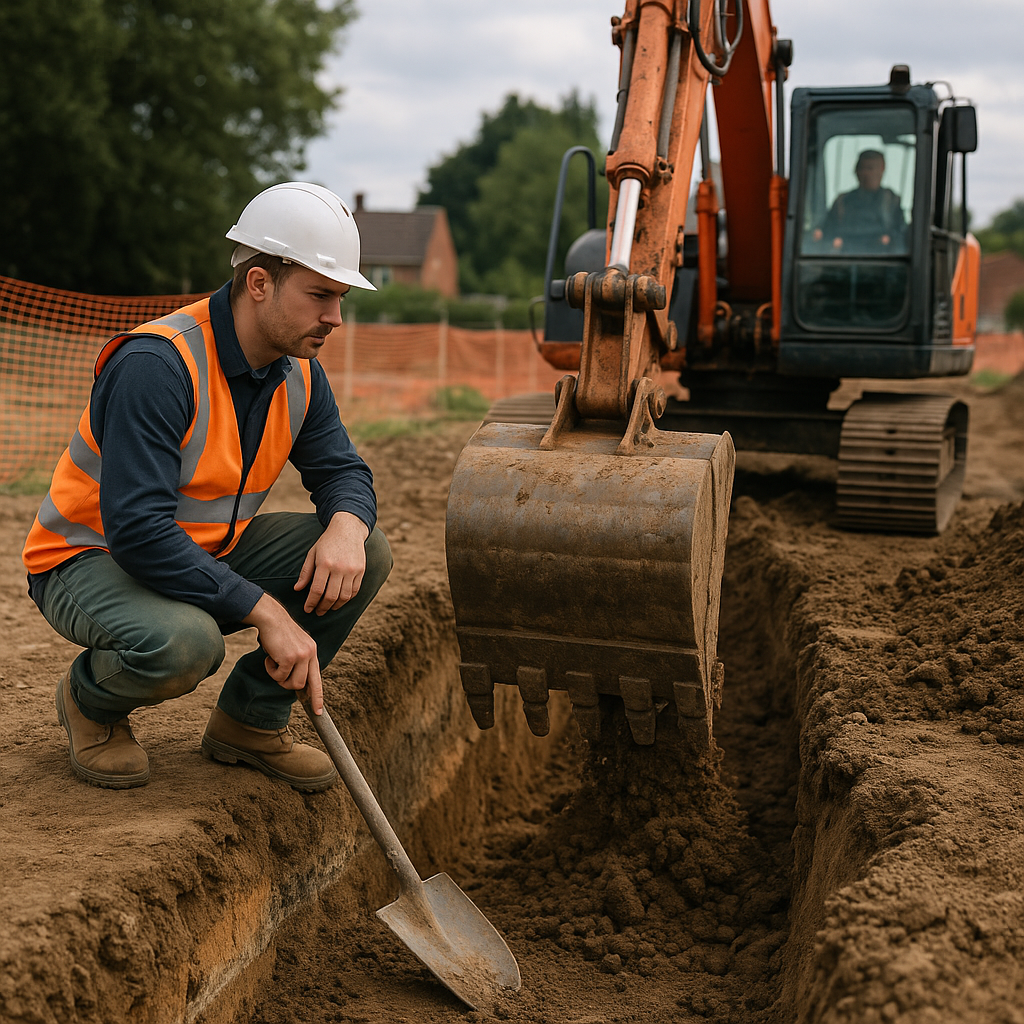
Effective excavation requires planning and precision. Engineers first survey the site to identify potential hazards. This step helps avoid unexpected surprises like underground utilities or hidden voids. Accurate surveys save time and prevent costly mistakes.
Once the survey is complete, workers mark out excavation areas. They use stakes and string lines to define boundaries clearly. This ensures the digging process stays on track and within the planned limits.
Excavators remove soil in layers to maintain stability. this method prevents sudden collapses and allows for easier backfilling later. It’s essential to avoid over-excavating, as this can weaken surrounding areas.
Shoring systems support trench walls during excavation. Engineers choose methods like timber shoring or trench boxes based on soil conditions. These systems protect workers and maintain trench integrity throughout the project.
Regular monitoring of excavation sites is crucial. Engineers conduct inspections to check for signs of instability. They adjust plans as needed to address any issues that arise. this proactive approach ensures safe and efficient progress.
Drainage Solutions in Construction
Effective drainage systems are essential in construction. Without them, water can accumulate, causing serious structural problems. Builders must plan and implement drainage solutions to protect the integrity of a building’s foundation.
Engineers often use perforated pipes to manage water flow. These pipes channel excess water away from the structure, preventing soil erosion and weakening. Proper installation ensures long-term efficiency and reduces maintenance needs.
Choosing the right drainage solution depends on soil type and site conditions. For instance, clay-rich areas may require more extensive drainage systems. These systems help manage water retention and prevent foundation movement.
French drains offer a practical solution. They consist of gravel-filled trenches with perforated pipes. This method effectively redirects water and is ideal for areas prone to flooding. Builders must ensure the system slopes correctly for optimal performance.
Regular maintenance is crucial for drainage systems. Clearing debris from pipes and checking for blockages maintain effectiveness. A well-maintained drainage system prolongs the life of the building and reduces repair costs over time.
Health and Safety in Groundwork
Ensuring safety in groundwork is vital. Workers face various hazards, such as trench collapses and equipment accidents. Proper training equips them to handle these risks effectively. Regular safety briefings keep everyone informed about potential dangers.
Personal protective equipment (PPE) is mandatory on sites. Helmets, glovesand steel-toed boots protect against injuries. High-visibility clothing ensures workers remain visible, reducing the risk of accidents, especially in busy environments.
Communication plays a crucial role in maintaining safety. Teams use hand signals and radios to coordinate actions. Clear communication prevents misunderstandings and ensures smooth operations, notably in noisy or complex sites.
Engineers must ensure all machinery is well-maintained. Regular checks prevent breakdowns and accidents. Such as,inspecting excavators for hydraulic leaks can avert potential hazards. This proactive approach keeps equipment running safely and efficiently.
Emergency procedures must be in place. Workers should know evacuation routes and first aid locations. Practising drills ensures everyone knows what to do in a crisis. This preparation can save lives and minimise damage during emergencies.
Sustainable Practices in Groundworks
are essential for reducing environmental impact. Engineers focus on minimising waste and conserving resources. Reusing excavated materials on-site is a practical approach.It reduces the need for new resources and decreases landfill waste.
Using eco-amiable machinery also supports sustainability. Modern equipment frequently enough features fuel-efficient engines. This reduces emissions and lowers the carbon footprint. Choosing machinery with low noise levels minimises disruption to local wildlife and communities.
Water management is crucial in sustainable groundworks.Engineers design systems to capture and reuse rainwater. This reduces reliance on mains water supplies. Implementing such systems can significantly lower water consumption throughout a project’s lifecycle.
Planting native vegetation around construction sites is beneficial. It helps stabilise soil and prevents erosion. Native plants require less maintenance and water, making them an eco-friendly choice. This practice also supports local biodiversity.
Collaboration with environmental experts enhances sustainability efforts. Consulting with specialists ensures compliance with regulations and best practices. They provide insights into improving environmental performance. This collaboration fosters a culture of sustainability in the construction industry.
To Conclude
Understanding the basics of groundworks is crucial in UK civil engineering. It lays the foundation for every project, big or small. With solid groundwork skills, engineers ensure structures are safe and durable.
Keep learning and adapting. Stay updated with the latest techniques and materials. By doing so, you enhance your expertise and contribute to the success and safety of your projects.