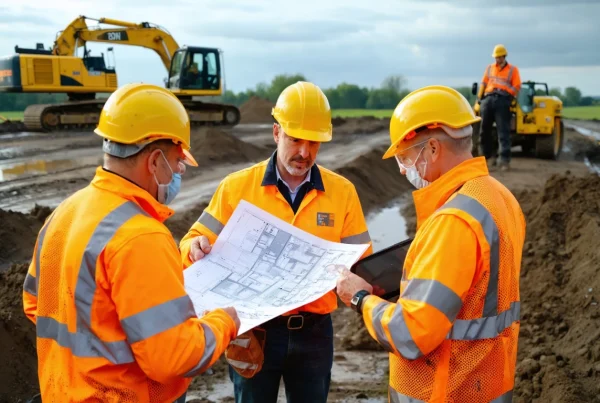
The UK’s first automated low-carbon foundation factory represents a significant change in how essential civil engineering components can be designed, manufactured and delivered. By combining automated production systems with lower-carbon materials and energy-efficient processes, the facility offers a practical model for reducing the environmental impact of foundations without compromising structural performance.
Why foundation manufacturing needs to change
Traditional foundation construction can involve material waste, variable site conditions and carbon-intensive concrete or steel. On-site operations may also depend on weather, specialist labour and complex delivery schedules.
Manufacturing foundation components in a controlled factory environment helps address many of these challenges. Automated batching, casting, curing and handling systems can produce components to precise specifications while collecting production data.
The embodied carbon challenge
Most of a foundation’s climate impact is associated with the extraction, manufacture and transport of its materials. Cement production is particularly important because conventional Portland cement is responsible for significant carbon dioxide emissions.
A low-carbon factory can reduce these impacts through carefully designed concrete mixes, efficient reinforcement layouts, renewable electricity and closed-loop material management. Engineers may also use performance-based specifications to lower cement content or introduce suitable supplementary cementitious materials while maintaining the required strength, durability and installation characteristics.
How automation supports lower-carbon construction
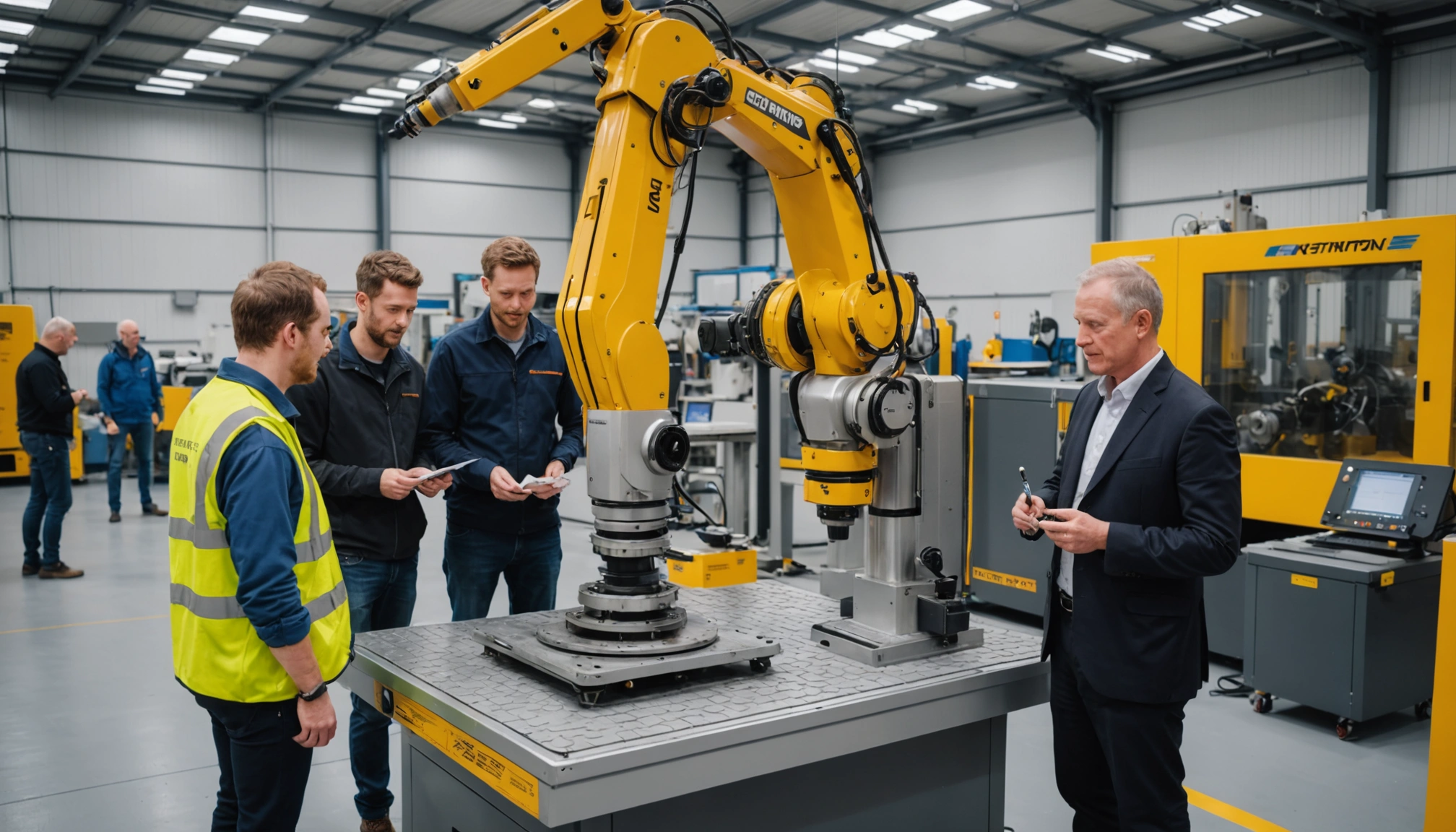
Automation allows manufacturers to control production with a level of consistency that is difficult to achieve through manual processes alone. Digital systems can regulate material dosing, monitor moisture levels, verify component geometry and identify defects before products leave the factory.
Connecting design with production
The greatest benefits emerge when automated manufacturing is connected to digital engineering workflows. Structural models can provide production equipment with accurate information about component dimensions, reinforcement and performance requirements.
Standardised components can still be configured for different loads, ground conditions and project types. A well-developed product platform enables engineers to select suitable foundation solutions while retaining enough flexibility for site-specific requirements.
Materials and processes behind a low-carbon foundation
Automation does not guarantee a lower-carbon product. Factory environmental performance depends on the materials selected, the structural efficiency of each component and the energy used throughout production.
Reducing reliance on conventional cement
Concrete mixes can be optimised by replacing a proportion of conventional cement with lower-carbon alternatives where technical requirements and material availability allow. Possible options include ground granulated blast furnace slag, fly ash, calcined clay and limestone-based additions.
Factory production provides an advantage because temperature, humidity and curing periods can be controlled. A mix that gains strength more slowly may still be commercially viable if production schedules and storage areas are designed around its curing profile.
Using reinforcement more efficiently
Reinforcement can be a major source of embodied carbon, so automated cutting, bending and placement should be configured to minimise offcuts and avoid unnecessary material.
Where appropriate, manufacturers may specify reinforcement with a high recycled content or source steel from suppliers using lower-carbon production routes. Alternative reinforcement systems can also be assessed, but any change must account for fire performance, durability, bond behaviour, installation loads and compliance with relevant standards.
Designing out waste
Accurate mould filling reduces surplus concrete, while reusable moulds avoid much of the timber waste associated with temporary site formwork. Any fresh concrete left after batching can be measured and, where technically suitable, returned to controlled processes rather than discarded.
Waste prevention should take priority over recycling. If production data shows that a component repeatedly requires excess material, engineers can review its geometry, mould design or batching instructions.
Energy, water and factory operations
A credible low-carbon facility must consider operational emissions as well as material emissions. Electricity may power mixers, robotic handling equipment, pumps, cranes, ventilation and curing systems.

Responsible water management
Concrete production and equipment cleaning require careful water management. Closed-loop systems can collect, treat and reuse process water, reducing demand for mains water and limiting contaminated discharge.
Rainwater harvesting can provide an additional source for suitable non-potable uses. However, recovered water must be tested and managed so that variations in chemistry or suspended solids do not affect concrete quality.
Quality assurance and traceability
Factory production enables a high level of traceability from raw material delivery to completed foundation element. Each component can be assigned a unique digital record containing batch information, reinforcement details, test results, dimensions, curing history and inspection status.
This record can support factory production control, third-party certification and project handover. It also gives asset owners better information about what has been installed, which may assist future inspection, alteration, reuse or deconstruction decisions.
Automated inspection with human oversight
Machine vision, laser scanning and digital measurement tools can identify dimensional variation, surface defects and misplaced features. Load cells and sensors can verify material quantities, while automated alerts can stop production when readings fall outside specified tolerances.
Human oversight remains essential. Experienced technicians and engineers are needed to interpret results, investigate recurring issues and decide whether a component is acceptable. Automation should strengthen professional judgement rather than replace engineering responsibility.
Benefits on the construction site
The value of factory manufacturing extends beyond the factory gate. Components that arrive ready for installation can reduce excavation exposure, temporary works and the number of labour-intensive activities performed on site.
Predictable dimensions also improve coordination with columns, frames, service routes and connection details. Installation teams can prepare lifting plans and equipment requirements in advance, reducing the risk of delays caused by incompatible components.
Faster and safer installation
Pre-manufactured foundation systems can shorten site programmes when ground preparation, deliveries and lifting operations are properly coordinated. Less wet concrete work may reduce the number of vehicle movements, pumps and manual tasks required at the point of installation.
Moving repetitive activities into a controlled environment can improve safety by separating workers from heavy moving equipment and automating high-risk handling tasks. The factory must still be designed around safe access, machine guarding, maintenance procedures and clear pedestrian routes.
Logistics and transport planning
Transport can offset some carbon savings if components are heavy, oversized or moved over long distances. Product dimensions should therefore account for standard vehicle capacities wherever possible.
Manufacturers can reduce transport emissions by maximising load utilisation, selecting lower-emission vehicles and locating facilities close to areas of sustained demand. For larger national programmes, a network of regional factories may prove more efficient than relying on a single production site.
Skills and employment in an automated facility
Automation changes the type of work involved in foundation production, but it does not remove the need for a skilled workforce. Roles are likely to include production engineers, maintenance technicians, concrete specialists, digital model coordinators, quality inspectors and data analysts.
Training must cover both engineering fundamentals and digital systems. Employees need to understand why tolerances, curing conditions and material properties matter, not simply how to operate machinery.
Supporting a just transition
Manufacturers can work with colleges, universities and apprenticeship providers to develop pathways into modern methods of construction. Existing site and manufacturing workers should also have access to retraining so that practical experience is retained as production methods evolve.
Well-designed automation can improve job quality by reducing exposure to dust, noise, heavy lifting and repetitive manual work. The strongest employment model combines safer working conditions with clear technical progression and long-term investment in skills.
Measuring whole-life carbon performance
Claims about low-carbon foundations must be supported by transparent measurement. A whole-life assessment should include raw material extraction, manufacturing, transport, installation, maintenance, replacement and end-of-life treatment.
Carbon calculations should use consistent boundaries and verified data wherever possible. Environmental product declarations can provide useful information about constituent materials and finished products. Project teams should also record actual transport distances, site activities and material quantities rather than relying entirely on generic assumptions.
Balancing embodied carbon and durability
Reducing initial embodied carbon should not weaken long-term performance. A foundation that deteriorates early or requires major repair may create more emissions over its service life than a slightly higher-carbon alternative with greater durability.
Engineers must account for groundwater, soil chemistry, freeze and thaw exposure, sulphate conditions and other environmental factors. Low-carbon mixes should be validated against the relevant exposure classes and design life.
Barriers to wider adoption
Automated factories require substantial capital investment, dependable demand and a supply chain capable of providing materials with consistent properties. Business cases can become difficult if projects use many unique designs or if orders fluctuate sharply.
Standards, approvals and technical confidence
New foundation systems must satisfy building regulations, engineering standards, warranty requirements and project-specific specifications. Testing and certification can take time, particularly when products combine unfamiliar materials, connections or installation methods.
Early collaboration with regulators, insurers, designers and contractors can identify evidence requirements before full-scale production begins. Pilot projects should test manufacturing repeatability, transport, lifting, installation and in-service behaviour under realistic conditions.
Ground conditions and design flexibility
Foundations must respond to variable soils, groundwater, contamination and nearby structures. A standard product cannot simply be applied to every site. Ground investigation and geotechnical design remain essential, with the manufactured system selected or adapted to suit verified conditions.
A configurable range of component sizes, connection details and load capacities can balance standardisation with flexibility. Projects that fall outside validated parameters may still require conventional or bespoke foundation solutions.
Procurement can enable better outcomes
Traditional procurement often rewards the lowest initial price rather than whole-life value. This can discourage investment in automation, product testing and carbon reduction. Clients can support improved outcomes by evaluating embodied carbon, installation time, safety, quality and durability alongside capital cost.
Early supplier involvement allows foundation design to reflect manufacturing capabilities before key decisions become fixed. Performance-based specifications can also give engineers and manufacturers scope to propose lower-carbon solutions while meeting defined structural and durability requirements.
Creating a dependable project pipeline
Aggregating demand across housing, transport, energy and public infrastructure programmes can improve factory utilisation. Common technical requirements and predictable order schedules make it easier to procure materials efficiently, retain skilled employees and invest in production improvements.
A blueprint for scalable civil engineering
The factory model demonstrates how civil engineering can combine product design, manufacturing data and site delivery within one coordinated system. Its principles can extend beyond foundations to retaining structures, drainage products, bridge elements and other repeatable components.
Successful scaling will depend on rigorous engineering, credible carbon accounting and collaboration across the supply chain. Automation is most valuable when it reduces material consumption, improves safety and provides evidence of consistent performance rather than merely accelerating existing processes.
The UK’s first automated low-carbon foundation factory is therefore more than a new production facility. It offers a practical blueprint for industrialised construction in which lower emissions, reliable quality and efficient delivery are designed into infrastructure from the ground up.