Civil engineering is often visible only when something large appears on the skyline, a bridge opens to traffic, or a railway upgrade reaches the news. In reality, much of the profession’s value on modern UK infrastructure projects sits behind the scenes, shaping decisions long before construction begins and continuing through delivery, maintenance, resilience planning, and eventual renewal.
On today’s infrastructure schemes, civil engineers combine technical design, environmental awareness, digital tools, safety planning, stakeholder coordination, and regulatory understanding. Their work helps turn national transport, water, energy, housing, and regeneration ambitions into practical assets that can be built, operated, and maintained in real communities.
Turning strategic needs into buildable infrastructure
Modern UK infrastructure projects usually begin with a need rather than a drawing. That need might be reducing congestion on a major road, increasing rail capacity, protecting a town from flooding, upgrading ageing water networks, or supporting new housing and commercial development. Civil engineers help define what the project must achieve and translate broad objectives into technically realistic options.
At this early stage, civil engineers assess existing conditions, constraints, risks, and opportunities. They consider ground conditions, land ownership, utilities, drainage, access, environmental designations, nearby communities, construction logistics, and long term operation. This work helps clients and public bodies understand which solutions are feasible, affordable, sustainable, and likely to gain planning and regulatory approval.
Feasibility, option appraisal, and early risk reduction
Feasibility studies are a major part of civil engineering on infrastructure schemes. Engineers compare potential routes, layouts, structures, materials, and construction methods to identify the option that best balances performance, cost, carbon, safety, programme, and social impact. This is especially important in the UK, where new infrastructure often has to fit around dense urban areas, historic assets, protected landscapes, and complex underground utility networks.
Early risk reduction can save significant time and money later in a project. By identifying flood risk, poor ground, buried services, access restrictions, contamination, or structural constraints before detailed design begins, uk civil engineers help prevent costly redesigns and delays. Their input gives project teams a clearer understanding of what is possible and what must be managed carefully during design and construction.
Designing safe, resilient, and sustainable assets
Once a preferred option is selected, civil engineers develop the design in greater detail. This can include earthworks, foundations, roads, bridges, retaining walls, drainage systems, flood defences, tunnels, public realm, utilities, and temporary works needed to support construction. The aim is not simply to create something that can be built, but to create infrastructure that performs safely and reliably throughout its intended life.
UK infrastructure is increasingly shaped by resilience and sustainability requirements. Civil engineers must account for heavier rainfall, heat, changing river flows, sea level rise, increased demand on networks, and the need to reduce whole life carbon. This means design decisions often involve more than structural strength or hydraulic capacity. They also involve material efficiency, maintenance access, biodiversity, surface water management, adaptability, and the long term impact of construction choices.
Balancing technical standards with real world conditions
Civil engineering in the UK is governed by standards, guidance, regulations, and client requirements. However, engineers also need to apply judgement to real sites, where ideal conditions rarely exist. A drainage design may need to work around existing sewers and limited outfall capacity. A bridge design may need to maintain traffic, rail, or river navigation during construction. A road improvement may need to protect nearby homes from noise, vibration, and disruption.
This balance between technical compliance and practical delivery is one of the defining features of infrastructure engineering. Civil engineers coordinate with architects, transport planners, environmental consultants, geotechnical specialists, contractors, local authorities, statutory undertakers, and asset owners to make sure the design can be approved, built, inspected, and maintained. The result is a design process that is both analytical and collaborative.
Managing interfaces across complex project teams
Modern infrastructure projects are rarely delivered by one organisation working in isolation. They involve clients, designers, contractors, subcontractors, regulators, landowners, utility companies, local authorities, transport operators, environmental bodies, and the public. Civil engineers often sit at the centre of these interfaces, making sure that decisions made by one discipline do not create unforeseen problems for another.
For example, a highway drainage design may affect flood modelling, utility diversions, landscape proposals, road safety audits, maintenance access, and construction phasing. A rail station upgrade may require structural alterations, platform drainage, passenger movement analysis, possessions planning, electrical systems coordination, and accessibility improvements. Civil engineers help connect these different workstreams so that the project remains coherent and deliverable.
Coordinating utilities, access, and third party constraints
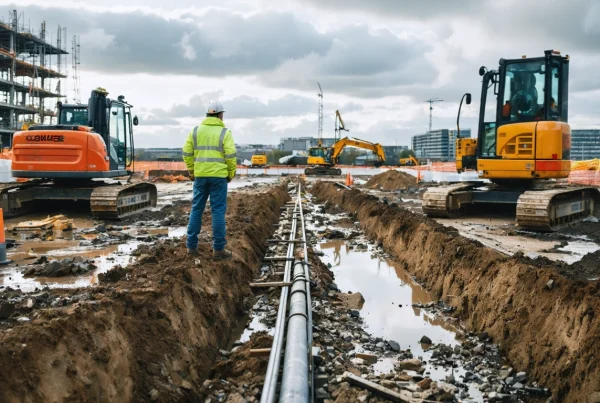
Utility coordination is one of the most important and challenging aspects of UK infrastructure delivery. Water mains, gas pipes, fibre cables, electricity ducts, sewers, and telecommunications routes often occupy the same corridors needed for new roads, bridges, public realm schemes, and development infrastructure. Civil engineers review records, commission surveys, assess diversion requirements, and work with statutory undertakers to reduce clashes and disruption.
Access is another major constraint. Construction teams may need to bring heavy plant, large bridge beams, precast units, piling rigs, or earthmoving equipment into locations that were never designed for modern construction logistics.
On projects close to homes, schools, businesses, hospitals, heritage buildings, or operational transport routes, engineering decisions also need to reflect third party impacts. Noise, vibration, dust, settlement, temporary road closures, and changes to access can all affect whether a technically sound solution is acceptable in practice.
Supporting planning, consents, and regulatory approval
Infrastructure projects in the UK are shaped by a wide range of planning and consent requirements. Depending on the scheme, approvals may be needed for planning permission, environmental permits, flood risk activities, highway works, railway possessions, land drainage consent, listed structures, protected species, tree removal, traffic regulation orders, and works affecting watercourses.
This evidence may include flood risk assessments, drainage strategies, transport assessments, earthworks strategies, construction methodology, structural calculations, highway design drawings, utilities reports, temporary works information, and buildability assessments.
Flood risk, drainage, and water management
Water management is a central part of civil engineering on UK infrastructure schemes. Increased rainfall intensity, ageing drainage networks, urban development pressure, and stricter environmental expectations mean that surface water can no longer be treated as a simple pipework problem.
Typical measures include attenuation basins, swales, permeable paving, filter drains, flow controls, culverts, pumping stations, outfall structures, and sustainable drainage systems. On highways and public realm projects, engineers need to balance drainage performance with safety, accessibility, landscape design, utilities, and maintenance.
Good drainage design can make the difference between infrastructure that performs reliably during extreme weather and infrastructure that becomes a source of disruption. Civil engineers therefore consider not only normal operation, but also blockages, future development, and how systems will be inspected and cleaned over time.
Reducing carbon and improving environmental outcomes
Infrastructure has a significant carbon footprint, especially through concrete, steel, asphalt, earthworks, transport of materials, and construction plant. Civil engineers play a key role in reducing both embodied carbon and operational carbon.
On modern projects, engineers may compare lower carbon concrete mixes, recycled aggregates, cement replacement products, modular construction, reuse of excavated material, leaner structural forms, reduced excavation, and designs that extend asset life.
Designing with nature and biodiversity in mind
Civil engineering is increasingly linked with nature based solutions and biodiversity improvement. Flood schemes may include restored river corridors, wetlands, flood storage areas, and naturalised banks.
This does not remove the need for robust engineering. Instead, it requires engineers to combine hydraulic, geotechnical, structural, and maintenance knowledge with ecological and landscape objectives.
Environmental design also affects construction planning. Civil engineers may need to account for protected species, seasonal working restrictions, water quality controls, noise limits, dust suppression, tree protection zones, and pollution prevention.
Using digital tools to improve design and delivery
Digital engineering has become a standard part of many UK infrastructure projects. Civil engineers use modelling, data management, geographic information systems, building information modelling, digital terrain models, clash detection, and common data environments to improve coordination and decision making.
Three dimensional models can show how roads, drainage, structures, utilities, earthworks, lighting, signs, barriers, and landscape features fit together. They can reveal clashes that might be difficult to identify on separate drawings.
From survey data to digital twins
Accurate survey information is the foundation of good digital design. Civil engineers use topographical surveys, utility surveys, ground investigation data, drainage CCTV, LiDAR, photogrammetry, monitoring data, and asset records to build a reliable understanding of existing conditions.
For some major assets, digital information continues beyond construction into operation. A digital twin or structured asset information model can help owners manage inspections, maintenance, renewals, performance monitoring, and future upgrades.
Digital tools do not replace engineering judgement. They improve visibility, coordination, and analysis, but civil engineers still need to test assumptions, verify data quality, understand standards, and recognise when a model does not reflect what is happening on site.
Planning construction methods and temporary works
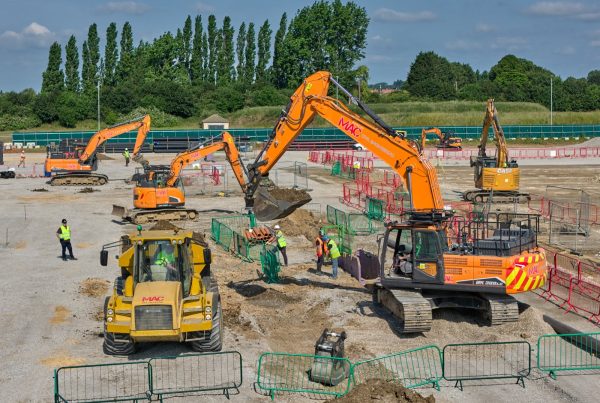
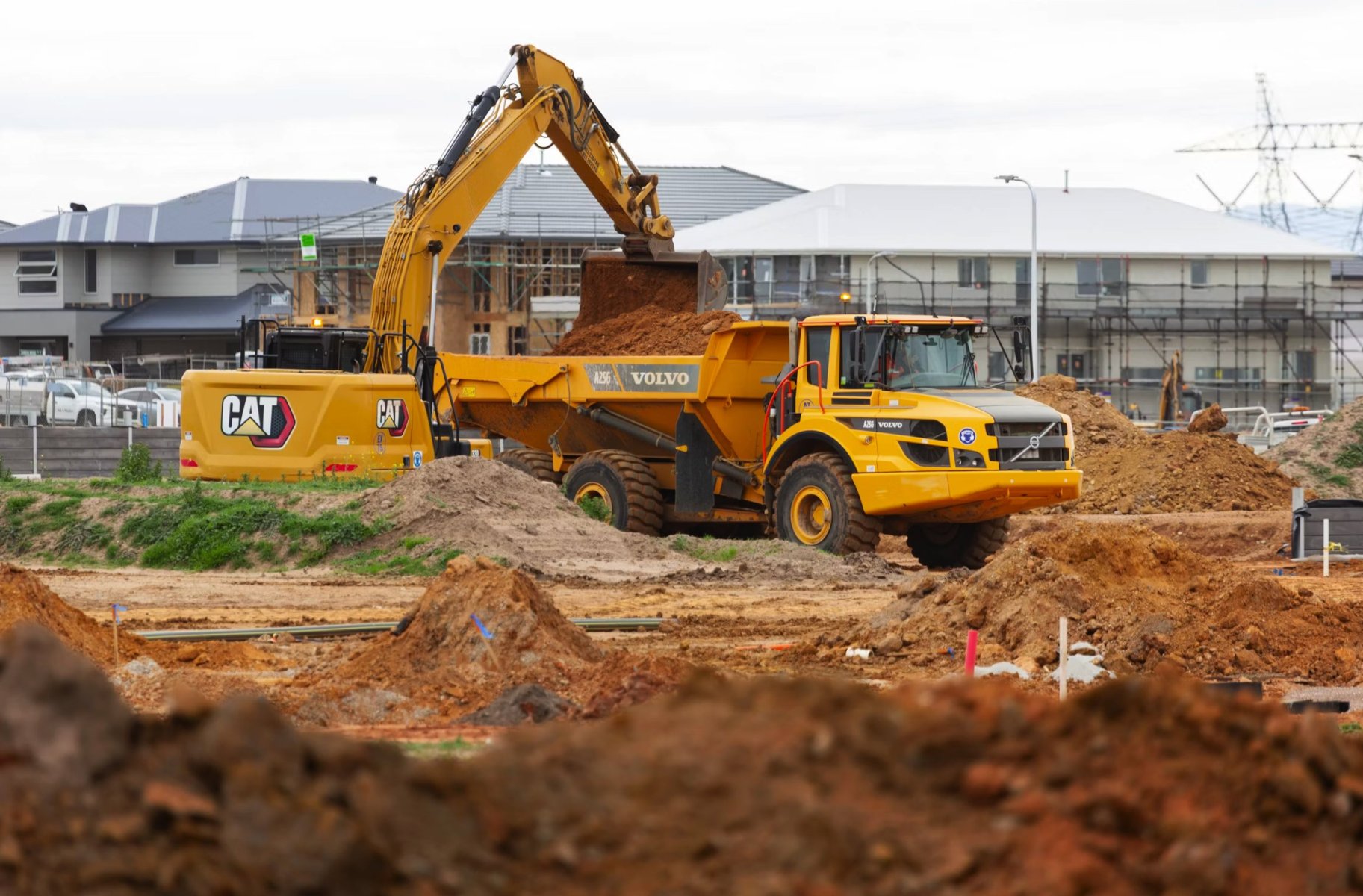
Civil engineers are closely involved in how infrastructure is built, not just what the finished asset looks like. Construction methodology affects safety, cost, programme, quality, carbon, disruption, and risk.
Buildability reviews help identify practical construction issues before work starts. Engineers consider excavation support, temporary drainage, working platforms, crane positions, traffic management, material storage, sequencing, lifting operations, temporary bridges, temporary retaining structures, and protection of existing assets.
Temporary works and construction safety
Temporary works are the engineered solutions needed to support construction before the permanent asset is complete. They can include excavation supports, scaffolding foundations, formwork, falsework, cofferdams, temporary propping, working platforms, haul roads, lifting beams, and temporary traffic arrangements.
Civil engineers help make sure temporary works are compatible with the permanent design and the realities of the site. They consider ground bearing capacity, surcharge loads, groundwater, adjacent buildings, buried services, construction plant movements, weather exposure, and safe access for inspection.
Maintaining quality during construction
Once work begins on site, civil engineers support quality control, technical assurance, and problem solving. They review contractor proposals, respond to technical queries, inspect works, assess materials, check setting out information, and confirm that construction aligns with the approved design.
Quality management on infrastructure projects covers much more than the visible finished surface. It includes compaction of earthworks, reinforcement placement, concrete testing, drainage gradients, waterproofing, pavement layers, weld inspections, bearing installation, tolerances, material certification, and as built records.
Responding to site discoveries and change
Even with strong surveys and planning, infrastructure sites often reveal surprises. A buried culvert may be in a different location than records suggest. Ground conditions may vary across short distances.
This requires both technical knowledge and clear communication. Changes need to be assessed, recorded, approved, and coordinated with the wider team. A small alteration to a foundation, drainage run, kerb line, or retaining wall can affect utilities, land take, maintenance access, safety barriers, environmental commitments, or future inspection requirements.