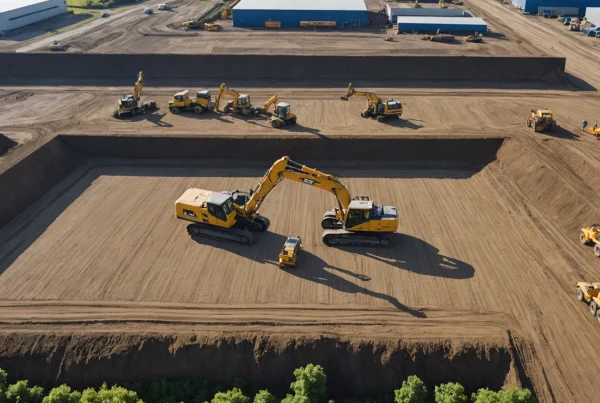
Enabling works are often treated as the preliminary stage before the “real” construction begins. In practice, they can be among the most complex and risk-sensitive activities on a project. Site clearance, demolition, utility diversions, temporary access, earthworks and ground remediation all influence how safely and efficiently the main works can proceed.
Early Contractor Involvement, commonly known as ECI, brings practical construction expertise into the planning and design process before work starts on site. For enabling works, this early collaboration can expose hidden risks, improve buildability and give the project team a more realistic understanding of cost, programme and resource requirements.
Finding site risks before they become site problems
Every enabling works package begins with uncertainty. Existing records may be incomplete, buried services may not follow the routes shown on drawings and previous land uses can leave behind contaminated soil, redundant structures or unexploded obstructions. If these conditions are discovered after mobilisation, the project may face delays, redesign, additional costs and avoidable safety risks.
Early contractor input helps the project team test assumptions before they are built into the programme. Contractors can review surveys, utility information, ground investigation results and proposed work sequences from a delivery perspective. This does not replace the role of designers or specialist consultants. Instead, it adds practical insight from people who understand how plant, operatives, temporary works and logistics interact on a live site.
Improving the quality of pre-construction investigations
An experienced enabling works contractor can help identify where further investigation is justified. For example, additional trial holes may be recommended around congested utility corridors, while targeted ground investigation could clarify the extent of made ground or contamination. Early sampling can also support more accurate waste classification, reducing the likelihood of excavated material being unexpectedly rejected by a disposal facility.
This targeted approach is usually more valuable than commissioning surveys simply to satisfy a checklist. The objective is to collect information that supports safe decisions. Better data allows hazards to be designed out where possible and gives the delivery team time to develop suitable control measures where risks cannot be eliminated.
Planning around existing services and neighbouring operations
Utility strikes remain a serious concern during excavation, demolition and earthworks. ECI allows service detection, isolation requirements and diversion strategies to be considered alongside the proposed construction sequence. It can also highlight whether temporary supplies will be needed to maintain neighbouring buildings or ongoing site operations.
The same principle applies to boundaries, public access, nearby businesses and other contractors. Early discussions can establish safe exclusion zones, delivery routes and working hours before these constraints begin to affect productivity. This creates a safer environment without relying on rushed changes once machinery and labour are already on site.
Turning the design into a workable construction sequence
A technically compliant design is not automatically an efficient design. Enabling works must be delivered in a sequence that provides safe access, maintains stability and creates suitable conditions for later trades. When contractor knowledge is introduced early, the team can examine how the proposed design will actually be built, including the plant required, the space available and the interfaces between different activities.
This buildability review can reveal opportunities to simplify operations or remove unnecessary handling. Materials may be processed and reused on site rather than transported away and replaced. Temporary haul roads can be positioned to support both the enabling package and the main construction phase. Demolition, remediation and bulk excavation can also be coordinated to avoid repeatedly opening and closing the same work areas.
Developing safer temporary works and access arrangements
Temporary works are fundamental to many enabling projects, even when they are not obvious in the finished development. Excavation support, working platforms, temporary drainage, hoardings and traffic routes all need to perform safely under real site conditions.
Contractors can assess whether proposed working areas provide enough room for lifting operations, piling rigs, excavators and delivery vehicles. They can also consider ground bearing capacity, vehicle turning movements and segregation between pedestrians and plant.
Creating a more reliable programme and cost plan
Enabling works programmes can appear straightforward until site constraints are translated into actual activities. A single line for demolition or earthworks may conceal surveys, permits, isolations, temporary works, material testing, waste acceptance procedures and hold points.
This level of detail gives the wider project team greater confidence in key dates. It can identify long lead items, dependencies and decisions that must be resolved before mobilisation.
Testing productivity assumptions against site conditions
Production rates depend on more than the capacity of a machine. Restricted access, unsuitable ground, limited storage space and working hour constraints can all reduce output.
For example, excavation may be expected to progress quickly based on the volume of material alone. In reality, each load might require inspection, classification and routing to a specific stockpile or disposal destination.

Improving cost certainty without hiding risk
Early contractor input can produce a more informed cost plan by connecting quantities and rates with a credible method of construction. Plant selection, disposal routes, temporary works, supervision and testing can be priced against the proposed sequence rather than treated as loosely defined allowances.
This does not mean every risk can be priced with complete certainty. Ground conditions and existing infrastructure will always retain some uncertainty. The benefit of ECI is that assumptions can be stated clearly, risk ownership can be discussed and provisional allowances can be based on evidence.
Reducing disruption at project interfaces
Enabling works rarely take place in isolation. They may overlap with utility companies, demolition specialists, remediation consultants, piling teams, structural contractors and neighbouring occupiers. Poorly managed interfaces create gaps in responsibility, duplicated work and unsafe conditions.
ECI gives the team an opportunity to define these interfaces before the site becomes busy. Responsibilities for isolations, temporary drainage, survey control, testing, access maintenance and handover information can be agreed in advance.
Planning handovers between enabling and main works
A useful handover requires more than a cleared site. The main works contractor may need confirmed formation levels, validated remediation areas, certified working platforms, accurate records of diverted services and evidence that temporary drainage is functioning correctly.
By consulting downstream contractors during the ECI period, the enabling package can be designed around these requirements. Acceptance criteria can be agreed before work starts, reducing disputes about whether an area is ready.
Coordinating specialist contractors and statutory bodies
Some activities depend on organisations whose timescales are not controlled by the principal contractor. Utility disconnections, highway approvals, environmental permits and specialist clearance work can become critical programme constraints.
The enabling contractor can also help establish a sensible order for specialist activities. Vegetation clearance may need to follow ecological checks, demolition may depend on confirmed isolations and contaminated material may require characterisation before excavation.
Using resources and materials more efficiently
Enabling works can involve significant quantities of soil, stone, concrete and demolition material. If these resources are treated as waste by default, the project may incur unnecessary haulage, disposal and replacement costs.
Designing for material reuse
A contractor can assess likely material streams and identify where processing, segregation or testing could make reuse possible. Crushed concrete may be suitable for temporary roads or engineered fill, while excavated soils may be reused in landscaping or level adjustments if they meet the relevant geotechnical and environmental criteria.
Reuse must be supported by an appropriate materials management process. Stockpiles need suitable locations, material movements must be recorded and testing must demonstrate that the material is suitable for its intended purpose.
Reducing unnecessary plant movements and double handling
Site efficiency often depends on small logistical decisions. Poorly positioned stockpiles can require material to be moved several times. Temporary access built without considering later phases may need to be removed and reconstructed.
Reviewing logistics early helps minimise these inefficiencies. The project can establish one-way traffic systems where space permits, position processing equipment close to material sources and create stockpile areas that do not obstruct future work.
Strengthening health and safety planning
ECI improves safety most effectively when it influences the construction strategy, not simply the paperwork. Risk assessments and method statements remain important, but they are stronger when the design, sequence and site setup have already reduced exposure to hazards.
Early collaboration enables designers and contractors to apply the hierarchy of control more effectively. An excavation might be redesigned to reduce depth, a service could be diverted before bulk earthworks or a structure could be demolished mechanically rather than requiring operatives to work in a high-risk area.
Allowing enough time for competent planning
Rushed mobilisation encourages temporary solutions and reactive decision-making. By contrast, ECI gives temporary works coordinators, lifting specialists, environmental advisers and site managers time to review the proposed methods.
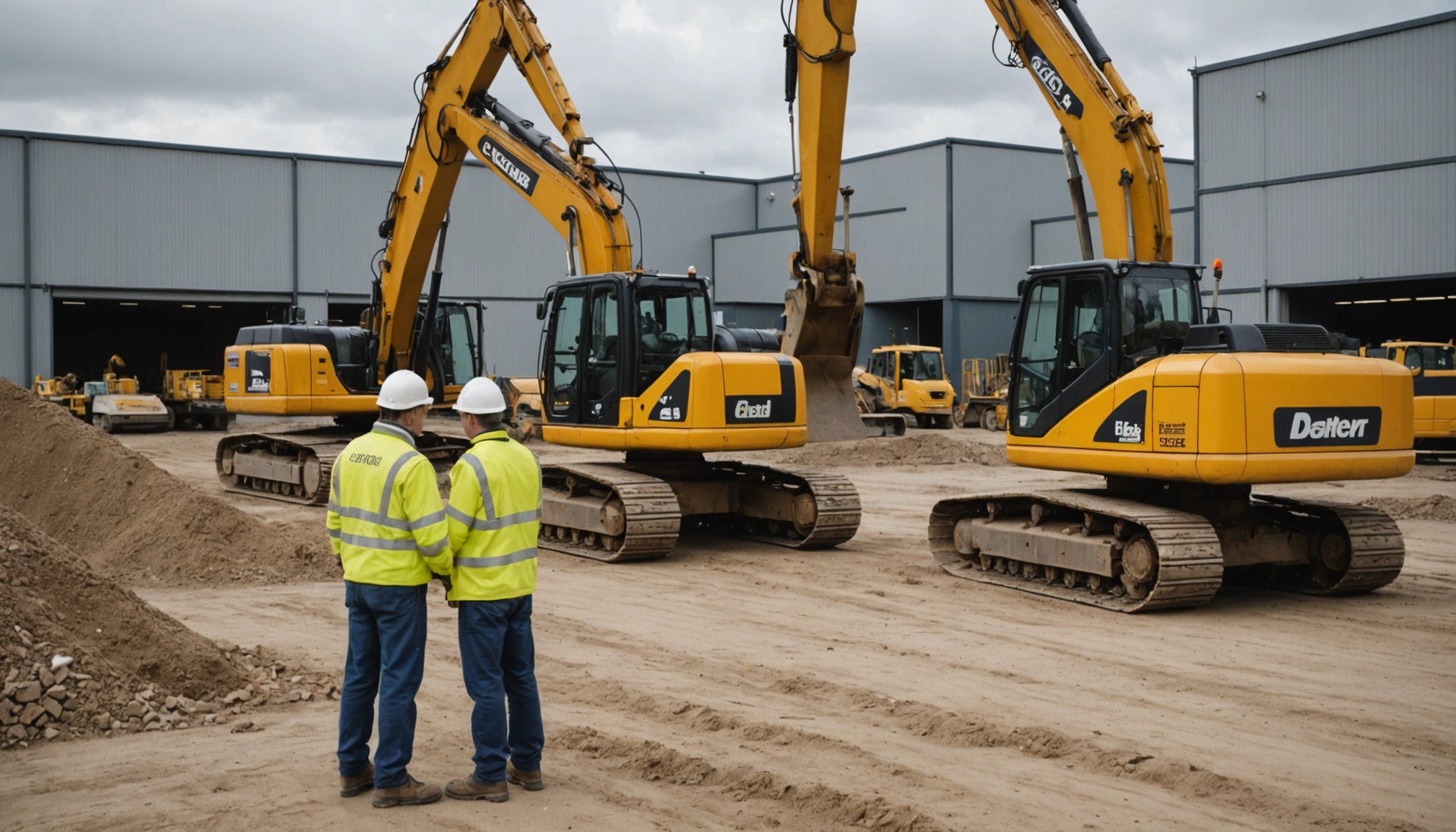
This preparation is particularly valuable where several hazards overlap. A deep excavation close to live services and a public boundary, for example, requires coordinated decisions about support systems, plant positioning, exclusion zones, monitoring and emergency arrangements.
Making residual risks visible to the workforce
Early involvement also improves the quality of information passed to supervisors and operatives. Known hazards can be incorporated into drawings, sequencing plans, inductions and task briefings.
Clear information does not remove the need for site vigilance. Conditions can change, and enabling works frequently uncover features that were not anticipated. However, a team that begins with a well-developed plan is better placed to recognise a genuine change and respond appropriately.
Maintaining flexibility when conditions change
Even thorough investigation cannot expose every underground obstruction or historical feature. The purpose of ECI is not to pretend uncertainty has disappeared. It is to create a delivery strategy that can respond to new information without losing control of safety, cost or programme.
Alternative methods can be explored during pre-construction so that the team understands its options. Contingency areas may be identified for temporary stockpiling, different disposal routes can be assessed and suitable standby plant can be considered.
Establishing clear decision points
Enabling packages often benefit from planned hold points. Work may pause after trial excavations, material testing or demolition surveys so that the next stage can be confirmed.
Decision points should identify who reviews the information, who has authority to approve the next step and what evidence is required. This avoids uncertainty when conditions differ from the design and helps the team distinguish between a manageable site adjustment and a change requiring wider technical input.
What effective ECI looks like in practice
ECI delivers value when it is a structured process rather than an informal request for a contractor to comment on completed proposals. The contractor needs access to relevant surveys, design information, constraints and project objectives.
A productive ECI process commonly includes site visits, design reviews, logistics workshops, risk meetings and programme development. The outputs should be recorded and assigned to named parties, with decisions reflected in updated drawings, specifications and commercial documents.
Involve the right people at the right time
The contractor’s contribution should come from people with direct knowledge of the proposed activities. Estimators can advise on cost, but delivery managers, engineers, temporary works specialists and site supervisors often identify different risks.
Involvement should also be proportionate to the project’s risks. A constrained brownfield site may require specialist input much earlier than a straightforward greenfield development. The important point is to secure relevant expertise while design and procurement decisions can still be influenced.
Turn recommendations into agreed actions
ECI workshops only create value when recommendations lead to decisions. Actions should identify required surveys, design changes, responsible parties and completion dates. Any assumptions that remain unresolved must be visible within the programme, cost plan and risk register.
The resulting construction strategy should then align with the tender documents and final scope. Otherwise, useful planning can be lost during procurement, leaving the delivery team to revisit decisions after mobilisation.
Choosing ECI for enabling works
Early Contractor Involvement is particularly valuable where projects involve uncertain ground conditions, live utilities, restricted access, demolition, contamination or complex stakeholder requirements. It can also support phased developments where enabling activities must accommodate future construction sequences.
The greatest benefit is better decision-making. Practical delivery knowledge reaches the project team before key assumptions become fixed, allowing hazards to be reduced, logistics to be improved and resources to be planned realistically.