Commercial paving has to cope with far more than passing vehicles.
Heavy goods traffic, delivery manoeuvres, fuel spills, standing water and changing weather conditions all place paved surfaces under constant pressure. Without planned maintenance, small defects can quickly develop into potholes, uneven areas and structural failures that are more disruptive and expensive to repair.
A proactive approach helps facilities managers, landlords and business owners protect their investment while keeping car parks, access roads, loading bays and pedestrian areas safe and presentable. The key is to understand how damage begins, then intervene before it reaches the deeper layers of the pavement.
Why Commercial Paved Surfaces Deteriorate
Most paving failures are caused by a combination of traffic loading, water penetration and gradual material fatigue. Commercial sites often experience concentrated vehicle movements in predictable locations, such as entrances, turning areas and loading zones. These sections may deteriorate faster than the rest of the surface, particularly if the original pavement design was not suitable for the weight or frequency of traffic using it.
Water is another major cause of damage. Cracks, failed joints and poor drainage allow moisture to enter the pavement structure, where it can weaken the sub-base and reduce its ability to support loads. During cold weather, trapped water can freeze and expand, widening existing cracks and loosening surrounding material. Repeated cycles of moisture, frost and vehicle pressure can turn a minor surface defect into a substantial repair.
Drainage Problems Should Not Be Ignored
Puddles that remain long after rainfall are more than an inconvenience. They can indicate blocked drainage channels, incorrect surface falls or localised settlement. Standing water increases the risk of surface deterioration and may create hazards for pedestrians, cyclists and drivers.
Regularly clearing gullies, channels and drainage outlets helps water leave the site as intended. Where ponding continues despite routine cleaning, the surface levels and drainage system should be assessed professionally. Correcting the underlying cause is usually more effective than repeatedly patching the same damaged area.
Build Maintenance Around Routine Inspections
Commercial paving should be inspected regularly rather than only after visible failure occurs. A simple inspection programme makes it easier to identify early signs of distress, including fine cracks, loose blocks, fretting edges, sunken sections, oil contamination and damaged kerbs. Inspections are particularly valuable after winter, prolonged heavy rain or changes in site use.
The frequency of checks should reflect the demands placed on the surface. A lightly used office car park may require less frequent attention than a distribution yard serving heavy goods vehicles throughout the day. Keeping dated records and photographs helps site managers monitor whether defects are stable or worsening, supporting better decisions about repair priorities and budgets.
Prioritise Defects by Risk and Severity
Not every defect requires the same response. Damage affecting pedestrian routes, accessible parking bays, loading areas or busy vehicle entrances should generally receive early attention because it presents a greater operational and safety risk. Depressions, rocking paving units and potholes can also expose a business to avoidable complaints, vehicle damage and potential liability.
Minor cracking and joint loss may initially appear cosmetic, but they often provide a route for water to enter the pavement structure. Prompt crack sealing, joint reinstatement and localised repairs can limit further deterioration. Repairs should use compatible materials and address the cause of the defect, rather than simply covering the visible symptoms.
Use the Right Maintenance Method for Each Surface
Maintenance needs vary according to the paving material, its construction and the type of traffic using it. Applying a generic treatment without checking compatibility can waste money and, in some cases, make the problem worse. Before work begins, contractors should confirm whether the surface is asphalt, concrete, block paving or another system, then assess the condition of the underlying layers.
Asphalt Surfacing
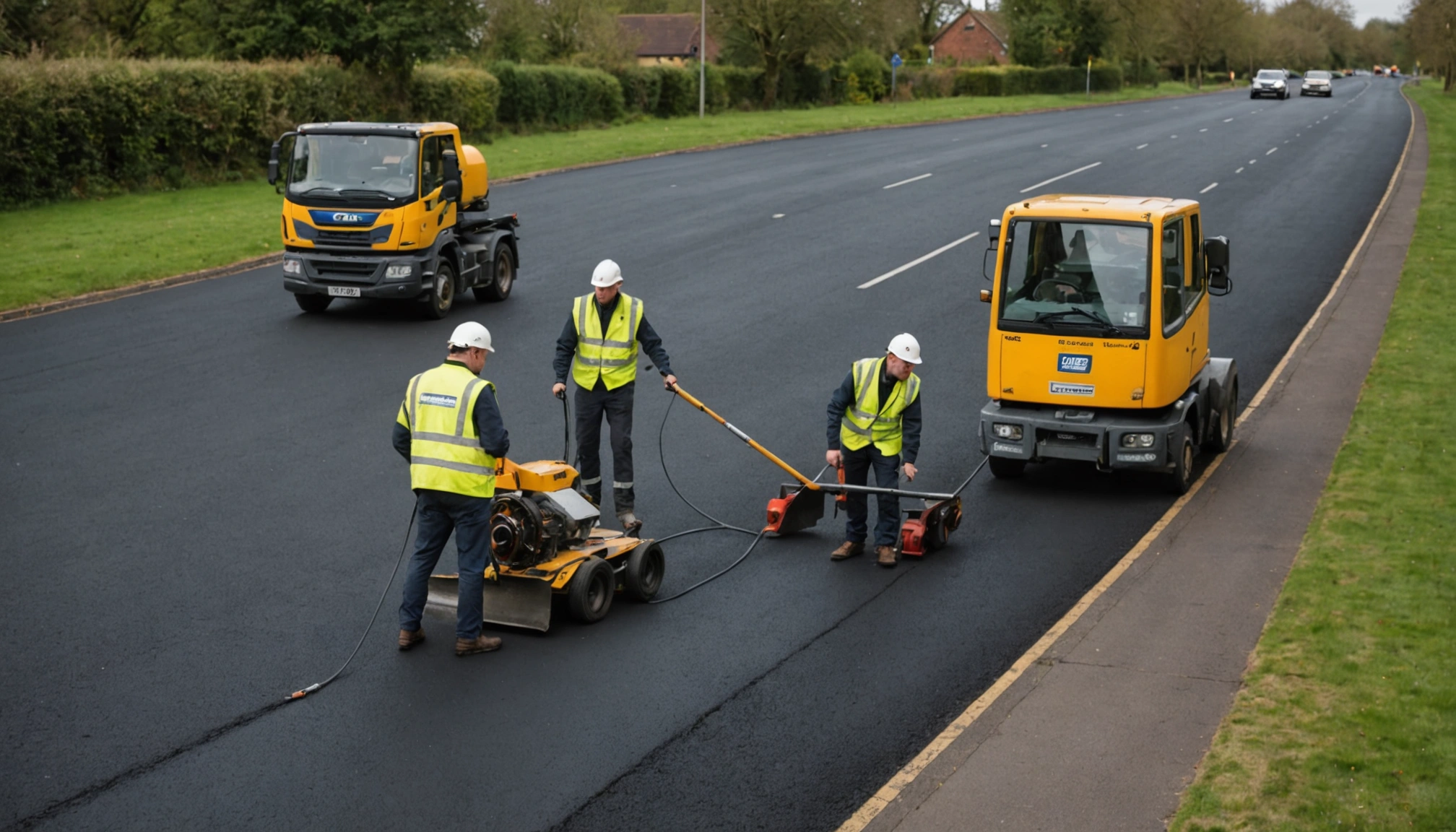
Asphalt often shows early deterioration through cracking, fretting and the loss of surface aggregate. Fine cracks should be cleaned and sealed before water can reach the lower pavement layers. Larger interconnected cracks may indicate movement or weakness in the base, so sealing alone is unlikely to provide a lasting solution.
Small potholes and isolated failures can usually be cut out and repaired locally. The damaged material should be removed to a sound edge, the exposed area cleaned and the replacement asphalt properly compacted. Simply placing material into an untreated hole tends to produce a short-lived repair, particularly in busy turning areas.
Where the surface is worn but the pavement remains structurally sound, resurfacing may extend its useful life without requiring full reconstruction. An appropriate surface course can restore texture, appearance and weather resistance, although drainage levels, kerb heights and access thresholds must be considered before additional material is laid.
Concrete Pavements
Concrete is durable, but it depends heavily on well-maintained joints and adequate support. Failed joint sealant allows water and debris to enter, restricting movement and increasing stress along slab edges. Damaged sealant should be removed and replaced with a suitable flexible product after the joint has been thoroughly prepared.
Cracked or rocking slabs may indicate sub-base erosion, poor load transfer or repeated loading beyond the original design capacity. Local repairs can be effective where damage is limited, but widespread movement often requires more substantial investigation. Surface spalling should also be addressed before it exposes reinforcement or develops into a deeper defect.
Block Paving
Block paving relies on edge restraints, jointing sand and a stable laying course to distribute loads correctly. Missing jointing sand allows individual blocks to move, while damaged kerbs or edging can cause the paved area to spread. Regular replenishment of kiln-dried jointing sand can help preserve interlock after cleaning or periods of heavy use.
Sunken or uneven blocks should be lifted so the bedding layer and underlying cause can be examined. Re-levelling the visible surface without correcting poor drainage, sub-base settlement or vehicle overloading is unlikely to last. One advantage of block paving is that individual units can often be reused if they remain undamaged.
Keep the Surface Clean Without Damaging It
Routine sweeping removes grit, broken aggregate, leaves and other debris that can obstruct drainage or accelerate surface wear. Loading bays and service yards may need more frequent cleaning because packaging waste, pallet fragments and vehicle deposits tend to accumulate quickly.
Oil, diesel and chemical spills should be contained and treated promptly. Hydrocarbons can soften some asphalt binders, leaving the surface vulnerable to deformation and aggregate loss. Sites where spills are likely should keep suitable absorbent materials available and establish a clear reporting and clean-up procedure.
Pressure washing can improve the appearance of concrete and block paving, but excessive pressure may remove jointing sand, damage sealants or disturb weakened surfaces. Equipment settings and cleaning products should be appropriate for the paving material. Any displaced jointing material should be reinstated once the area has dried.
Control Weeds at the Source
Weeds in paving joints are frequently treated as an isolated appearance problem. In practice, growth usually becomes established where soil, organic matter and moisture have collected. Removing this material and restoring the joints is more effective than repeatedly cutting off visible growth.
Tree roots also require careful management. Roots can lift paving, distort kerbs and interfere with drainage, but indiscriminate root removal may damage or destabilise the tree. Where established trees are affecting commercial paving, advice should be obtained from an appropriate tree specialist before excavation or reconstruction begins.
Reduce Avoidable Damage from Site Operations
Some deterioration can be prevented by changing how a site is used. Heavy vehicles should follow designated routes designed to carry their weight, rather than cutting across pedestrian paving or lightly constructed parking areas. Delivery drivers should also be discouraged from making tight stationary turns, which place significant shear forces on asphalt and block paving.
Loading practices matter as well. Trailer legs, skips, storage containers and access equipment can apply concentrated loads that exceed those created by vehicle tyres. Protective pads or purpose-built hardstanding can spread these loads and reduce indentation, cracking and local settlement.
Businesses should review paved areas whenever site operations change. An office car park converted into a delivery zone, for example, may not have sufficient pavement depth for regular heavy goods traffic. Strengthening the area before intensive use begins is usually less disruptive than repairing repeated failures later.
Protect Edges, Kerbs and Service Covers
Pavement edges are particularly vulnerable where vehicles regularly overrun kerbs or verges. Once edge support is lost, cracking and surface break-up can spread inwards. Clear road markings, bollards, wheel stops or revised traffic routes may be needed where driver behaviour is contributing to recurring damage.
Inspection chambers, drainage covers and service boxes should sit securely and close to the surrounding surface level. Loose covers, failed frames and deteriorated reinstatement material can create impact loads and trip hazards. Repairs must account for expected traffic loads and preserve safe access to the underground service.
Plan Maintenance Around the Seasons
Timing affects both the quality and cost of paving work. Spring is a useful time to inspect for frost damage, clear drainage assets and arrange repairs before defects worsen. Summer conditions may be more suitable for certain sealing, jointing and resurfacing products, although manufacturer requirements should always be followed.
Autumn maintenance should focus on clearing leaves, checking gullies and sealing routes through which water could enter. Before winter, high-risk potholes, loose units and damaged edges should be repaired wherever practical. Emergency work during freezing or persistently wet weather may offer fewer treatment options and can be more difficult to complete effectively.
Winter inspections remain important, particularly after snow clearance or gritting. Mechanical snowploughs can catch raised blocks, covers and kerbs, while some de-icing products may affect particular concrete finishes or surrounding landscaping. Site teams should use suitable equipment and follow the paving supplier’s care guidance.
Know When Patching Is No Longer Cost-Effective
Local repairs make sense when damage is isolated and the surrounding pavement remains stable. They become less economical when defects repeatedly return, cover a large proportion of the area or result from widespread sub-base failure. A surface filled with overlapping patches can also become uncomfortable to drive over and difficult to drain properly.
Warning signs of deeper structural trouble include extensive interconnected cracking, pronounced wheel-path rutting, repeated settlement and movement across multiple slabs or blocks. In these cases, a condition survey can establish the depth and extent of deterioration.
Reconstruction does not always mean replacing an entire car park or yard. Phased work can target the most heavily loaded areas first, such as entrances, loading bays and turning circles.
Coordinate Repairs with Other Planned Works
Before resurfacing or reconstructing an area, check whether drainage improvements, utility works, lighting upgrades or electric vehicle charging installations are planned. Cutting through newly completed paving shortly afterwards is expensive and can introduce weak points into the surface.
Coordination also helps businesses plan access, temporary traffic routes and working hours. Commercial paving work often needs to take place while the premises remain operational, so phasing should account for deliveries, emergency access, pedestrian movement and the curing or cooling time required before reopening.
Create a Practical Long-Term Maintenance Plan
A useful maintenance plan should identify each paved area, its construction where known, its principal use and the person responsible for inspections. It should also set out routine tasks, expected frequencies and clear thresholds for escalation.
Budgets should include preventative work rather than reserving all funds for emergencies. Crack sealing, drainage cleaning, joint maintenance and small permanent repairs usually cost less than major reconstruction caused by years of water ingress and neglect.
Accurate records support better long-term decisions. Inspection reports, photographs, repair details and product information provide evidence of how the pavement is performing. They also help identify recurring defects, compare contractor performance and forecast when resurfacing or replacement is likely to become necessary.
Protecting Performance, Safety and Appearance
Extending the life of commercial paving is not about carrying out one treatment and assuming the problem is solved. It requires regular inspection, effective drainage, timely repairs and sensible control of traffic and site operations.
Sites that act early generally experience fewer emergency repairs, less operational disruption and more predictable maintenance costs. A well-maintained paved area also creates a safer, more professional environment for employees, visitors, customers and delivery teams.