Site clearance and demolition are often the most visible parts of enabling works, but removing vegetation, structures, and surface obstructions does not automatically create a construction ready site. Before permanent works can begin safely, the project team must understand ground conditions, control environmental risks, manage existing utilities, and establish reliable access and temporary infrastructure.
Effective enabling works transform an uncertain site into a controlled working environment. This process can affect programme certainty, construction costs, safety performance, regulatory compliance, and the design of the permanent works.
What Enabling Works Actually Include
Enabling works are the coordinated activities required to prepare a site for the main construction phase. Their scope varies according to the site, project type, planning conditions, and construction strategy. On a simple development, the package may focus on access, utility isolation, and ground preparation. On a complex brownfield site, it can involve extensive surveys, remediation, temporary works, service diversions, and specialist environmental controls.
Site clearance removes items such as vegetation, waste, redundant fencing, hardstanding, and minor obstructions. Demolition deals with existing buildings and structures that cannot remain. These activities create physical space, but they do not necessarily resolve the hidden constraints below ground or the operational requirements needed to support construction.
Investigations and surveys
Reliable site information is central to an effective enabling strategy. Topographical surveys establish levels, boundaries, features, and access constraints, while geotechnical investigations provide information about soil strength, groundwater, made ground, and foundation conditions. Environmental investigations may identify asbestos, hydrocarbons, heavy metals, invasive species, or other hazards that require controlled treatment.
Utility surveys are equally important because drawings alone may not accurately represent the location, depth, condition, or status of buried services. Detection surveys, trial holes, and service tracing help confirm where utilities are located before excavation begins. This evidence allows designers and contractors to plan diversions, protection measures, and safe working zones.
Access, logistics, and temporary infrastructure
A cleared site still needs safe and dependable routes for workers, delivery vehicles, lifting equipment, and emergency services. Enabling works may therefore include haul roads, wheel washing facilities, traffic controls, temporary drainage, security fencing, lighting, welfare facilities, and construction compounds. These elements support daily operations and reduce disruption to neighbouring roads, properties, and businesses.
Temporary power, water, communications, and fire safety provisions must also be planned early. If these systems are treated as late additions, they can constrain productivity or lead to repeated temporary installations. A coordinated layout helps prevent conflicts between logistics areas, excavations, cranes, material storage, and future permanent works.
Hidden Ground Risks Can Control the Programme
Once buildings and surface features have been removed, buried constraints often become the main source of uncertainty. Old foundations, basements, tanks, drainage runs, tunnels, undocumented services, and contaminated made ground can all affect excavation and foundation activities. Discovering these features during the main construction phase may require redesign, additional permits, specialist disposal, or unplanned temporary works.
Early investigation does not eliminate every unknown, but it allows the project team to assess risk and develop proportionate responses. Intrusive surveys, targeted excavations, groundwater monitoring, and laboratory testing can clarify the extent of a problem before it affects critical construction activities. The findings can then inform design decisions, tender allowances, sequencing, and risk ownership.
Contamination and remediation
Contaminated land requires more than the removal of visibly affected soil. The project team must understand the source of contamination, the routes through which it can move, and the people, structures, or environmental receptors that could be affected. Remediation might involve excavation and disposal, soil treatment, capping layers, groundwater controls, gas protection systems, or a combination of measures.
Remediation must also be integrated with earthworks and materials management. Suitable excavated material may be reused where testing and regulatory requirements allow, reducing disposal volumes and imported fill. Clear classification, segregation, tracking, and verification procedures are essential to prevent cross contamination and demonstrate that the prepared site meets the required standard.
Groundwater and temporary drainage
Groundwater conditions can influence excavation stability, contamination movement, plant access, and the performance of temporary haul roads. Surface water can create additional problems by flooding work areas, softening exposed soils, and carrying sediment beyond the site boundary. These risks require planned controls rather than reactive pumping after water has already disrupted the works.
A suitable strategy may include cut off drains, settlement systems, temporary attenuation, sump pumping, filtration, or dewatering. Discharge routes and water quality requirements should be confirmed before these systems are needed. By addressing groundwater and drainage during enabling works, the project can create safer excavations and more dependable conditions for the main civil engineering activities.
Utilities Require More Than Disconnection
Existing utilities can remain live, redundant, privately owned, or poorly recorded after site clearance and demolition. A cable, pipe, or duct shown as abandoned should not be treated as safe until its status has been verified. Unconfirmed services can expose workers to electrocution, gas release, flooding, contamination, communication outages, and disruption to neighbouring properties.
A robust utility strategy identifies each service, confirms ownership and operational status, and defines whether it will be retained, protected, diverted, disconnected, or removed. This process requires coordination with utility providers, asset owners, designers, contractors, and affected occupiers. Applications, approvals, outages, and physical diversion works can take considerable time, so they should be addressed early in the programme.

Isolation and verification
Utility isolation should follow a controlled process supported by records, permits, physical identification, and testing. Where possible, isolation points should be locked, labelled, and protected against accidental reconnection.
Verification is particularly important on former industrial sites, hospitals, transport facilities, and occupied developments where multiple networks may cross the work area. Trial holes can confirm service depth and alignment, but they must be excavated using safe techniques and based on current survey information.
Protection and temporary supplies
Not every service can be removed. Utilities that supply adjacent buildings or operational facilities may need temporary support, bridging, protection slabs, barriers, or exclusion zones.
Temporary supplies also need sufficient capacity and resilience for the planned construction methods. Crane operations, dewatering systems, welfare facilities, lighting, testing equipment, and specialist plant can create significant demand.
Temporary Works Shape the Safety of the Site
Enabling packages often include temporary structures and systems that are essential to safe delivery. These may include excavation support, working platforms, retaining systems, façade retention, propping, access scaffolds, temporary bridges, crane bases, and support for retained utilities.
The temporary works strategy should reflect the sequence of demolition, excavation, remediation, and permanent construction. Removing an existing slab or wall can change how loads are distributed or how adjacent ground is retained.
Working platforms and plant stability
Heavy plant depends on properly designed and maintained working surfaces. Piling rigs, cranes, demolition excavators, and loaded dump trucks can impose high ground pressures, particularly near excavations, basements, buried structures, or areas of weak fill.
Working platform design should consider ground investigation data, plant loads, platform thickness, drainage, edge distances, and inspection requirements. The platform should be constructed from suitable material and protected from deterioration caused by weather, trafficking, or excavation.
Retained structures and neighbouring assets
Demolition frequently takes place close to party walls, roads, railways, buried infrastructure, waterways, or occupied buildings. Baseline condition surveys provide a record of existing defects and help establish appropriate monitoring measures.
Trigger levels should be linked to defined actions. A reading that exceeds an agreed threshold may require increased monitoring, a change in working method, installation of additional support, or suspension of work.
Earthworks Must Deliver an Engineered Platform
Clearing a site does not establish whether the remaining ground is suitable for roads, slabs, foundations, drainage, or landscaping. The enabling strategy should define the required formation levels and the geotechnical performance expected at handover.
A coordinated earthworks design can balance cut and fill volumes, reduce unnecessary material movements, and create suitable construction platforms. It should account for soil type, moisture sensitivity, bulking, compaction characteristics, contamination status, and seasonal weather.
Materials management and traceability
Excavated materials should be classified according to their engineering properties and environmental status. Separate stockpiles, clear labelling, controlled placement, and documented testing help prevent suitable material from being mixed with waste or contaminated soil.
Accurate records should show where material originated, how it was tested, whether it was treated, and where it was placed or disposed of. This traceability supports regulatory compliance and provides evidence that engineered fill has been constructed correctly.
Ground improvement and validation
Weak, compressible, or variable ground may require improvement before permanent construction. Possible methods include dynamic compaction, vibro treatment, soil mixing, grouting, stabilisation, surcharging, or replacement with engineered fill.
Ground treatment must be followed by appropriate validation. Testing may include plate load tests, density testing, probing, settlement monitoring, laboratory analysis, or installation records. Validation criteria should be agreed with the geotechnical designer before treatment starts so that unsuccessful areas can be identified and corrected promptly.
Environmental Controls Extend Beyond Contaminated Soil
Enabling works can generate dust, noise, vibration, mud, sediment, exhaust emissions, and construction traffic. They may also disturb protected species, nesting birds, invasive plants, archaeological remains, or sensitive watercourses.
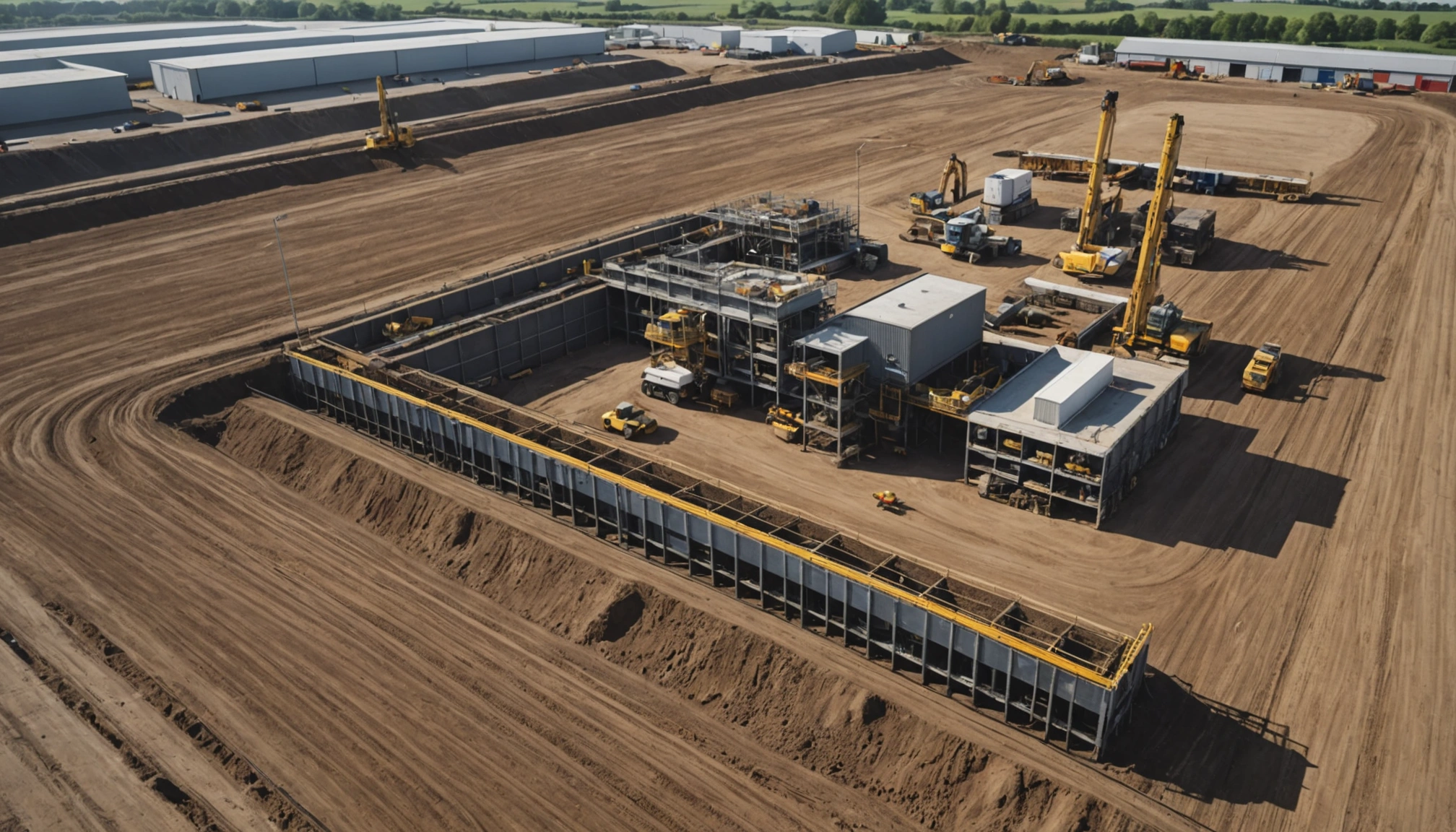
Environmental controls should be based on site specific risks and planning or permit requirements. Measures may include dust suppression, covered loads, wheel cleaning, road sweeping, noise barriers, low vibration techniques, water treatment, designated refuelling areas, and ecological exclusion zones.
Dust, noise, and vibration
Dust suppression should target the source and consider the type of material being handled. Water sprays can be effective for general demolition dust, but excessive water can create contaminated runoff or unstable working surfaces.
Noise and vibration assessments should consider receptors as well as equipment ratings. Nearby laboratories, hospitals, historic structures, residential buildings, and precision manufacturing facilities may be particularly sensitive.
Ecology and invasive species
Vegetation clearance may be restricted by ecological surveys, seasonal constraints, or licensing requirements. Trees to be retained need clearly defined protection zones that account for roots as well as trunks and canopies.
Invasive species require controlled identification, handling, transport, and disposal. Poorly planned clearance can spread contaminated soil or plant fragments across the site and create a larger management problem.
Sequencing Determines Whether Enabling Works Add Value
Enabling activities are closely connected, and performing them in the wrong order can cause rework. Demolishing a slab before completing surveys may remove safe access for investigation.
A coordinated sequence should show how surveys, isolation, demolition, remediation, earthworks, temporary drainage, utility works, and access construction interact. It should also identify hold points for inspections, testing, approvals, and design confirmation.
Information release and design interfaces
Enabling works often begin while the permanent design is still developing. This can accelerate the programme, but it also creates a risk that early work will conflict with later design decisions.
Design assumptions and responsibilities should be recorded clearly. Survey findings, remediation validation, utility diversions, and temporary works details must be transferred into the permanent works design.
Handover and acceptance criteria
A prepared site should be handed over against defined acceptance criteria rather than assumed to be ready because visible work is complete. Requirements may cover formation levels, bearing capacity, compaction, contamination status, drainage performance, utility clearances, access conditions, and temporary works certification.
The handover record should include survey data, test results, permits, waste documentation, service records, inspection reports, and details of residual risks. Accurate as-built information allows the main works contractor to plan safely and reduces the likelihood of repeating investigations.
Commercial Planning and Risk Allocation
Enabling works contain uncertainty that cannot always be priced reliably as fixed quantities. Contract documents should distinguish known scope from provisional or risk-based activities and establish how unexpected conditions will be assessed.
Clear measurement rules, rates, notification procedures, and decision timescales help the team respond efficiently. Early contractor involvement can also improve buildability, logistics planning, investigation design, and the selection of realistic construction methods.
Measuring success
The success of enabling works should be judged by the condition and certainty of the site delivered to the main works. Useful indicators include completed utility isolations, validated remediation, verified formation strength, approved temporary works, functioning drainage, safe access, and closed survey actions.
Site clearance and demolition create space, but comprehensive enabling works create confidence. By resolving hidden constraints, establishing controls, and documenting the prepared condition, the project team provides a safer and more predictable foundation for permanent construction.