Civil engineering has always depended on good information, but traditional inspections often provide only a snapshot of an asset at a particular moment. Smart sensors change that by continuously measuring how structures, ground conditions and construction activities behave over time.
When combined with real time monitoring systems, these devices can help engineers identify unusual movement, changing loads or environmental risks much earlier. I see this as a practical shift towards more informed decision making, safer sites and infrastructure that can be maintained according to its actual condition rather than assumptions.
From Periodic Inspections to Continuous Insight
Conventional inspections remain essential, but they are naturally limited by frequency, access and visibility. A bridge may appear sound during a scheduled visit while experiencing excessive vibration under particular traffic conditions.
Smart sensors allow engineers to build a more detailed picture by collecting measurements at regular intervals or continuously. Depending on the project, a monitoring system might record strain, displacement, vibration, temperature, moisture, pressure, tilt or groundwater levels.
The real value is not simply the volume of information collected. It lies in turning reliable data into useful engineering insight. A well designed system can establish normal behaviour, highlight meaningful changes and notify the relevant team when agreed thresholds are exceeded.
How Smart Monitoring Systems Work in Practice
A typical monitoring system includes sensors, a method of transmitting data and a software platform that presents the results. Sensors are installed at carefully selected locations, with readings sent through wired connections or wireless networks to a central dashboard.
Not every project requires constant measurement or an extensive sensor network. The correct approach depends on the engineering question being asked. Monitoring a retaining wall during nearby excavation, for example, may require frequent readings and rapid alerts, while observing the long term settlement of an embankment may call for a different sampling schedule.
Common Measurements Across Civil Engineering Projects
Structural monitoring often focuses on strain, deflection, vibration and cracking. These measurements can help teams understand how bridges, buildings, tunnels and temporary works respond to loads or changing site conditions.
Environmental sensors can also provide valuable context. Rainfall, temperature, humidity and water levels may influence structural or ground behaviour, so combining these readings can make patterns easier to interpret.
Why Sensor Placement and Data Quality Matter
Installing more devices does not automatically produce better monitoring. Sensors must be positioned where they can answer a defined engineering question, and their range, accuracy and durability must suit the site.
Data also needs appropriate validation and maintenance. Calibration, power supply, communications and physical damage can all affect readings. In my view, smart monitoring should support engineering judgement rather than replace it, with unusual results checked against site observations, design assumptions and other available evidence.
Where Real Time Monitoring Delivers the Most Value
Smart monitoring is particularly valuable where conditions can change quickly, access is difficult or the consequences of an unnoticed problem are significant. It gives project teams a way to observe critical behaviour between inspections and respond using current evidence rather than relying solely on predictions.
Bridges and Transport Infrastructure
On bridges, sensors can measure strain, acceleration, displacement, temperature and traffic related vibration. Over time, this information helps engineers distinguish normal seasonal behaviour from changes that may justify closer investigation.
Monitoring can also support maintenance planning. If readings indicate that a component is behaving differently under similar loading conditions, engineers can prioritise an inspection before the issue becomes more serious.
Similar principles apply to railway assets, highways, culverts and tunnels. Movement sensors, water level instruments and environmental monitoring can provide early warning of settlement, flooding, deformation or changing ground conditions.
Excavations, Retaining Walls and Temporary Works
Deep excavations and temporary works often require careful control because construction changes the balance of loads within the ground. Inclinometers, tilt sensors, load cells and survey instruments can track movement as excavation progresses or temporary supports are adjusted.
Real time alerts are especially useful where work is taking place close to existing buildings, roads, utilities or railway infrastructure. If movement approaches a predefined threshold, the site team can pause the relevant activity, inspect the area and review the construction sequence.
This is a good example of monitoring as an active risk management tool. The system is not merely recording what happened. It is providing information that can influence what happens next.
Flood Risk and Water Management
Water levels can change rapidly during severe weather, so timely data is important for drainage systems, rivers, reservoirs and flood defence assets. Sensors may be used to monitor water depth, flow, rainfall, pressure and the operation of pumps or control structures.
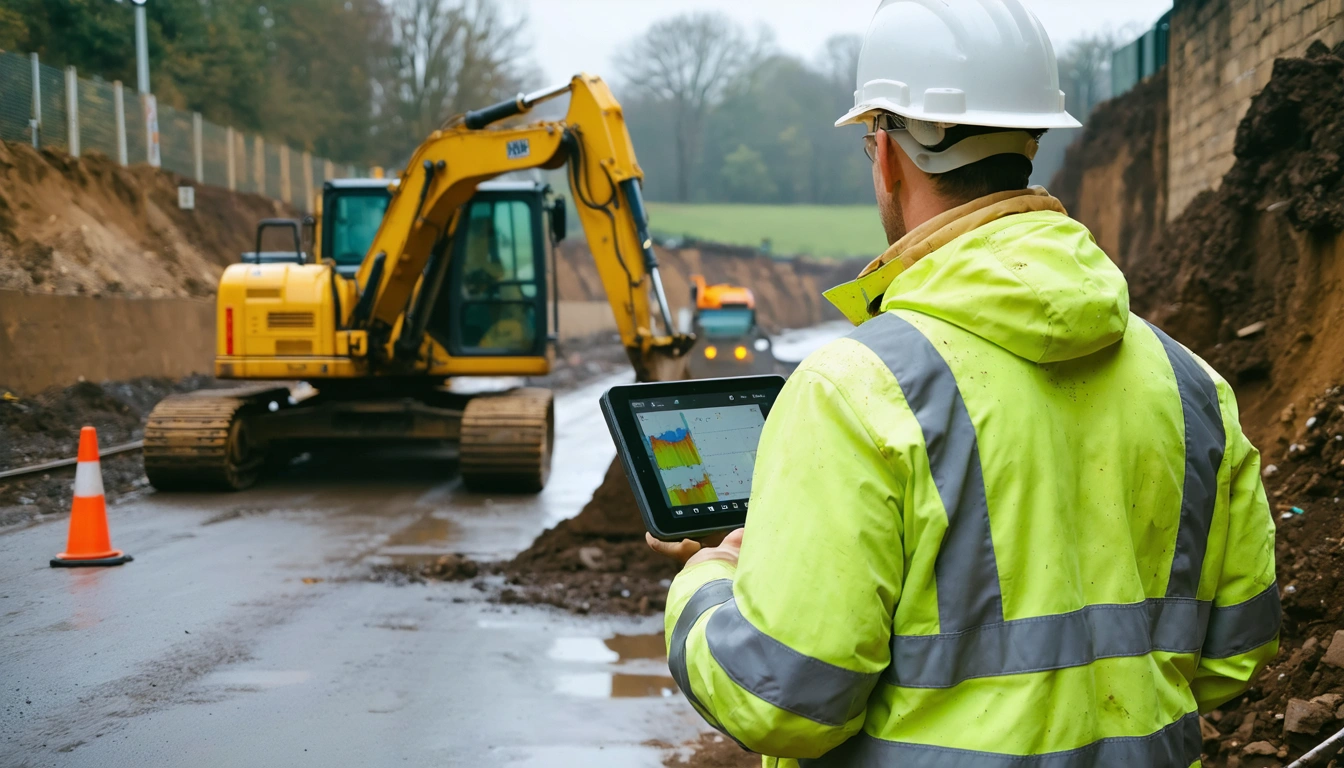
Combining these measurements can improve situational awareness. For example, rising rainfall totals may not create an immediate problem if storage capacity remains available and pumps are operating correctly.
Earthworks, Slopes and Embankments
Slopes and earth structures can respond to rainfall, groundwater, erosion and changes in loading. Monitoring systems may include piezometers, inclinometers, settlement sensors and weather stations to track the factors that influence stability.
Long term trends are important in these applications. A small movement reading may not be concerning on its own, but repeated movement following periods of heavy rainfall could indicate a developing pattern.
Turning Alerts Into Engineering Action
An alert only has value if the project team knows what it means and how to respond. Before monitoring begins, engineers should define suitable trigger levels, responsibilities and escalation procedures.
Thresholds should reflect design assumptions, predicted behaviour, asset condition and the accuracy of the instruments. A single universal limit rarely works because acceptable movement for one structure may be unacceptable for another.
Using Graduated Trigger Levels
Many projects use several trigger levels rather than a simple safe or unsafe warning. An initial level might prompt a review of recent readings and a check that the sensor is functioning correctly.
This graduated approach helps teams respond proportionately. It also reduces the risk of either ignoring an important trend or stopping work unnecessarily because of one questionable reading.
Avoiding Alarm Fatigue
Poorly configured systems can generate frequent alerts caused by normal fluctuations, communications faults or overly cautious thresholds. If this happens repeatedly, users may begin to treat warnings as background noise.
I believe alarm design deserves the same care as sensor selection. Alerts should identify the instrument involved, the threshold exceeded, the time of the event and the relevant response procedure.
Using Monitoring Data to Improve Construction
Real time information can support more than safety management. It can also help contractors verify construction methods, reduce uncertainty and improve productivity.
During compaction, piling, dewatering or excavation, monitoring data can show how the surrounding ground and nearby structures are responding. If behaviour remains within expected limits, the team may be able to continue with greater confidence.
Supporting the Observational Method
The observational method uses planned monitoring to compare actual behaviour with predicted behaviour during construction. Alternative actions are prepared in advance and implemented if defined limits are reached.
This approach can be effective on complex geotechnical projects where ground behaviour cannot be predicted with complete certainty. However, it depends on reliable instruments, prompt interpretation and clear authority to act.
Providing Better Project Records
A well managed monitoring system creates a detailed record of conditions throughout construction. This can help teams investigate incidents, demonstrate compliance with agreed limits and understand how completed assets behaved during critical stages.
Good records need context. Data should be linked to relevant activities such as excavation depth, concrete pours, changes to temporary supports, rainfall events or heavy plant movements.
Condition Based Maintenance for Existing Assets
Traditional maintenance programmes are often driven by fixed intervals. While scheduled maintenance remains appropriate for many components, it can result in work being completed too early or emerging deterioration being discovered too late.
Condition based maintenance uses inspection and monitoring evidence to inform when intervention is needed. Smart sensors can contribute by identifying changes in vibration, loading, moisture, movement or other indicators associated with deterioration.
The objective is not to wait until failure is imminent. It is to recognise developing changes early enough to plan an appropriate response. This can reduce unplanned closures, improve budgeting and extend the useful life of infrastructure where continued operation is supported by sound engineering evidence.
Establishing a Reliable Baseline
Condition monitoring works best when there is enough baseline data to define normal behaviour. Structures naturally respond to temperature, traffic, wind, water levels and seasonal ground conditions.
Baseline periods should therefore include representative operating and environmental conditions where practical. Statistical analysis can help identify patterns, but engineering interpretation remains essential because not every correlation has a meaningful physical cause.
Practical Challenges That Should Not Be Overlooked
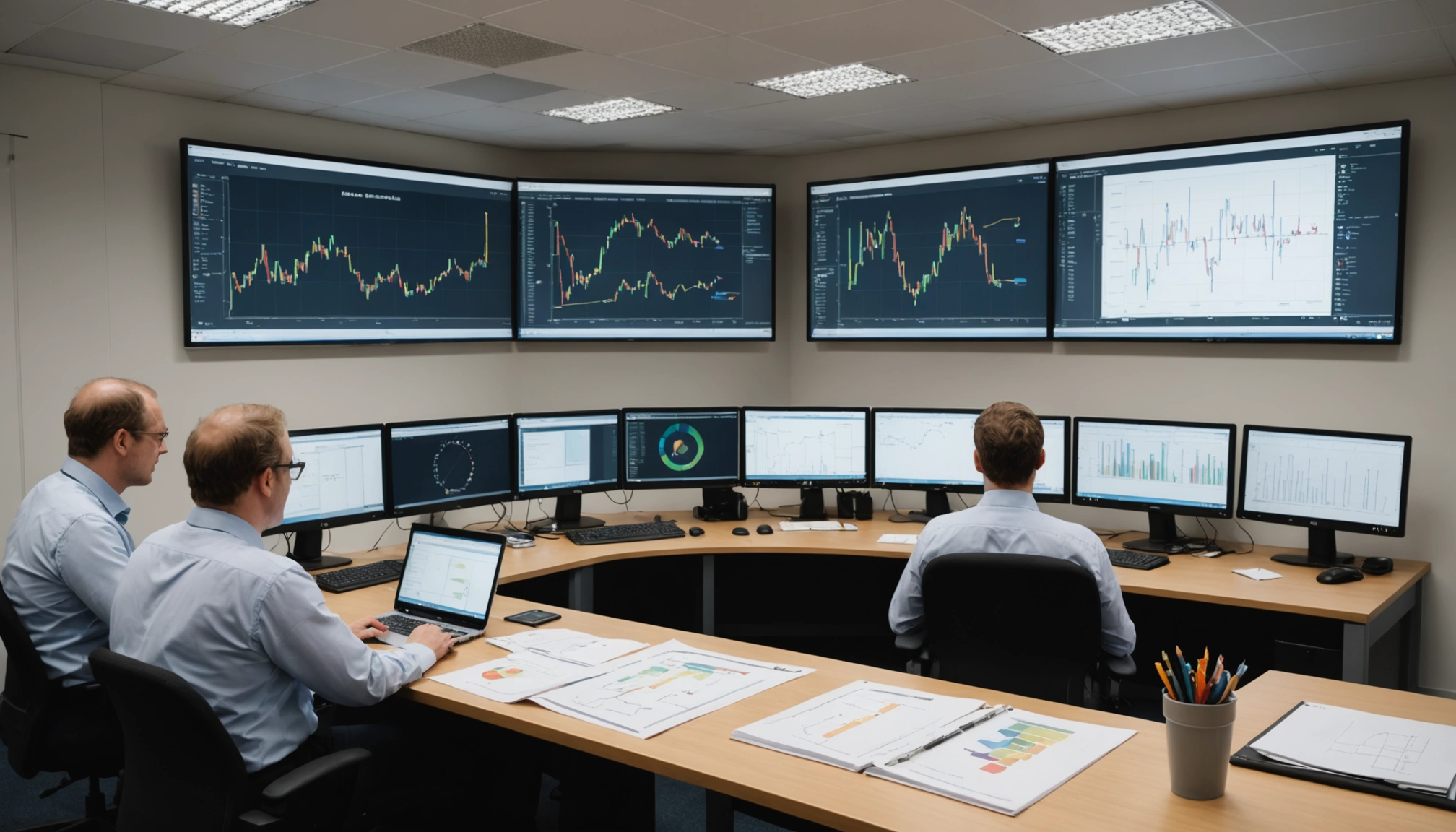
Smart monitoring can sound straightforward when described as sensors connected to a dashboard. In reality, the quality of the outcome depends on installation, communications, maintenance, data governance and human decision making.
Power and Connectivity
Remote sites, tunnels and temporary works can present difficult conditions for power supply and data transmission. Wireless systems may reduce cabling, but signal strength can be affected by distance, structures, buried locations and site activity.
Battery life also depends on measurement frequency, transmission frequency and environmental conditions. A system designed for occasional readings may operate for years, while frequent sampling and communications can consume power much more quickly.
Sensor Durability and Maintenance
Civil engineering sites expose equipment to water, mud, dust, impact, vibration and accidental disturbance. Instruments must be protected without preventing them from measuring the intended behaviour.
Monitoring plans should include access for inspection, calibration and replacement. Redundancy may also be sensible for measurements that are critical to safety, particularly where a single damaged instrument could leave the team without essential information.
Cyber Security and Data Ownership
Connected monitoring systems create digital risks as well as engineering opportunities. Project teams should understand who owns the data, where it is stored, who can access it and how it is protected.
Access controls, secure communications, software updates and reliable backups should form part of the system specification. These issues become especially important when monitoring relates to critical infrastructure or when several organisations share a common platform.
Managing Large Volumes of Data
High frequency monitoring can generate an enormous number of readings. Retaining everything without a clear purpose can increase storage costs and make analysis more difficult.
A sensible data strategy should define sampling rates, retention periods, validation rules and reporting requirements. Raw data may need to be preserved for detailed analysis, while dashboards can present processed information that is easier for project teams to use day to day.
Choosing the Right Monitoring Strategy
A successful system starts with a clear engineering question. The project team should identify what could change, which measurements would reveal that change and how quickly a response would be required.
The monitoring design can then define suitable instruments, locations, sampling frequencies, trigger levels and reporting arrangements. It should also assign responsibility for reviewing data, investigating anomalies and authorising action.
Start With Risk, Not Technology
It is easy to be distracted by sophisticated dashboards and automated analysis. However, technology should follow the risk assessment rather than lead it. A simple, robust instrument in the correct location may provide more useful information than a complex network that lacks a defined purpose.
The cost assessment should consider installation, calibration, communications, software, maintenance and eventual removal. Whole life costs matter, particularly for systems expected to operate throughout an asset’s service life.
Combine Data With Professional Judgement
Automated tools can filter readings and identify trends, but they cannot fully understand site context. A sudden movement might indicate a genuine engineering issue, accidental impact, sensor drift or a change in construction activity.
The strongest approach combines monitoring data with inspections, surveys, design information and local knowledge. Smart sensors provide better visibility, while experienced engineers determine what the evidence means and what should happen next.
The Future of Connected Civil Engineering
Monitoring systems are becoming easier to deploy and integrate with digital models, asset management platforms and construction records. This could allow teams to view live asset behaviour alongside design details, maintenance history and environmental information.
Predictive analytics may also help identify subtle changes before conventional thresholds are reached. Even so, predictions will only be dependable when they are based on accurate data and a sound understanding of physical behaviour.
For me, the most important development is not the sensor itself. It is the ability to make timely decisions using evidence from the asset or site.