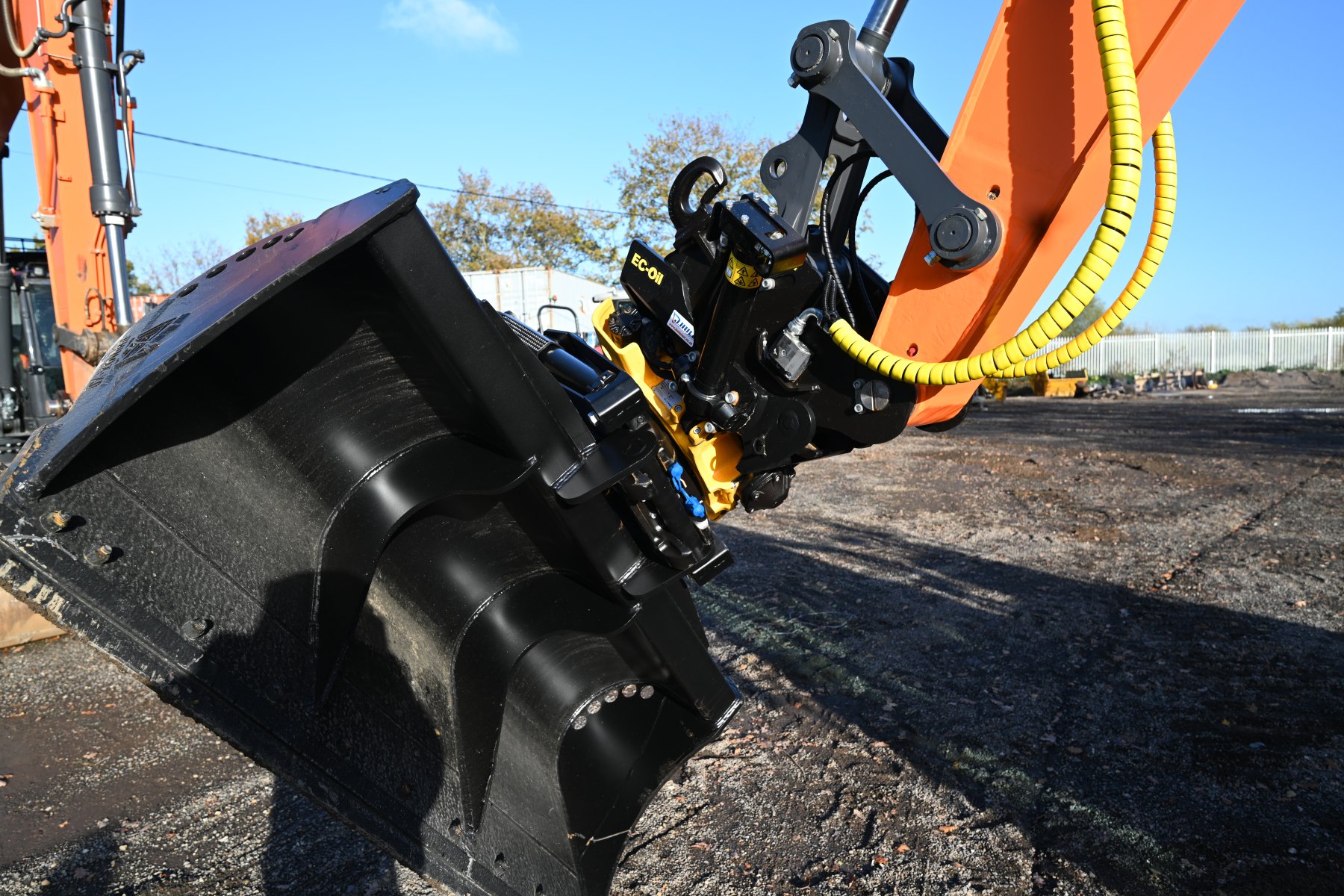
Tiltrotators are changing how excavators operate across civil engineering, groundworks and infrastructure projects.
Fitted between the excavator arm and attachment, these compact units allow tools to rotate continuously and tilt from side to side, giving operators far greater control without repeatedly repositioning the machine.
For contractors working under pressure to improve productivity, reduce disruption and maintain consistently high standards, that flexibility can make a measurable difference. Understanding the practical advantages of tiltrotators helps project managers, plant operators and procurement teams decide whether the technology is right for their machinery and workload.
How tiltrotators transform excavator capabilities
A conventional excavator is already one of the most versatile machines on a construction site, but its movements are restricted by the position of the boom, dipper arm and fixed attachment. A tiltrotator overcomes many of these limitations by enabling the bucket or other attachment to rotate through 360 degrees and tilt at an angle, typically up to 45 degrees in either direction.
This additional movement allows an operator to approach tasks from more practical angles. Trenches can be shaped accurately, slopes can be graded smoothly and material can be placed around obstacles without constantly moving the excavator. The machine effectively gains wrist like movement, making it more precise and adaptable in confined or complex working environments.
More than a specialist attachment
Tiltrotators were once viewed as specialist equipment suited mainly to particular markets or highly experienced operators. They are now becoming increasingly common across UK civil engineering projects, including drainage installations, road construction, landscaping, utility works and site preparation.
Modern systems can also be paired with quick couplers, grading buckets, grabs, compactors and other hydraulic attachments. This turns one excavator into a flexible tool carrier capable of completing several stages of work with fewer interruptions.
The first key reasons for adopting tiltrotator technology
The case for using a tiltrotator extends beyond convenience. Its value comes from the combined effect of higher productivity, improved accuracy, reduced machine movement and safer working practices. These benefits can influence project costs, programme delivery and the quality of the finished work.
Not every excavator or project requires the same specification, so attachment compatibility, hydraulic capacity, operator training and expected utilisation must all be considered. However, where an excavator performs varied or precision based tasks, the advantages can be substantial.
1. Greater precision when excavating and grading
A tiltrotator allows the operator to position a bucket at the required angle without relying solely on the movement or orientation of the excavator. This makes it easier to create accurate gradients, shape embankments, trim formation levels and excavate around existing services.
Better control can reduce over excavation and limit the amount of material needed for reinstatement. It may also decrease reliance on manual finishing, particularly during detailed grading work where small inaccuracies can create additional labour, waste and delay.
2. Less need to reposition the excavator
Traditional digging often requires the machine to move several times so that the attachment can reach the correct angle. With a tiltrotator, the operator can rotate and tilt the tool while the excavator remains in a stable position, allowing a wider working area to be covered from one location.
Reducing unnecessary tracking saves time and fuel while limiting disturbance to prepared ground. It is particularly useful on restricted sites, beside live roads, near buildings or within utility corridors where space for manoeuvring is limited.
3. Faster completion of complex tasks
The time saved through fewer machine movements becomes especially valuable when an excavator is completing several related activities. An operator can excavate, shape, backfill and finish an area without repeatedly adjusting the position of the undercarriage or waiting for another machine to assist.
Consider a drainage run that includes changes in direction, varying invert levels and connections around existing utilities. A tiltrotator enables the bucket to follow the required alignment more naturally, making it easier to form the trench and prepare the bedding accurately. Once the pipework is installed, the same machine can place surround material and complete reinstatement with controlled movements.
The productivity gain on an individual action may appear modest, but the cumulative saving across hundreds of cycles can be significant. Faster working does not mean rushing. It comes from removing unnecessary movements and giving the operator better control over each task.
4. Improved safety around people and structures
Any reduction in machine movement can help make a busy site easier to manage. Tracking, slewing and repositioning an excavator create risks for nearby workers, temporary works, existing structures and other plant. Keeping the machine stationary for longer reduces the number of interactions that must be controlled.
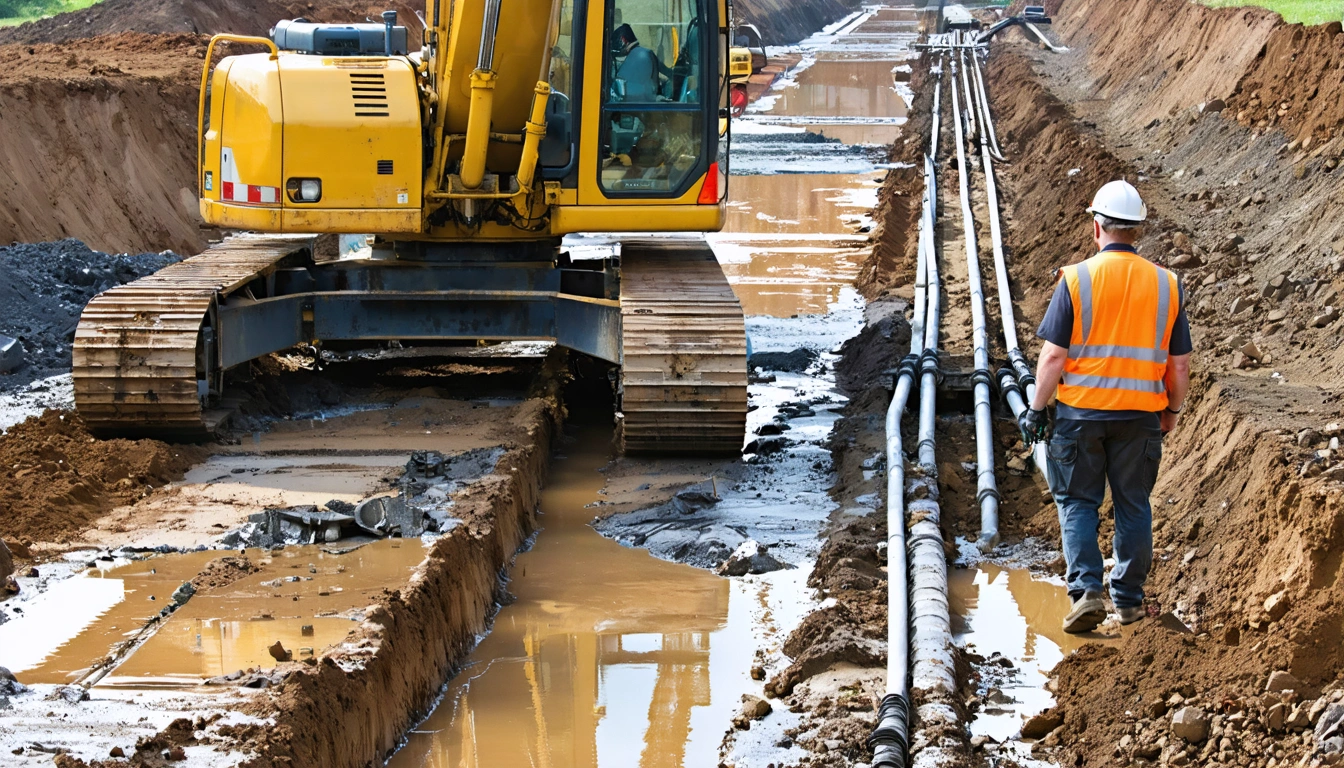
A tiltrotator can also decrease the need for operatives to enter an excavation or work close to the attachment to complete manual trimming. Suitable grabs and specialist tools may allow materials, pipes and kerbs to be handled from the cab, provided that the attachment and lifting arrangements are approved for the task.
Technology does not replace a proper lift plan, exclusion zone or safe system of work. Visibility, ground conditions, machine stability and attachment limitations must still be assessed. However, the ability to approach work from a safer angle gives site teams more options when planning an activity.
5. Reduced demand for manual labour
Detailed ground shaping often involves workers using shovels, rakes and other hand tools after the excavator has completed the main dig. With a tiltrotator and an appropriate grading bucket, more of this finishing work can be carried out mechanically.
This does not remove the need for skilled groundworkers. Instead, it allows them to focus on tasks that genuinely require their expertise while reducing repetitive and physically demanding work. On projects where labour availability is restricted, that improved use of the workforce can support programme certainty.
Mechanical finishing can also produce more consistent results across large areas. The operator can maintain a controlled bucket angle when grading batters, verges and formation surfaces, rather than leaving substantial quantities of material to be adjusted by hand.
6. Lower fuel use and reduced plant wear
Tracking an excavator consumes fuel and places wear on the undercarriage, particularly when the machine is repeatedly turning on abrasive or uneven ground. By expanding the useful working envelope from each position, a tiltrotator can reduce those movements.
There may also be less need for supporting plant. If one excavator can excavate, grade, handle materials and operate specialist attachments, contractors may be able to reduce the number of machines required for particular work stages. The practical saving will depend on site conditions and utilisation, but fewer machine hours can mean lower fuel consumption, maintenance costs and transport requirements.
A tiltrotator introduces its own servicing needs, including lubrication, inspection and hydraulic maintenance. These costs should be included when assessing whole life value. A well maintained system used regularly is more likely to provide a meaningful return than an attachment fitted without a clear plan for its workload.
7. Better performance in confined spaces
Urban civil engineering frequently takes place within narrow roads, residential developments, industrial sites and restricted compounds. Excavators may need to work between barriers, parked plant, buried services and live traffic while maintaining safe clearances.
A tiltrotator allows the attachment to work alongside the machine or reach around an obstruction without requiring the whole excavator to face the task directly. The operator can excavate parallel to a wall, clean material from awkward corners or grade beneath an offset edge while occupying a comparatively small working footprint.
This flexibility can help preserve pedestrian routes, traffic lanes and access for other trades. It may also reduce the amount of temporary surfacing or working platform needed solely to accommodate repeated machine movements.
8. Greater attachment versatility
The benefits of a tiltrotator extend beyond bucket movement. When combined with a compatible quick coupler and hydraulic connections, it allows operators to change between tools efficiently and use each attachment from a wider range of angles.
Depending on the excavator and approved setup, suitable attachments may include grading buckets, digging buckets, grabs, rippers, compactors, pallet forks, sweepers and asphalt cutters. One machine could dig a trench, handle pipes, compact backfill and grade the surface during the same shift.
Attachment changes must follow the manufacturer’s instructions and the contractor’s safe working procedures. Automatic coupling systems can improve efficiency, but indicators, locking mechanisms and connection points should still be inspected. Compatibility should never be assumed simply because two components appear to fit.
9. More consistent quality and easier compliance
Civil engineering tolerances matter. Incorrect trench depths, uneven formation levels and poorly formed gradients can lead to additional excavation, excess material use or drainage problems. The finer control provided by a tiltrotator helps experienced operators achieve the intended profile with fewer corrections.
The technology becomes particularly effective when paired with machine control. Digital models, position sensors and in cab guidance can tell the operator where the attachment is in relation to the design, while the tiltrotator provides the movement needed to follow that information accurately.
This combination can support efficient checking and reduce dependence on repeated setting out. Site teams still need appropriate inspection and quality assurance procedures, but work can often be brought closer to the required level before surveyors or engineers carry out final verification.
10. Increased excavator utilisation and commercial value
An excavator that can perform a broader range of activities is easier to keep productive. Rather than waiting for a particular digging task, the machine may be used for grading, material handling, landscaping, drainage or finishing work.
Higher utilisation can strengthen the financial case for purchasing or hiring a tiltrotator. Contractors can assess the investment against reduced labour, shorter task durations, lower reliance on additional plant and improvements in finished quality. For hire fleets, a properly specified package may also appeal to customers looking for versatile equipment.
Resale value can be another consideration, although it varies by machine type, system condition and market demand. Service records, attachment compatibility and the quality of the installation are likely to influence value more than the presence of the tiltrotator alone.
Where tiltrotators provide the greatest benefit
Tiltrotators can support many civil engineering activities, but they deliver the clearest advantages where work is varied, space is restricted or precise shaping is required.
Drainage and utility installation
Drainage and utility projects often involve narrow trenches, changing levels and existing buried infrastructure. The ability to alter the bucket angle helps operators excavate accurately around known services, form pipe bedding and manage material within constrained working areas.
A grab attachment may also assist with handling chambers, pipes and other components. Any lifting operation must remain within the machine’s rated capacity and use approved lifting points and accessories.
Road construction and maintenance
Roadworks require careful control of formation levels, verges, drainage features and tie ins to existing surfaces. A tiltrotator can grade crossfalls, shape channels and work around kerbs without continually repositioning the excavator.
Where traffic management leaves limited space, the ability to complete more work from one stable position can be especially useful. It can reduce encroachment into adjacent lanes and simplify coordination between plant and groundworkers.
Landscaping and public realm projects
Landscaping schemes contain curves, slopes and detailed transitions that can be awkward to create with a fixed bucket. Tiltrotators allow soil and aggregate to be shaped with smoother, more controlled movements.
They can also support the placement of rocks, edging materials and street furniture when paired with appropriate attachments. This makes them useful on public realm schemes where the quality of visible finishing is as important as the underlying engineering.
Foundations and structural groundworks
Foundation excavations often take place close to setting out pins, reinforcement, temporary works and completed structures. Accurate attachment positioning can help minimise over excavation and keep the bucket clear of vulnerable elements.
The same machine may then be used to trim bases, place stone and prepare surrounding levels. Reducing the number of plant changes can help maintain momentum during tightly sequenced groundwork operations.
What to consider before fitting a tiltrotator
If you’ve spent any time on a busy site lately, you’ve probably watched an operator twisting and tilting a bucket in ways that would have looked like witchcraft fifteen years ago. Tiltrotators have gone from a Scandinavian curiosity to a fairly common sight across UK groundworks, and it’s easy to see why. They let an excavator do more from one position, cut down on hand digging, and swap between attachments in seconds.
But they’re not a bolt-on gadget you buy on a whim. A tiltrotator is a serious investment, and getting the spec wrong can leave you with an expensive bit of kit that never quite earns its keep. So before you sign anything, here are the things genuinely worth thinking through.
Start with the work, not the kit
The first question isn’t “which brand?” It’s “what do we actually do all day?”
Tiltrotators shine on jobs with lots of fiddly, varied tasks: drainage runs, grading around obstacles, working near services, trimming batters, laying kerbs, and anywhere space is tight. If your machines spend most of their time on bulk earthworks, loading dumpers and shifting muck in a straight line, the benefit shrinks a lot. You’ll be carrying extra weight and complexity for something you rarely use.
Have an honest look at the last six months of work. If a good chunk of it involved repositioning the machine, a banksman with a shovel, or swapping buckets several times a day, that’s a strong sign a tiltrotator will pay its way.
Match it properly to the machine
This is where people most often go wrong. A tiltrotator has to suit the excavator’s weight class, hydraulic capacity and stick length. Too big and you’ll overload the machine and lose stability. Too small and you’ll be wearing it out early.
Remember that it adds weight right at the end of the arm, which eats into your lifting capacity and reach. On a smaller machine that can make a noticeable difference, so check the lift charts with the tiltrotator fitted, not without it. If you do a lot of lifting work, that matters for your lift plans too.
Hydraulics are the other big one. The tiltrotator needs the right flow and pressure to rotate and tilt smoothly, and if you want to run powered tools on it, such as a breaker, compactor or grab, you’ll need extra hydraulic circuits. Older machines sometimes need additional valves or pipework, and that adds to the cost. Get your dealer to look at the actual machine rather than quoting off the model number.
Think about the coupler system
Tiltrotators sit between two quick couplers: one connecting them to the machine, and one at the bottom for your attachments. It’s worth giving this proper thought, because it affects every bucket and tool you own.
The industry has moved towards open standards, with the Open-S coupler system now widely adopted by several manufacturers. Going with an open standard means you aren’t locked into one supplier’s attachments and you’ve got more choice when you buy or hire tools later on. If you already have a fleet of buckets on a different system, factor in the cost of adapting or replacing them.
Safety is non-negotiable here. Make sure any coupler meets the current standards and has positive locking with clear indication, ideally with a sensor system that warns the operator if an attachment isn’t properly secured. Dropped buckets have caused serious injuries over the years, and modern systems are designed to make that far less likely.
Control systems and integration
The way the tiltrotator is controlled makes a huge difference to how productive it actually is. Most modern systems use proportional joystick controls, with the tilting and rotating functions built into the operator’s existing joysticks. A good control set-up feels natural after a short while. A clunky one will frustrate your operators and they’ll avoid using the features.
If you run machine control or GPS guidance, check how it’ll work with the tiltrotator. Many systems now support tilt and rotation sensors so the guidance knows exactly where the bucket edge is, whatever angle it’s at. That’s brilliant for accurate grading, but it needs setting up and calibrating properly. Ask early whether your machine control provider supports it.
Don’t underestimate the operator side
Here’s the honest bit: a tiltrotator is only as good as the person using it. Give an experienced operator one without any training and they’ll often use it as an expensive rotating bucket for the first few months.
Budget for proper training, and give operators time to build up the skill. The best results usually come from people who’ve been shown how to plan their work differently, not just how the joysticks work. Some will take to it straight away, others take longer, and that’s normal.
It’s also worth getting your operators involved in the decision. They’ll have useful views on which features they’d actually use, and people tend to look after kit they’ve had a say in choosing.
Servicing and maintenance
There’s more to look after on a tiltrotator than a standard bucket. You’ve got a rotating swivel, seals, hoses, sensors and electrics, all working hard in mud, dust and water. Daily greasing and checks need to become part of the routine, and you’ll want to know who services it and how quickly they can get to you if something goes wrong.
Ask about the dealer’s support network in your area, the availability of spare parts, and what’s covered under warranty. A tiltrotator sitting idle waiting for a part means a machine working at a fraction of its potential.
Do the sums properly
Tiltrotators aren’t cheap, especially once you add the couplers, extra hydraulics, control system, attachments and installation. So do the maths properly before you commit.
The savings tend to come from fewer machine moves, less hand digging, fewer labourers needed on certain tasks, and less time swapping attachments. On the right kind of work, plenty of firms find it pays back in a reasonable timeframe. On the wrong kind of work, it may never do so. Be realistic about how much the machine will actually use it.
It’s also worth thinking about resale. A well-specced tiltrotator on a popular machine size can help resale value, while an unusual set-up may be harder to shift.
Try before you buy
If you can, get a demo or hire one for a job before committing. There’s nothing quite like seeing how it performs on your own type of work, with your own operators, in your own ground conditions. It’ll answer questions no brochure can, and give you a much clearer idea of whether it’s the right move.
The bottom line
Fitted to the right machine, for the right type of work, with properly trained operators, a tiltrotator can transform how productive an excavator is on site. Rushed, mismatched or poorly supported, it becomes an expensive headache. Take your time, ask plenty of questions, and make the decision based on the work you actually do rather than what looks impressive.
Read more: Tiltrotator vs Standard Excavator: 9 Groundworks Tasks that Matter