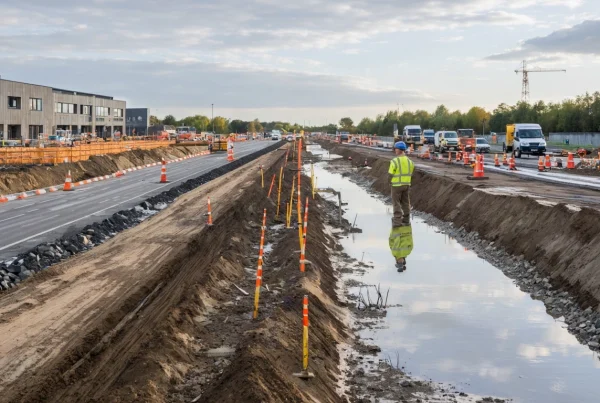
The Chancellor’s announcement that biodiversity net gain requirements will be removed from brownfield development sounds like a straightforward cost saving. For developers looking at former industrial land, redundant yards or vacant commercial premises, one less planning obligation could make a difficult scheme more attractive. But does it make brownfield land genuinely cheaper to build on?
Potentially, yes, but not necessarily by much. Removing a biodiversity net gain (BNG) obligation could reduce habitat-related costs and release some space within a layout. It does not remove contaminated ground, buried foundations or inadequate drainage. Before changing a development appraisal, I would separate two questions: does the proposed exemption actually apply, and which costs would it genuinely take out?
Start with the exemption, not the headline
A political announcement is not the same as an exemption taking legal effect. The Chancellor’s statement should not, by itself, be treated as confirmation that every brownfield planning application can now proceed without BNG. The implementing rules, commencement date, eligibility criteria and any transitional arrangements matter, particularly for schemes already moving through planning.
The jurisdiction matters too. Mandatory BNG under the English planning framework generally requires eligible development to deliver at least a 10% biodiversity gain, subject to exemptions. It is not a single UK-wide requirement. For projects in Lincolnshire and the East Midlands, the relevant question is how any change operates in England, rather than whether a UK Government announcement automatically changes every application.
Previously developed does not mean ecologically empty
“Brownfield” is commonly used to describe previously developed land, but a site’s planning history tells you little about its current habitat value. An actively used, largely sealed service yard is a different proposition from a former industrial site where vegetation has established over several decades. Some previously developed sites support open mosaic habitats with significant ecological interest.
That distinction matters both to eligibility for any exemption and to the savings available. A site with very little existing habitat may already have a relatively modest BNG liability, or qualify for an existing exemption if its impacts meet the relevant criteria. Another site could face a much larger habitat delivery requirement. There is no reliable flat-rate “brownfield BNG saving” to apply across a development portfolio.
Other environmental duties remain separate
Even where a BNG exemption applies, it does not automatically remove protected species legislation, designated-site protections or other relevant planning requirements. Ecological surveys and measures to avoid or mitigate harm may still be necessary. Requirements for trees, landscaping and sustainable drainage can also arise independently of BNG.
For an appraisal, the sensible starting point is therefore the actual scope of the exemption and the site’s existing obligations. Do not assume that an announcement cancels an approved biodiversity gain plan, a planning condition or a legal agreement on an existing permission.
What could disappear from the development budget?
The clearest potential saving is expenditure directly attributable to meeting mandatory BNG. Depending on the scheme, that could include biodiversity metric work, habitat design, purchasing off-site biodiversity units and securing long-term habitat management. Significant on-site habitat enhancements and off-site gains under the mandatory framework generally need to be maintained for at least 30 years, so the liability can extend well beyond construction.
There may also be a layout benefit. If a scheme no longer needs a particular area of habitat solely to meet its BNG target, the design team may have greater flexibility over building footprints, access or servicing. However, that land is not automatically developable: drainage, flood risk, landscaping and other planning constraints may still determine its use.

Separate biodiversity savings from groundworks risk
The expensive brownfield problems often sit below ground. Contaminated soils, buried tanks, redundant services, old slabs and variable made ground can drive excavation, disposal and foundation costs. Removing a BNG obligation does not change waste classification, make unsuitable material reusable or establish that existing ground can carry the proposed loads.
Drainage deserves particular attention on low-lying Lincolnshire sites. Outfall levels, receiving-system capacity, groundwater and flood risk can constrain a scheme regardless of its biodiversity obligations. A former yard with extensive hardstanding does not necessarily have a serviceable drainage network or an acceptable discharge arrangement for redevelopment.
A useful cost comparison should therefore show the BNG-related saving separately from remediation, foundations, drainage and utility allowances. Keep the ground-risk contingency tied to investigation evidence rather than reducing it because an unrelated planning obligation may disappear. That gives the project team a defensible saving, rather than a cheaper-looking appraisal built on the same unresolved site risks.
Run two appraisals, not one optimistic revision
Until the position for a particular application is confirmed, I would keep two appraisal scenarios: one with the applicable BNG obligation and one assuming the proposed exemption applies. Hold the ground conditions, construction specification and sales assumptions constant. That isolates the policy change instead of allowing several optimistic assumptions to creep into the same spreadsheet.
Within each scenario, distinguish between expenditure already incurred, future costs that can genuinely be avoided and costs that remain necessary for another reason. An ecological survey already completed is a sunk cost. A landscape scheme required for visual screening is not a BNG saving simply because it also generates biodiversity units.
A worked example of the difference
Take a hypothetical redevelopment with £150,000 allowed for outstanding expenditure solely attributable to mandatory BNG. Separately, it carries £600,000 for remediation, abnormal foundations and drainage works. These figures are illustrative, not typical rates for brownfield development.
If an exemption removes the full £150,000 obligation, that is a meaningful improvement. But the £600,000 allowance remains. If subsequent investigation identifies additional contaminated material costing £200,000 to manage, the scheme is still £50,000 more expensive than the original combined allowance, despite the biodiversity saving.
The lesson is not that BNG costs are unimportant. It is that a confirmed saving and an uncertain ground-risk allowance are different things. Show both clearly, and test whether the project remains viable if the below-ground costs move against it.
Check whether commitments can actually be unwound
Existing schemes need particular care. A developer may already have commissioned habitat works, entered into an agreement to buy off-site units or accepted obligations through a planning agreement. A change in national requirements does not necessarily provide a contractual right to cancel those commitments without cost.
Ask the planning adviser and solicitor to identify what requires a formal change, what can be cancelled and what remains binding. Until that review is complete, treat the potential saving as provisional rather than available cash.

Will the saving stay with the developer?
A reduction in development cost does not always translate into a cheaper completed scheme. On land already acquired at a fixed price, the benefit may improve the developer’s margin or help a marginal project proceed. On a site being marketed, the landowner may expect a higher price because purchasers can now afford to bid more.
This is the distinction between cheaper construction and stronger residual land value. Removing an obligation can improve the amount a development can support for land without changing the price of excavation, concrete, drainage pipes or labour.
Do not pay away the saving before confirming it
For conditional purchases and option agreements, the timing of the policy change may affect negotiations and valuation assumptions. Buyers should establish whether the purchase price already reflects a BNG allowance, and whether any price adjustment mechanism captures changes in planning obligations.
I would be cautious about increasing a land offer on the strength of an announcement alone. Confirm eligibility, quantify the avoidable expenditure and review the site investigations first. Otherwise, the purchaser risks paying a higher land price while retaining both the original biodiversity exposure and the unresolved ground risks.
The investigations that still deserve their budget
If the prospect of an exemption frees up money during feasibility, spending some of it on better site information may deliver more value than immediately reducing the project budget. Brownfield cost certainty depends on understanding what is present, how it affects the proposed use and what the construction team must do about it.
Build a ground model before fixing the earthworks strategy
A desk study and site walkover should inform targeted intrusive investigation. Historic uses, previous structures, fuel storage and neighbouring activities help determine where to investigate and what testing is appropriate. A handful of convenient sampling locations is not a substitute for an investigation designed around the site’s risks.
The resulting information needs to serve both environmental and geotechnical decisions. Contamination results alone do not establish bearing capacity or settlement behaviour. Equally, evidence that ground can support a building does not demonstrate that excavated material is suitable for reuse or acceptable at a particular disposal facility.
Develop the materials strategy alongside the proposed levels and foundation design. Whether material can lawfully and safely remain on site depends on its properties, intended use and the applicable regulatory route, not simply on the cost of taking it away.
Prove the drainage arrangement rather than inheriting it
Existing drainage should be surveyed where it is relevant to the redevelopment, with attention to condition, connectivity, ownership and discharge rights. A pipe shown on an old drawing is not proof of a usable connection. Nor does the presence of a nearby ditch establish permission or capacity to discharge into it.
Across parts of Lincolnshire, an internal drainage board may be an important consultee or consenting body, depending on the location and proposed works. Establish the roles of the sewerage undertaker, lead local flood authority, Environment Agency and relevant drainage board early, rather than assuming one approval covers every aspect of the design.

Infiltration also needs evidence. Groundwater levels, soil permeability and contamination can limit its suitability. Where infiltration is not appropriate, the alternative discharge route and attenuation requirements need to be reflected in both the layout and the cost plan.
Could removing BNG shorten the programme?
Potentially, particularly where securing biodiversity units or resolving a gain plan would otherwise delay commencement. Avoiding a future obligation may reduce design coordination and administrative work as well as direct expenditure. That can matter on a financed development where holding costs accumulate before construction starts.
However, programme savings only arise if the removed activity sits on the critical path. If the scheme is waiting for a power connection, remediation approval or highway works agreement, removing a biodiversity-related step may not bring the start date forward at all.
Keep the ecological survey programme under review
Do not cancel all ecological work simply because mandatory BNG may no longer apply. Surveys needed to assess protected species or other ecological effects can have seasonal constraints. Missing an appropriate survey window can create a delay that outweighs the anticipated administrative saving.
The practical approach is to ask the ecologist to separate work required specifically for BNG from work needed to support the planning application or comply with other duties. That produces a defensible revised scope without leaving an avoidable gap in the evidence.
What should change in a groundworks tender?
A confirmed exemption should lead to targeted scope changes, not an arbitrary discount across the groundworks package. Identify the habitat-specific operations that are genuinely no longer required, then check their interfaces with drainage, levels, retaining structures and landscaping.
For example, removing a habitat area might eliminate particular planting and establishment works while creating additional hardstanding, drainage and excavation. More developable space can improve a scheme’s value, but using that space may increase the construction bill.
Issue revised drawings and schedules so tenderers price the same scope. Keep assumptions about contamination, material reuse, groundwater and buried obstructions explicit. A lower tender based on broader exclusions is not equivalent to a genuine reduction in cost.
The useful question for the contractor is therefore specific: which measured works, specialist inputs and future maintenance obligations have changed? That is a much firmer basis for repricing than asking whether brownfield development is now cheaper in general.