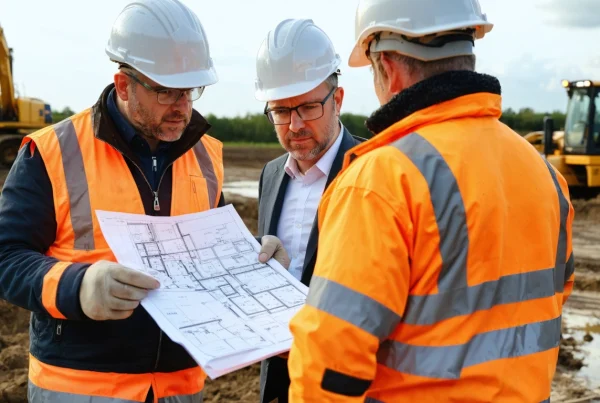
Main construction rarely starts on a completely clean slate. Before piling rigs, cranes and structural teams arrive, the site may need to be cleared, investigated, disconnected, demolished, remediated or diverted. These enabling works create the conditions for safe and efficient construction, but they also expose risks that can affect the entire programme.
The key to effective enabling works risk management is to remove uncertainty early. That means looking beyond obvious site activities and understanding how ground conditions, existing services, third parties, permits and design decisions could disrupt later phases. A relatively minor issue during site preparation can become a costly delay once the principal works are under way.
Why early site activities carry disproportionate risk
Enabling works often take place when project information is still developing. Surveys may be incomplete, designs may not be fully coordinated and the condition of existing assets may be uncertain.
This uncertainty makes the early works programme particularly vulnerable. Discovering an unrecorded utility, contaminated ground or an unstable structure can stop work immediately. The direct cost of resolving the issue may be manageable, but the effect on mobilisation dates, specialist subcontractors and subsequent construction packages can be far more significant.
Interfaces between separate work packages
Risk frequently develops at the boundaries between packages rather than within a single activity. A demolition contractor may leave a slab that conflicts with piling operations, or a temporary drainage arrangement may not accommodate the demands of the main works.
These interfaces should be identified during planning and translated into measurable handover requirements. Drawings, specifications, inspection records and site condition surveys should make it clear what each package must deliver.
The cost of relying on assumptions
Assumptions are unavoidable during early project development, but they must be visible and actively managed. Problems arise when estimated service locations, anticipated ground conditions or expected approval dates are treated as confirmed facts.
A practical assumptions register can help the project team identify which decisions require further evidence. Each assumption should have an owner, a verification method and a deadline.
Build the risk plan around evidence, not paperwork
A risk register is useful only when it influences what happens on site. Listing generic hazards such as bad weather, unknown services and ground conditions does little to prevent delay unless each risk is linked to a specific investigation, control measure and decision date.
The process should begin with a structured review involving the client, designers, enabling works contractor and representatives from the main works team. This brings different perspectives into the discussion.
Prioritise investigations that protect the programme
Not every uncertainty requires the same level of attention. Investigations should be prioritised according to the likelihood of the issue occurring and the potential effect on safety, cost and programme.
Timing matters as much as scope. A survey completed after procurement or mobilisation may confirm a problem without leaving enough time to change the design or construction method.
Set clear hold points and escalation routes
Some enabling activities should not proceed until defined evidence has been reviewed and accepted. Hold points may be appropriate before excavating near live services, entering an existing structure, removing temporary support or handing over a remediated area.
The project also needs a straightforward escalation route for unexpected conditions. Site personnel should know who can make technical and commercial decisions, what evidence must be recorded and how quickly a response is required.
Control utility risk before excavation starts
Existing services are among the most common causes of disruption during enabling works. Records may be incomplete, routes may have changed over time and abandoned services may still contain residual hazards.
A robust utility strategy combines records, site surveys, physical verification and controlled working methods. It should cover electricity, gas, water, telecommunications, drainage and any private networks serving existing buildings or industrial processes.
Verify services in the field
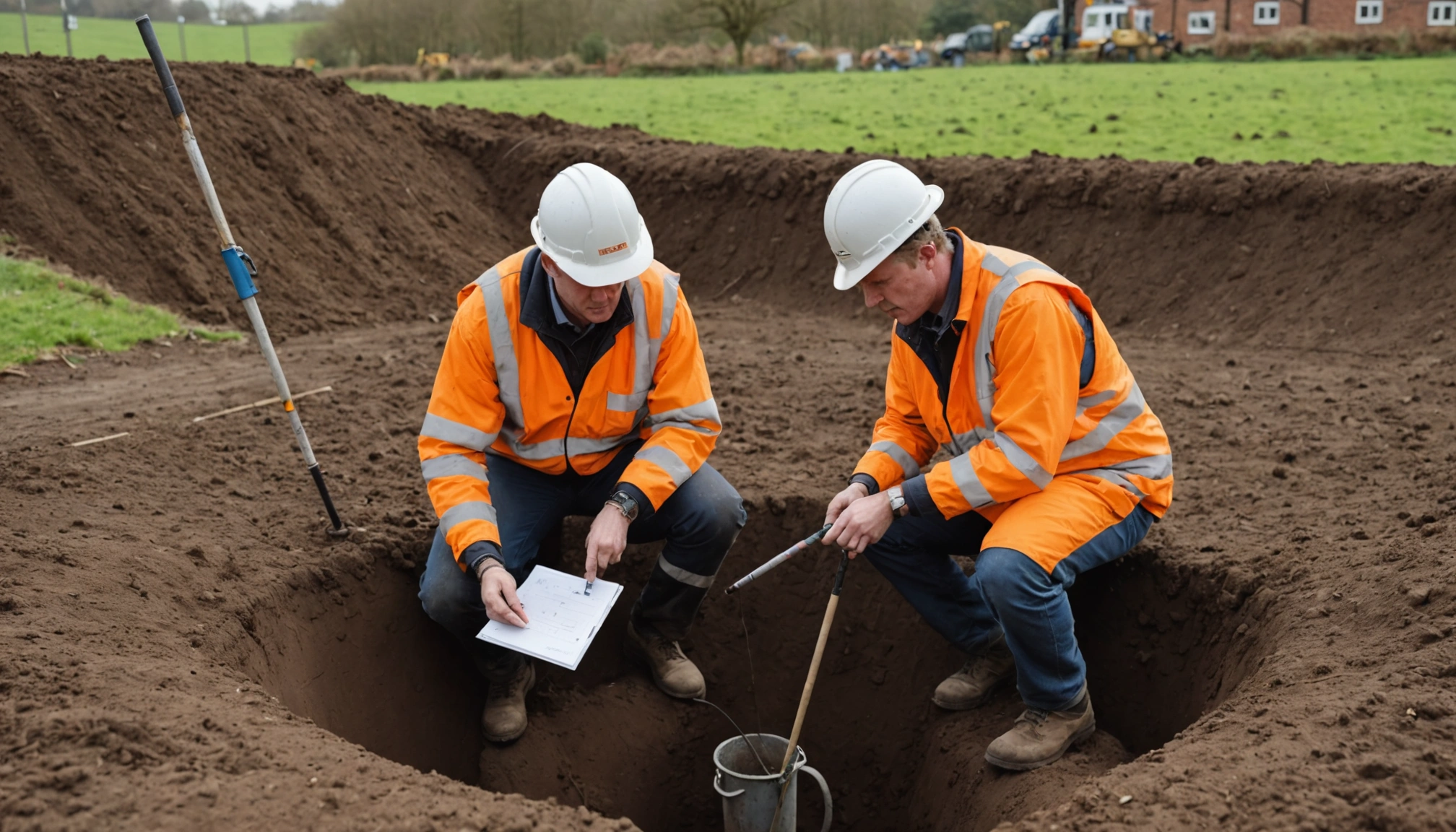
Desktop searches and detection surveys provide a useful starting point, but critical services should be physically located before high risk excavation begins. Carefully positioned trial holes can confirm depth, material, direction and condition.
Service investigations should extend beyond the immediate excavation area. Plant outriggers, haul roads, stockpiles and temporary compounds can all impose loads on buried infrastructure. Overhead services also need to be considered when selecting cranes, excavators and delivery routes.
Plan isolations and diversions realistically
Service disconnections are often dependent on utility companies, asset owners or building occupiers. Their lead times may not align with the construction programme, particularly where applications, design approvals or specialist attendance are required.
Where services must be diverted, the temporary and permanent arrangements should be coordinated with the final development. Installing a diversion quickly is of little value if it conflicts with foundations, drainage or future landscaping.
Manage ground and contamination uncertainty
Ground conditions influence almost every stage of enabling and main construction. Made ground, buried foundations, soft spots, groundwater and historic obstructions can affect excavation methods, temporary stability and the suitability of proposed working platforms.
Ground investigation should therefore be designed around the planned construction methods, not treated as a general information gathering exercise. Boreholes and trial pits need to target likely foundation locations, deep excavations, crane positions, haul routes and areas with a higher potential for historic contamination.
Turn investigation findings into site controls
Technical reports are useful only if their findings are translated into practical instructions. Site teams need to understand where unsuitable materials are expected, what visual or olfactory indicators may suggest contamination and what to do if conditions differ from the investigation data.
An unexpected ground procedure should define when work must stop, how the affected area will be secured and who will assess the material. It should also explain the sampling, classification and record keeping requirements.
Protect the earthworks balance
Projects can lose time and money when excavated material cannot be reused as anticipated. Material may be too wet, too weak, contaminated or inconsistent with the earthworks specification.
A materials management plan should identify anticipated volumes, classifications, testing requirements and intended destinations. Suitable quarantine areas should be established so that suspect materials do not become mixed with reusable soils.
Coordinate demolition with the construction that follows
Demolition is not simply the removal of unwanted structures. It is often the first stage of excavation, temporary works and asset protection. The demolition methodology must account for retained buildings, shared walls, basements, live services and adjacent public areas.
Define the required end state
Instructions such as clear the site or remove the existing structure are open to interpretation. The scope should state whether slabs, piles, foundations, ducts, tanks and below ground obstructions are to remain or be removed.
Where foundations are retained, their locations should be surveyed and recorded accurately. Unknown remnants can damage piling equipment, obstruct drainage runs or force late redesign.
Maintain stability throughout the sequence
Existing structures may rely on elements that are scheduled for removal. Demolition sequencing should be supported by suitable engineering assessment, particularly where party walls, retained façades or shared structural components are involved.
The condition of retained structures should be monitored where demolition could cause movement or vibration. Baseline surveys, crack gauges and movement monitoring provide evidence if concerns arise later.
Treat temporary works as part of the permanent programme
Temporary works are sometimes planned too late because they will not remain in the completed development. In practice, they often determine whether the permanent works can begin safely and on time.
The temporary works register should identify each item, its design category, responsible people, checking requirements and required date. Design briefs need to include actual plant loads, ground information, construction sequences and constraints.
Protect working platforms and access routes
A working platform may initially be suitable but deteriorate through trafficking, weather or poorly controlled excavation. Maintenance and inspection arrangements should continue throughout its use.
Access routes should also be checked against the vehicles expected during the main works. Turning circles, gradients, overhead restrictions and delivery holding areas can all become constraints once larger equipment arrives.
Design temporary drainage early
Water management is a frequent source of preventable delay. Surface water can soften working platforms, flood excavations and carry silt beyond the site boundary. Temporary drainage should be designed for the evolving site layout rather than only the initial enabling phase.
The plan should identify collection points, settlement measures, discharge locations and maintenance responsibilities. Pumps, settlement tanks and treatment systems need sufficient capacity, with contingency for heavy rainfall or equipment failure.

Secure approvals and third party agreements
Many enabling works depend on decisions outside the immediate project team. Highway authorities, environmental regulators, neighbours, landlords, utility providers and asset owners may all impose conditions.
Create an approvals schedule
An approvals schedule should identify every consent, submission, review period and dependency. It should distinguish between the date an application is submitted and the date approval is genuinely required.
Typical requirements may include road opening permits, traffic management approvals, discharge consents, demolition notices, licences for work near third party assets and agreements for temporary access.
Keep neighbours and occupiers informed
Noise, vibration, dust, restricted access and service interruptions can affect neighbouring properties and occupied parts of a site. Poor communication can lead to complaints, restrictions or working hour disputes that disrupt the programme.
Communications should set out what work is planned, when it will happen and who can respond if a problem occurs. Commitments made during consultations must then be reflected in method statements and site controls.
Integrate enabling works with the master programme
An enabling works programme should not sit separately from the main construction schedule. Its completion dates need to be linked directly to mobilisation, piling, substructure and logistics milestones.
Use area based handovers where appropriate
Waiting for the entire site to be completed may unnecessarily delay the main contractor. On suitable projects, phased handovers allow construction to begin in verified areas while enabling work continues elsewhere.
Area handover packs should include survey information, test results, service records, temporary works details and confirmation that completion criteria have been met. A joint inspection helps both parties agree the condition of the area before responsibility transfers.
Plan for recovery before delay occurs
Contingency planning should identify realistic alternatives for high impact risks. Options might include resequencing work, opening a second access point, using an alternative disposal facility or progressing another area while an issue is resolved.
Programme allowances must reflect genuine uncertainty. Artificially compressing early activities may create an attractive baseline, but it leaves no room to respond when investigations, approvals or site conditions take longer than expected.
Measure readiness for main construction
Enabling works should finish with a formal readiness review rather than an informal assumption that the site is complete. The review should test whether the physical site, information, approvals and temporary arrangements are suitable for the next construction phase.
Use objective completion criteria
Completion criteria may include verified formation levels, tested working platforms, confirmed utility isolations, operational drainage, approved access routes and closure of relevant permits. Outstanding defects should be recorded with owners and deadlines, alongside an assessment of whether they prevent handover.
Photographs, surveys, test certificates and as-built records provide an auditable account of what has been completed. This information is particularly important for buried work that cannot be inspected after the main contractor mobilises.
Retain knowledge during the handover
A document pack cannot capture every practical detail discovered during enabling works. A structured briefing between supervisors, engineers and the incoming construction team helps retain knowledge about unusual ground, retained services, access limitations and monitoring requirements.
Specialist civil engineering input can also help clients coordinate investigations, temporary works and site preparation. Experienced providers such as MAC Group Ltd understand that successful enabling works are measured not only by what is removed or installed, but by how reliably the site supports the construction that follows.
Make risk management a daily site activity
Risk management should continue after the initial workshops and registers are complete. Conditions change as structures are removed, excavations deepen and new work areas open.
The most effective approach is straightforward: verify critical assumptions, assign clear ownership, coordinate package interfaces and record the condition of every handover area. When enabling works are managed with the main construction phase in mind, uncertainty is reduced before it becomes expensive, disruptive and difficult to recover.