
More money for England’s roads is welcome, but the real test is not how many potholes councils fill this year. It is whether they can stop so many appearing next winter. For highways teams, civil engineering contractors and road users, the difference comes down to predictable funding, sound asset management and maintenance carried out before the road structure fails.
The Government’s announced allocation of nearly £1.6 billion for local highway maintenance in England in 2025/26, including an additional £500 million, put road condition firmly back in the spotlight. But turning a funding uplift into lasting improvement takes more than ordering extra asphalt. Councils need to balance urgent repairs with preventative work, drainage maintenance and the practical limits of their delivery programmes.
What Road Maintenance Funding Actually Pays For
Calling it a “pothole fund” makes an easy headline, but local highway maintenance covers considerably more than filling holes. Depending on the funding stream and its conditions, expenditure can support resurfacing, preventative surface treatments, drainage improvements and maintenance of other highway assets. Those activities compete for money across networks with very different conditions, traffic levels and maintenance histories.
The distinction between local roads and strategic roads also matters. Councils are generally responsible for the local highway network, while National Highways manages England’s motorways and major trunk roads. An announcement about council road maintenance should not be read as a funding settlement for every road in the country.
A larger allocation is not the same as a cleared backlog
An annual funding increase can support a bigger works programme, but it does not erase years of accumulated deterioration. Councils must also account for the cost of materials, labour, plant and traffic management. The useful measure is how much effective maintenance an allocation buys, rather than the headline cash figure alone.
There is also a difference between capital investment and day-to-day maintenance budgets. Larger renewal schemes and routine activities can sit within different budget arrangements, subject to accounting rules and grant conditions. That matters because a newly resurfaced carriageway still needs functioning drainage and ongoing inspection. A stronger renewal programme cannot compensate indefinitely for neglected routine maintenance.
Getting Ahead of Potholes Means Treating Roads Earlier
A pothole is often the visible end of a longer deterioration process. Water enters through cracks, joints or damaged edges, weakening vulnerable layers beneath the surface. Repeated wheel loads then break up the affected area. Freezing conditions can accelerate damage, but poor drainage, ageing materials and inadequate structural support can cause failures without a prolonged cold spell.
That is why counting completed pothole repairs tells only part of the story. A council can repair thousands of defects while the overall condition of its network continues to decline. Getting ahead means identifying roads where timely intervention will preserve useful life, alongside addressing routes that already need substantial reconstruction.
Choose the treatment to match the failure
Surface dressing can help seal a suitable road surface and restore skid resistance, but it will not fix a failing foundation. Localised patching can remove isolated defects, while deeper deterioration may require more extensive excavation and replacement. Treatment selection needs to follow condition assessment, not simply whichever option produces the largest apparent coverage for the budget.
In Lincolnshire and across the East Midlands, drainage and road-edge condition deserve particular attention on rural routes. Narrow carriageways, soft verges and heavy agricultural or freight traffic can make edge deterioration a recurring problem. Where water remains trapped beside or beneath the carriageway, replacing the surface without addressing the cause risks paying for the same repair again.
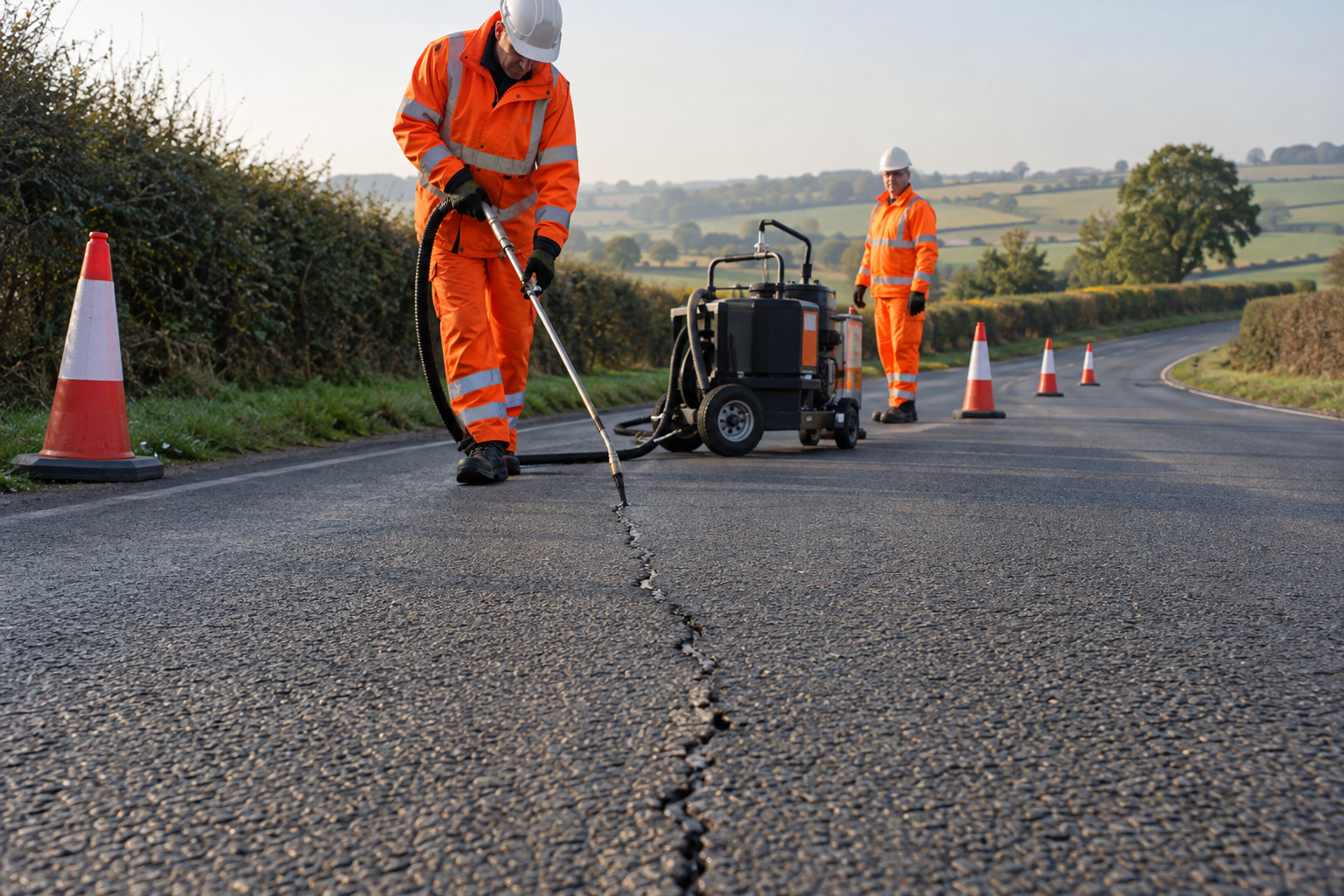
For contractors, a planned programme also creates better opportunities to organise crews, secure materials and coordinate traffic management. Councils still need capacity for urgent safety repairs, but predictable preventative work offers a more credible route towards improved network condition than a programme dominated by emergency call-outs.
Funding Certainty Matters as Much as the Headline Figure
The practical question for a highways manager is not just “How much have we received?” It is “What can we confidently programme over the next few years?” A single-year uplift can fund useful schemes, but longer-term certainty makes it easier to build a balanced maintenance programme, investigate underlying failures and commission work at the right time.
That matters particularly for weather-sensitive treatments. Surface dressing and other preventative treatments need suitable conditions, so late decisions can squeeze delivery into a short window. If surveys, procurement and public notifications are not ready, extra money does not automatically translate into extra work delivered well.
Build a pipeline rather than a last-minute spending list
A credible programme needs schemes at different stages of readiness. Some roads will require straightforward treatment design, while others need drainage investigations, pavement testing or coordination with utility companies before work can begin. Having those investigations completed gives councils more options when allocations are confirmed.
For contractors, a visible pipeline supports decisions about staffing, training, plant and supply arrangements. It can also make coordinated delivery more practical. Several nearby schemes may share traffic management resources or reduce repeated mobilisation costs, provided that packaging the work does not create unacceptable disruption for residents and businesses.
Predictability does not mean locking every scheme into an inflexible timetable. Severe weather and unexpected failures will always change priorities. The aim is to retain a planned core programme rather than allowing urgent defects to consume almost all available delivery capacity.
Drainage Needs to Be Part of the Road Repair Decision
If a road repeatedly fails in the same place, the investigation should extend beyond the damaged asphalt. Blocked gullies, defective connections, damaged culverts and restricted outfalls can all contribute to persistent wet conditions. Clearing a gully is useful, but it achieves little if the pipe downstream has collapsed or the receiving ditch cannot discharge.
On low-lying routes in Lincolnshire, the relationship between the road and the surrounding drainage system can be especially important. Highway drainage may interact with roadside ditches, watercourses and systems managed by other bodies. Responsibilities need checking rather than assuming the highway authority controls the entire route taken by the water.
Investigate repeat failures before specifying another patch
Consider a rural bend where carriageway-edge repairs fail repeatedly after heavy rain. A sensible investigation would look at levels, verge condition, drainage routes and the extent of deterioration beneath the surface. It should also consider whether vehicles regularly overrun the edge because of the road geometry or available passing width.
The resulting scheme might combine deeper pavement repairs with drainage work and appropriate edge support. Simply widening or strengthening an edge is not automatically the answer, particularly where land ownership, utilities, environmental constraints or road safety considerations complicate the design.
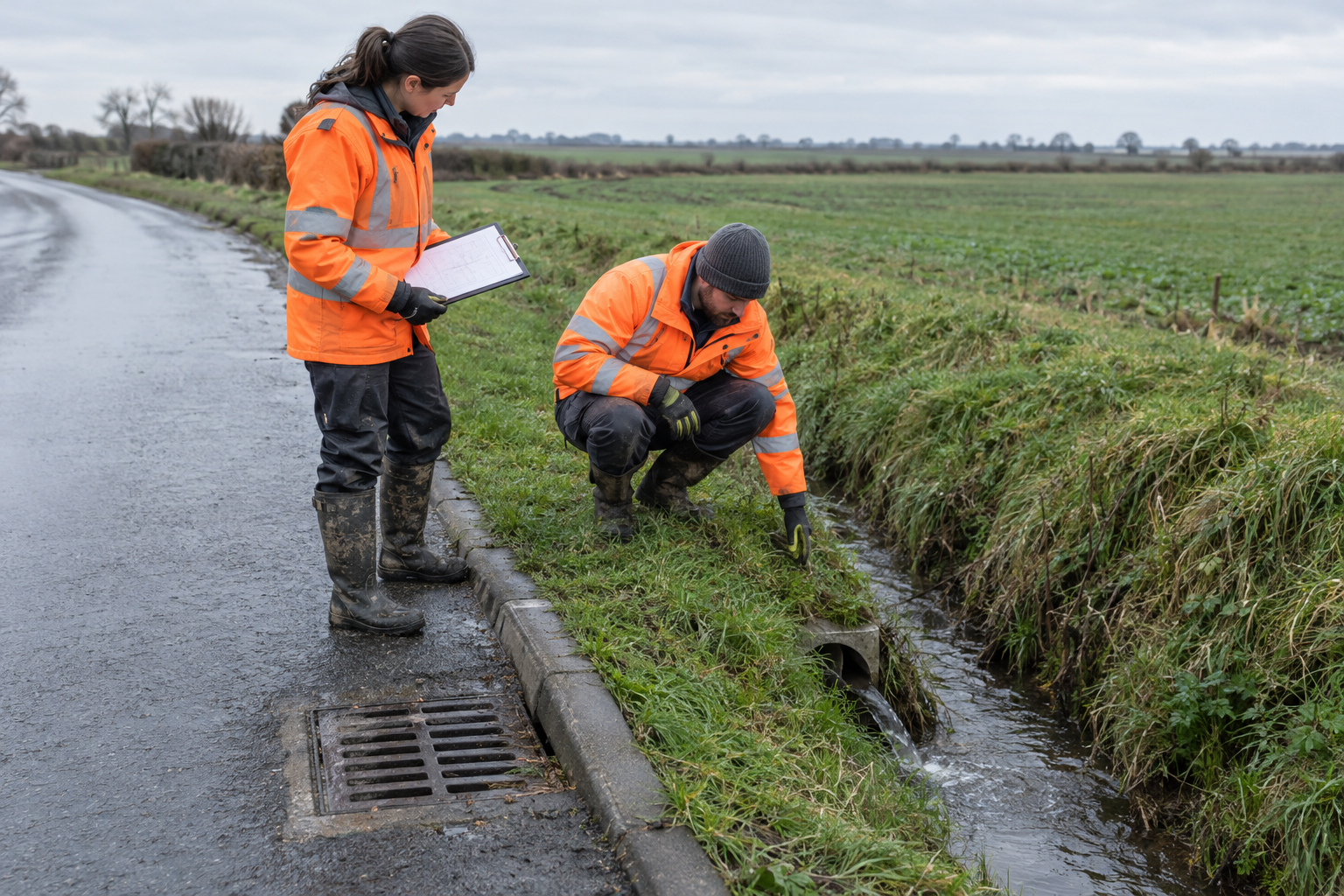
This is where coordination between highways engineers, drainage teams and groundworks contractors becomes valuable. The repair specification needs to address the cause of failure, while the construction sequence must keep excavations, water management and traffic movements under control.
Better Data Should Lead to Better Maintenance Decisions
Road condition surveys, inspection records and public reports all provide useful evidence, but they answer different questions. A reported pothole identifies a particular concern. A network survey helps show broader deterioration. Neither should be treated as a complete substitute for engineering judgement.
The strongest asset management approach combines these sources with information about traffic, drainage, previous repairs and the consequences of failure. A road serving a village, industrial estate or essential bus route may have an importance that is not fully reflected in its traffic volume alone.
Avoid letting complaint numbers set the whole programme
Public reporting is important, particularly for identifying defects between inspections. However, allocating investment mainly according to complaint volumes risks favouring the most vocal locations over roads with greater maintenance needs. Councils need a transparent way to balance safety, condition, network function and whole-life cost.
Digital inspection tools and vehicle-mounted imaging can help teams assess large networks more consistently. Their value depends on data quality, appropriate validation and whether the results actually inform treatment selection. A detailed map of defects is not much use if it cannot be turned into a deliverable works programme.
Records should also follow the repair through to completion. Knowing what was repaired, how it was treated and whether it subsequently failed helps distinguish a poor construction outcome from a treatment that was unsuitable for the underlying problem.
What Councils Should Measure Beyond Potholes Filled
Pothole repair totals are easy to communicate, but they can create a misleading picture of success. A rising total might demonstrate a productive repair team, a deteriorating network or both. Equally, fewer repairs could reflect successful prevention, reduced resources or a change in reporting practice.
A more useful assessment considers trends across several years. Are fewer roads moving into poor condition? Are repeat defects becoming less common? Is preventative maintenance reaching suitable roads before more expensive intervention becomes necessary? Those questions get closer to whether the funding is changing the trajectory of the network.
Track durability as well as delivery
Councils should distinguish between temporary measures used to make a defect safe and permanent repairs intended to provide a longer service life. Both can have a legitimate role, but presenting them as equivalent outputs obscures what has actually been achieved.

For permanent repairs, workmanship still matters enormously. Preparation, removal of unsound material, appropriate bond between layers, compaction and joint treatment all influence performance. Wet conditions and difficult access can complicate delivery, which is why specifications and quality checks need to reflect the realities of the site.
Useful reporting would explain the balance between reactive repairs, preventative treatments and more substantial renewal, alongside comparable condition data. It should also acknowledge factors such as severe weather and construction cost changes. That provides a fairer test of council performance than a league table based solely on the number of holes filled.
Delivery Must Be Coordinated With Utilities and Road Users
Few things undermine confidence faster than seeing a newly resurfaced road excavated shortly afterwards. Not every utility intervention can be predicted, particularly emergency repairs, but planned works should be coordinated wherever practicable. Early discussions with utility companies can identify opportunities to complete necessary work before a new surface is laid.
In England, street works controls provide mechanisms for coordination and, in certain circumstances, restrictions on subsequent works following substantial road works. These are subject to statutory procedures and exceptions, so they should not be presented as an absolute guarantee that a renewed carriageway will remain untouched.
For rural communities, delivery planning also needs to account for the limited diversion options. A closure that looks straightforward on a map may send heavy vehicles through unsuitable lanes or disrupt agricultural access. Bus services, school transport, emergency access and local businesses should be considered when selecting working hours and construction phases.
Good communication cannot remove the inconvenience of highway works, but it can explain why a particular treatment is being used and what disruption to expect. That is especially useful for preventative schemes, where residents may reasonably ask why a road with no obvious potholes is being treated while a visibly damaged route waits for a different, more substantial repair.
Will Councils Finally Get Ahead?
The funding creates an opportunity, not a guarantee. Councils will make lasting progress where additional investment supports properly investigated schemes, timely preventative treatments and reliable construction quality. Where budgets remain unpredictable or routine maintenance is squeezed, the cycle of deterioration will be harder to break.
For contractors and developers, the practical signal to watch is a sustained pipeline of planned highway work, rather than a short burst of emergency repairs.
Takeaways
England’s pothole problem will not disappear through repair volumes alone. Success means keeping water out, selecting appropriate treatments and renewing roads before failure becomes widespread. More funding helps, but consistent maintenance decisions will determine whether councils genuinely get ahead.