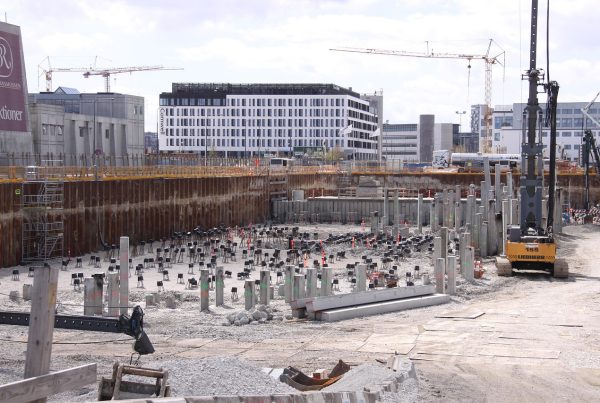
The Government’s plan to identify the final locations for a new generation of UK new towns by Christmas has put large scale development firmly back on the agenda.
Much of the public discussion will focus on housing numbers, planning decisions and where the sites might be. From a groundworks perspective, however, the more revealing question is what it will take to turn those locations into functioning communities.
New towns are not simply larger housing estates. They require roads, drainage, utilities, public transport connections, schools, healthcare facilities and extensive public spaces. Before most of that can be built, contractors must understand and prepare the ground beneath it. In my view, the scale and complexity of this early work will be one of the biggest factors determining whether the programme can deliver homes at the pace being discussed.
What the new towns programme could mean for construction
The renewed interest in new towns reflects the pressure to increase housing delivery across England while creating communities that are supported by proper infrastructure. Rather than adding isolated developments to existing settlements, the ambition is to plan homes, employment space and essential services together. That approach can produce better places, but it also creates significant construction and civil engineering demands from the outset.
The proposed locations are being assessed by the New Towns Taskforce, with the final sites expected to be confirmed by Christmas. Until the locations are settled and detailed masterplans progress, it is impossible to put a precise figure on the volume of groundworks required. Even so, developments involving tens of thousands of homes will inevitably require multi-year programmes of earthworks, infrastructure installation and phased site preparation.
Some locations may be urban extensions connected to existing towns, while others could involve the regeneration of underused land or the creation of largely standalone settlements. Each model presents different ground conditions and logistical challenges. A greenfield location might require extensive topsoil management, new drainage networks and major access roads. Previously developed land could introduce contamination, buried structures, restricted access and more complicated remediation work.
Housing numbers tell only part of the story
Headline housing targets can make the programme sound like a straightforward question of how quickly homes can be constructed. In practice, residential delivery depends on infrastructure capacity. A site cannot support thousands of properties without reliable water supply, wastewater connections, electricity, digital infrastructure and safe transport routes.
This means enabling works must be coordinated with housebuilding rather than treated as a separate preliminary exercise. Groundworks packages are likely to be delivered in phases, with strategic infrastructure installed early and local networks extended as individual neighbourhoods come forward. Poor sequencing at this stage can create delays, repeated excavation and unnecessary costs later in the programme.
The groundworks needed before new communities can rise
Every proposed new town will begin with detailed investigation. Ground surveys, trial pits, boreholes and laboratory testing help establish soil strength, groundwater conditions, contamination risks and the presence of existing services. This information shapes decisions about foundations, drainage, earthworks and construction access.
Site preparation may involve vegetation clearance, demolition, remediation and the removal or treatment of unsuitable material. On very large sites, achieving the required development levels can mean moving substantial quantities of soil. A well-designed cut and fill strategy can reduce the need to import or export material, helping to control costs, construction traffic and environmental impact.
Drainage and flood resilience
Drainage will be a central consideration, particularly where development changes how rainwater moves across a landscape. New roads, roofs and paved areas create impermeable surfaces, increasing the volume and speed of surface water runoff. Groundworks teams may therefore need to construct attenuation basins, swales, culverts, carrier drains and other sustainable drainage features.
These systems must be integrated into the wider masterplan rather than fitted around completed layouts. Space may be needed for ponds, landscaped channels and flood storage areas, while drainage levels can influence road design and plot elevations across the site. With climate resilience becoming increasingly important, designing only for minimum short-term requirements would be a false economy.
Roads, utilities and development platforms
Strategic access is another major early requirement. Construction traffic needs safe routes into and around the site before permanent streets are available. Temporary haul roads may later be replaced by adoptable highways, requiring careful coordination between earthworks, drainage, kerbing, surfacing and utility installation.
Utility corridors will also need to accommodate electricity, water, telecommunications and, where appropriate, low carbon heat networks. Installing these services at the right depth and in the correct sequence is essential. Once roads and public spaces have been completed, correcting clashes or adding missing capacity becomes slower, more disruptive and considerably more expensive.
Ground conditions will shape cost and programme certainty
Two sites of a similar size can demand very different large scale commercial groundworks budgets. Geology, groundwater, historic land use and topography all affect how easily land can be prepared for development. Early site selection should therefore consider buildability alongside planning policy, housing need and transport potential.
Weak or variable soils may require ground improvement, deeper foundations or the replacement of unsuitable material. High groundwater can complicate excavations and utility installation, while steep terrain may increase the need for retaining structures and carefully engineered development platforms. These issues are manageable, but they become expensive when discovered after layouts and delivery dates have already been fixed.
Brownfield remediation and hidden constraints
Where a new town includes former industrial or previously developed land, remediation could become a substantial part of the enabling programme. Potential issues include hydrocarbons, heavy metals, asbestos fragments, buried tanks and unrecorded foundations. Old mine workings, landfill deposits and redundant utility infrastructure can create further uncertainty.
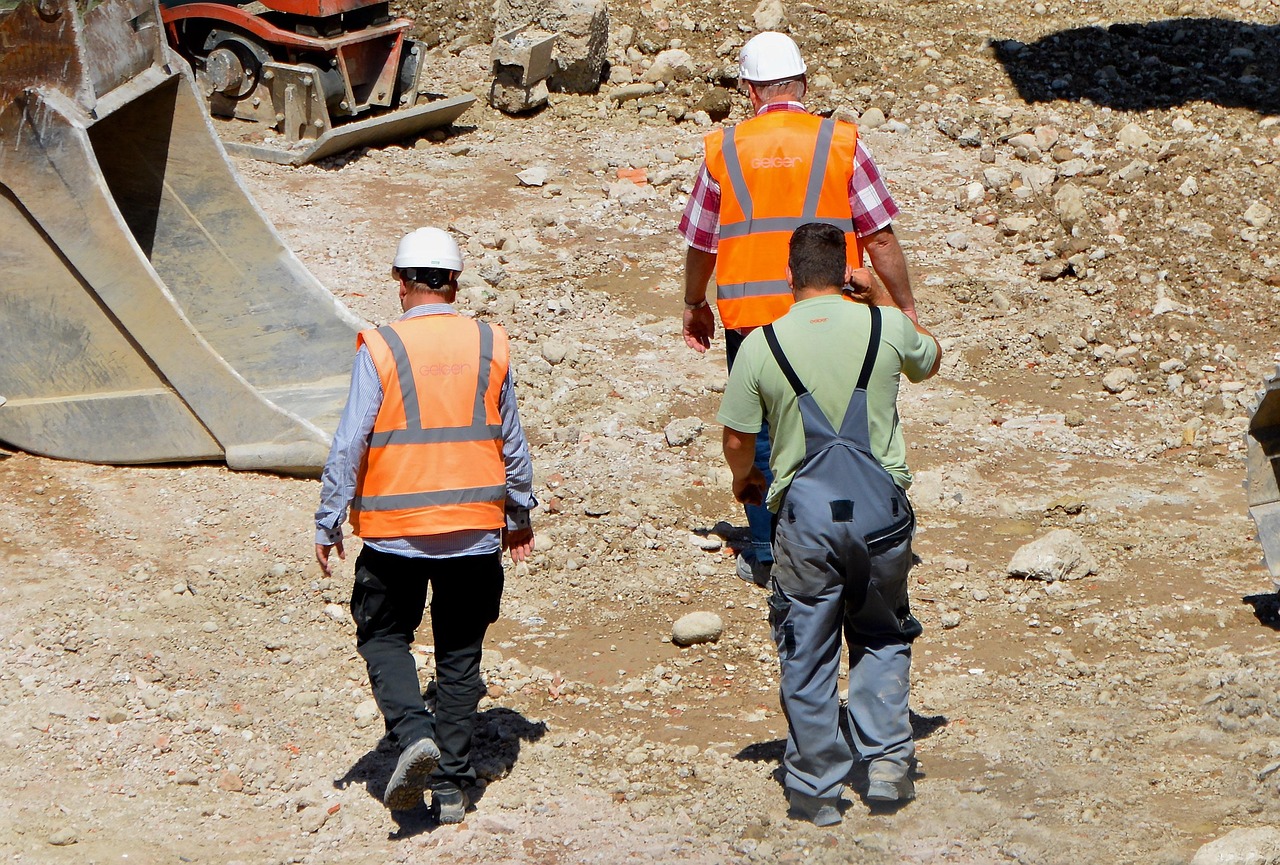
Not every contaminated site requires material to be removed. Depending on the risks and intended land use, soil may be treated, stabilised, capped or reused within an engineered solution. The right approach depends on reliable investigation and close coordination between environmental specialists, designers, regulators and groundworks contractors.
Material tracking will be particularly important across large sites. Contractors need to know where excavated soil originated, how it has been classified and where it can safely be reused. Effective soil management can reduce waste and vehicle movements, but it must be supported by testing, documentation and clear responsibility.
Archaeology, ecology and unexploded ordnance
Ground risks are not limited to soil strength and contamination. Archaeological remains may need to be investigated before bulk excavation begins, particularly on greenfield sites with a long history of settlement or agriculture. Ecological constraints can also affect when vegetation clearance, drainage work and earthmoving may take place.
Some locations may require unexploded ordnance assessments because of their wartime history or former military use. Discovering such constraints during active construction can stop work across a wider area. Bringing specialist surveys forward allows mitigation to be included in the programme rather than handled as an emergency.
Managing earthworks on a new town scale
Earthworks for a new town are closer to landscape engineering than routine plot preparation. The aim is not merely to level individual parcels. Contractors may need to reshape catchments, form road corridors, create flood storage, prepare school and commercial sites, and establish platforms for several housing phases.
A site wide earthworks model can help balance cut and fill across the development. Material excavated for an attenuation basin, for example, may be suitable for raising a nearby development platform. This sounds simple, but success depends on soil condition, moisture content, haul distance and the timing of each phase.
Material that is technically reusable may not be available when it is needed. Without coordinated phasing, it could be stockpiled repeatedly or taken off site before replacement fill is imported later.
Weather and soil management
British weather can quickly affect earthmoving productivity. Fine grained soils may become difficult to compact after sustained rainfall, while exposed formations can deteriorate if they are left unprotected.
Practical measures include temporary drainage, staged stripping, protected haul routes and limiting the area of exposed subsoil. Lime or cement modification may be suitable in some circumstances, subject to testing and environmental controls.
Construction logistics could affect surrounding communities
A major groundworks programme brings excavators, dozers, dump trucks, rollers and delivery vehicles onto site for extended periods. If soil, aggregate and demolition material must be transported on public roads, the effect can reach well beyond the development boundary.
Logistics plans should identify vehicle routes, delivery times, wheel washing facilities, holding areas and traffic control measures. They must also account for schools, residential streets and existing businesses near site entrances.
On the largest sites, temporary internal roads can separate construction traffic from completed neighbourhoods. This becomes essential once the first residents move in while work continues elsewhere.
Opportunities for lower impact delivery
The scale of the programme also creates opportunities to reduce carbon and waste. Reusing excavated material on site can cut lorry mileage, while recycled aggregates may be appropriate for selected road and drainage applications.
Temporary haul routes, compounds and drainage systems should be designed with their eventual removal or reuse in mind. Even small efficiencies become significant when repeated across thousands of plots and several years of construction.
Phasing infrastructure without creating future bottlenecks
One of the hardest decisions will be how much infrastructure to build at the start. Installing oversized networks too early ties up capital, but providing only enough capacity for the first phase can leave later neighbourhoods dependent on expensive upgrades.
I believe strategic infrastructure must be planned for the completed settlement, even where delivery is divided into manageable packages. Main drainage routes, primary roads and utility corridors should reserve sufficient space and capacity for later growth.
Interfaces between contractors and developers
New towns are unlikely to be delivered by a single contractor or housebuilder. Several organisations may work on adjacent parcels while public bodies and utility companies deliver strategic assets.

Clear design responsibility is vital. If one package ends at a road boundary and another begins several months later, temporary drainage and access still need to function between them.
Adoption and long term maintenance
Infrastructure is not complete simply because it has been built. Roads, sewers, drainage features and public spaces may need to satisfy adoption requirements before responsibility transfers to the relevant authority or organisation.
Quality assurance should therefore be embedded throughout construction. Accurate records of levels, materials, tests and installed services are far easier to collect as work progresses than to recreate afterwards.
Skills, plant and supply chain capacity
If several new towns progress at the same time, demand for experienced civil engineering teams could rise sharply. Site managers, engineers, surveyors, machine operators, groundworkers and utility specialists will all be required, alongside environmental and geotechnical expertise.
Plant availability is only one part of the equation. Modern machinery can move material efficiently, but it still needs competent operators and a well planned sequence of work.
Long term programmes can support apprenticeships and local employment because they provide a more stable pipeline than short projects. However, that benefit will depend on procurement giving contractors enough visibility to invest in training.
Pressure on materials and utility connections
New towns will consume considerable quantities of aggregate, concrete products, drainage components, kerbs and surfacing materials. Demand forecasts should consider whether local suppliers can support several major phases without creating delays or excessive transport distances.
Utility connections may prove even more restrictive. Electricity network reinforcement, water resources and wastewater treatment capacity can involve approvals and construction well beyond the site itself.
Why procurement will influence build quality
Groundworks are sometimes procured on price before design information is sufficiently developed. On a straightforward scheme, that can still create disputes and variations. On a new town, where quantities and constraints may evolve over many years, it can undermine programme certainty from the outset.
Early contractor involvement can help test whether designs are practical, whether earthworks assumptions are realistic and whether temporary works have been allowed for. It also gives the delivery team a chance to identify alternative construction methods before key decisions become difficult to change.
Packages still need commercial discipline, but the cheapest initial figure is not necessarily the lowest final cost. A contractor that understands material reuse, drainage sequencing and site logistics may prevent far greater expense later.
What must happen after the final sites are announced
Once the locations are confirmed, attention must move quickly from political ambition to deliverable infrastructure plans. Each site will need robust ground investigations, realistic phasing and early engagement with highways, water, energy and environmental authorities.
Masterplans should be tested against levels, drainage routes, material movements and construction access before development parcels are fixed.
This practical work may be less visible than housing design, but it will determine whether homes can be delivered safely, efficiently and in the right sequence.
Groundworks must be treated as strategic infrastructure
The strongest programmes will treat groundworks as part of place creation rather than a preliminary cost to minimise. Roads, drainage and development platforms influence everything built above them, while decisions about soil and water management can affect the surrounding area for decades.
Confirming the final sites by Christmas will be an important milestone, but it will only begin the harder delivery process. If the Government wants new towns to become well connected, resilient communities, investment in the ground beneath them must match the scale of the ambition above.
That is where delivery will ultimately be won or lost.