A groundworks quote can look reassuringly detailed while still leaving out the items most likely to push a project over budget. A price for excavation, drainage and concrete tells only part of the story if it does not explain assumptions, quantities, ground conditions and responsibility for unexpected work.
I have found that the cheapest quote on paper is often not the cheapest once work begins. Before comparing totals, it is worth checking exactly what each contractor has included, excluded or left open to interpretation. The following omissions are among the most common, and each can create expensive surprises later.
Start by checking what sits behind the headline price
A reliable groundworks quotation should describe the scope in enough detail for you to understand what is being priced. It should identify the relevant drawings, expected excavation depths, material specifications, estimated quantities and disposal arrangements. If the document simply lists broad activities with a single total, it becomes difficult to tell whether every contractor is pricing the same job.
Ambiguity also creates room for legitimate additional charges. A contractor may have allowed for a standard excavation depth while the engineer’s design requires deeper foundations, or priced ordinary soil removal when the site contains contaminated material. Asking for a clear breakdown is not about catching anyone out. It is about establishing a fair basis for comparison and reducing disagreement once machinery and labour are already on site.
1. Disposal of excavated material
Excavated soil does not disappear once it leaves the trench. It must either be reused safely on site or loaded, transported and taken to an appropriate facility. Many quotations include excavation but do not clearly include muck away, tipping charges, waste classification or the cost of additional loads if the estimated volume increases.
This omission can be particularly costly because excavated material expands when disturbed. A cubic metre of compacted ground can occupy considerably more space after digging, so the number of lorry movements may be higher than a simple trench calculation suggests. Wet clay, mixed demolition waste and contaminated soil can also cost more to handle and dispose of than clean inert material.
What to look for in the quote
The quotation should state the assumed volume or number of loads, the type of material being removed and whether haulage and disposal fees are included. It should also explain how additional loads will be charged and who is responsible for arranging any required waste testing or documentation.
Without this information, disposal can move from a minor line item to a substantial unplanned cost. It may also delay the programme if stockpiled material blocks access or if the correct disposal route has not been agreed before excavation starts.
2. Temporary works and excavation support
Groundworks are often priced as though trenches and excavations will remain stable by themselves. In practice, soil type, depth, groundwater, nearby structures and site traffic may mean that shoring, trench boxes, battering or other temporary support is required.
Temporary works are not optional simply because they were missed during pricing. They protect workers, neighbouring property and the permanent works. Guidance from the engineer, site investigation and construction plan should be reflected in the contractor’s assumptions rather than left until an unsupported trench has already been opened.
Why the later cost can exceed expectations
The direct expense may include specialist equipment hire, temporary works design, extra excavation and additional labour. Wider working space can also increase the volume of material removed and the amount of imported stone needed for reinstatement.
A useful quote should identify any temporary works included, along with the conditions under which extra support would be required. Where the final design is not yet available, ask for a stated allowance or schedule of rates so that the potential cost is visible before work begins.
3. Groundwater management and dewatering
Water can change the cost and pace of groundworks very quickly. A quote may assume dry excavations even where trial pits, local knowledge or the season suggest groundwater could be encountered.
Dewatering might involve sump pumps, wellpoint systems, settlement tanks, standby equipment and ongoing monitoring. The discharge also needs somewhere lawful and suitable to go. Pumping silty water directly into a surface water drain or watercourse is not an acceptable default solution.
What the contractor should clarify
Ask whether the price includes pumps, fuel or electricity, filtration equipment, supervision and discharge arrangements. The quote should also state what level of groundwater has been assumed and whether pumping outside normal working hours would carry an additional charge.
A small pump used for a few hours may be a relatively modest expense. Continuous pumping, specialist dewatering or treatment of contaminated water can cost thousands of pounds and affect the programme.
Water management should be discussed alongside the construction sequence. Opening long sections of trench unnecessarily can increase exposure to rainfall and groundwater, while shorter sections may be easier to control and reinstate.
4. Unsuitable ground and formation remediation
Many quotes price excavation to the designed formation level but say little about what happens if the ground at that level is weak, wet or unsuitable.
Remedial work may include digging deeper, installing a geotextile or geogrid, importing additional stone, using lean mix concrete or redesigning part of the foundation. Each option affects materials, labour, plant and disposal volumes.
The difference between an allowance and an open-ended risk
No contractor can guarantee what lies beneath an uninvestigated site. They can, however, explain their assumptions and provide rates for likely remedial measures. For example, the quotation might state a price per cubic metre for additional excavation and stone replacement, together with rates for extra muck away and geotextile installation.
Without those rates, you may have little basis for assessing the cost when a soft spot is discovered. A variation that initially sounds like a small amount of extra digging can expand into additional lorry movements, imported aggregate, compaction work and engineer inspections.
I would also check who has authority to approve over-excavation. Digging deeper without an agreed instruction can create disputes, while waiting several days for approval can leave plant and labour standing idle.
5. Imported fill, stone and compaction requirements
A quote may include phrases such as “stone up” or “backfill excavations” without specifying the material, depth or compaction standard. Those details have a direct effect on cost.
The quantity delivered is only part of the expense. Imported material needs to be unloaded, spread in suitable layers and compacted using appropriate plant. Testing may also be required to demonstrate that the finished layer meets the engineer’s specification.
Questions worth asking
Check whether the price identifies the aggregate specification, estimated tonnage, compacted thickness and number of layers. It should say whether delivery, placing, compaction and testing are included.
Moisture and ground conditions can influence productivity. If aggregate has to be moved across the site using dumpers rather than tipped near its final position, labour and plant costs will rise.
Be cautious if one contractor has allowed 100 tonnes of stone while another has allowed 180 tonnes for apparently the same scope. The lower total may reflect a different assumption rather than a more competitive rate.
6. Drainage connections, testing and approvals
Installing drainage within the site boundary is only part of a complete drainage package. The system still needs to connect to an approved outfall, and that connection may involve permits, inspections, specialist contractors or work in the public highway.
Quotes commonly omit connection fees, sewer applications, road opening requirements, traffic management and final testing. They may also exclude pumping stations, attenuation controls or alterations needed when the existing drain is shallower or deeper than expected.
Define where the contractor’s responsibility ends
The quotation should identify the exact connection point and state whether breaking into an existing chamber or pipe is included. It should cover chamber construction, pipe bedding, surround, backfill and reinstatement.
Testing is another frequent gap. Air tests, water tests, CCTV surveys and as-built drainage records may be required before the system is accepted. If they are not included, you could face extra charges shortly before handover, when there is little practical choice but to proceed.
Failed tests can create further expense if completed surfaces must be reopened to repair displaced joints, incorrect falls or damaged pipes. I would therefore look for a quote that includes testing at sensible stages, rather than leaving every check until paving, concrete or landscaping is complete.
7. Concrete pumping, access and waiting time
A quotation for concrete foundations or slabs may include the concrete itself while excluding the practical cost of placing it. If a mixer cannot discharge directly into the excavation, a concrete pump, additional labour or other placing equipment will be needed.
Pump hire is rarely just a single fixed figure. Charges may include travel, set-up, pipeline, additional metres of hose, minimum volumes, cleaning and waiting time.
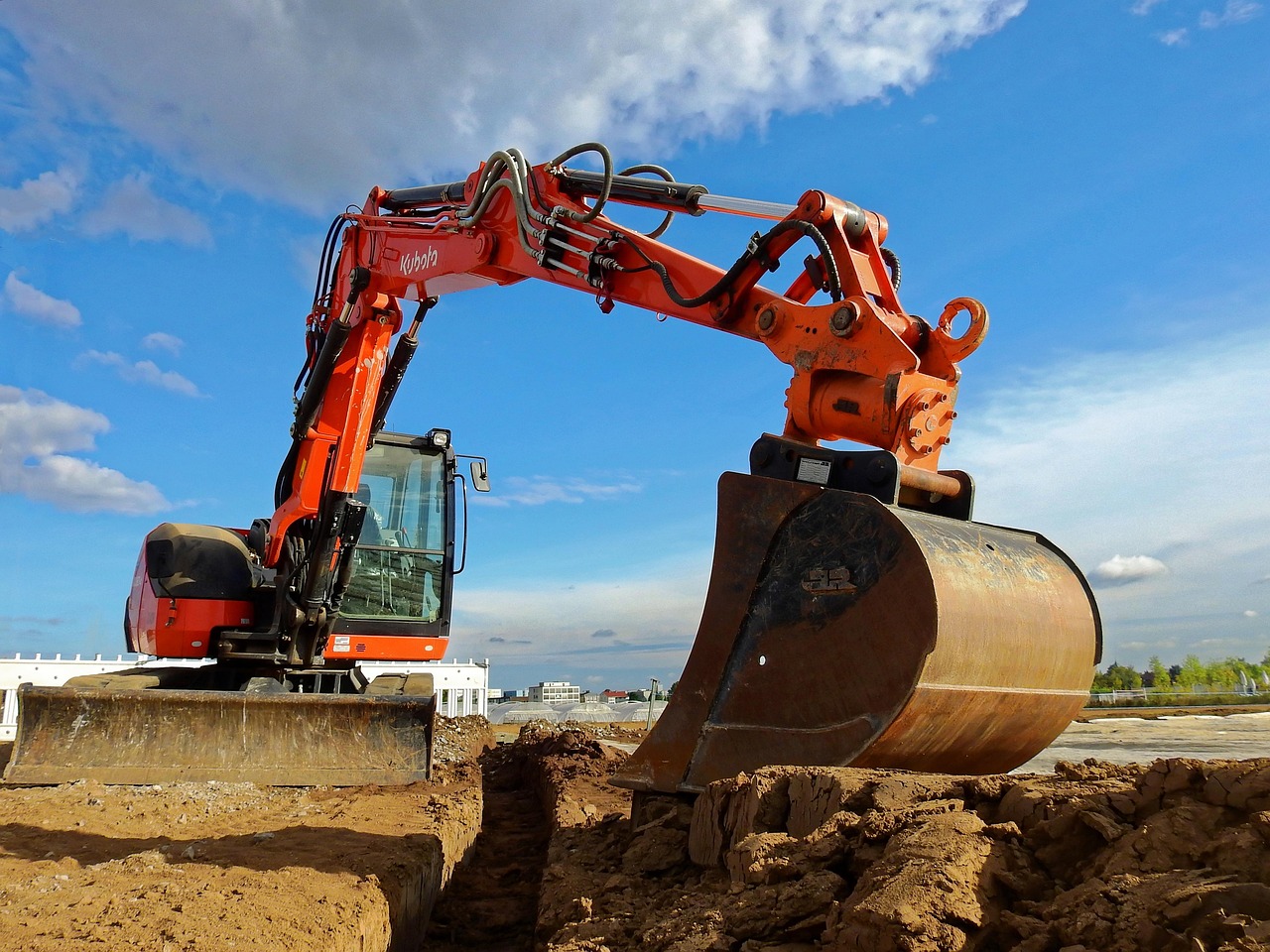
Concrete quantities also need scrutiny
The quote should state the assumed volume, concrete grade and method of placement. It should explain how overbreak is treated because irregular excavations often consume more concrete than the neat dimensions shown on a drawing.
For example, a trench designed to be 600 mm wide may become wider because of unstable sides or a large excavator bucket. Across a substantial foundation run, that difference can add several cubic metres of concrete.
Ask whether the allowance includes short-load charges, washout arrangements, testing, finishing and protection during poor weather. Concrete supply is time-sensitive, so clarity about aborted pours and waiting charges is particularly important.
8. Service searches, protection and diversions
Existing utilities are one of the biggest risks in groundworks. Drawings and statutory records are useful, but they do not always show the precise position or depth of every cable, pipe and duct.
A basic quote may assume that all services have already been located and that excavation can proceed mechanically. If scanning, trial holes and hand digging are later required, progress will slow and labour costs will increase.
What a complete allowance should cover
Look for confirmation of who will obtain utility records, scan the work area and mark identified services. The contractor should state whether trial holes, hand excavation and temporary support are included.
Service strikes can cause injury, disruption and serious financial consequences. Even without a strike, discovering an unrecorded cable through a proposed foundation may require redesign, specialist attendance and programme changes.
Responsibility should be shared sensibly. The client or principal contractor may hold existing survey information, while the groundworks contractor controls the excavation method. The quote and construction information should make those responsibilities explicit.
9. Reinstatement, cleaning and demobilisation
Some quotations end when the underground work is complete. They do not necessarily include reinstating roads, paths, verges, fences or landscaped areas disturbed by excavation and plant movements.
Reinstatement can be more expensive than expected because matching an existing finish is not always straightforward. Tarmac may need to be saw cut and laid across a wider area to produce a durable repair.
Agree the required finish before work starts
The quote should define the area, material and standard of reinstatement. It should also identify who is responsible for damage to kerbs, paving, drainage channels and soft landscaping caused by construction traffic.
Site set-up andSite set-up and demobilisation deserve attention too. Temporary fencing, welfare connections, wheel washing, road sweeping and removal of unused materials can all generate charges if they are not included.
How to compare groundworks quotes properly
I recommend comparing quotations line by line rather than looking only at the totals. Create a simple schedule covering quantities, specifications, assumptions, exclusions, provisional sums and rates for additional work.
Pay particular attention to vague wording such as “if required”, “by others” or “subject to site conditions”. These phrases are sometimes reasonable, but they should be supported by clear rates or defined responsibilities.
Questions to settle before appointment
Confirm which drawings and revisions have been priced, who will set out the works and how variations must be approved. Ask for the anticipated programme, payment schedule and evidence of suitable insurance.
A thorough groundworks quote may not produce the lowest initial total, but it gives you a much better view of the likely final cost. The aim is not to eliminate every unknown.