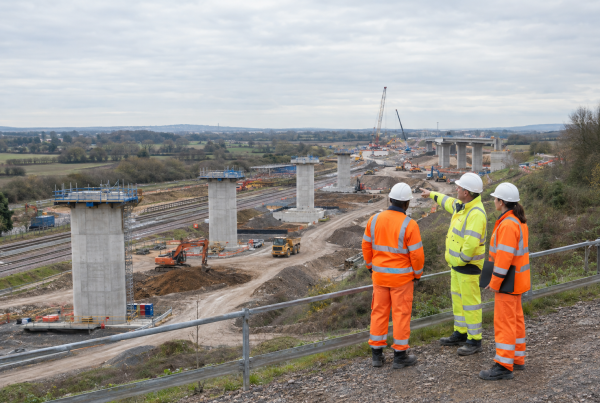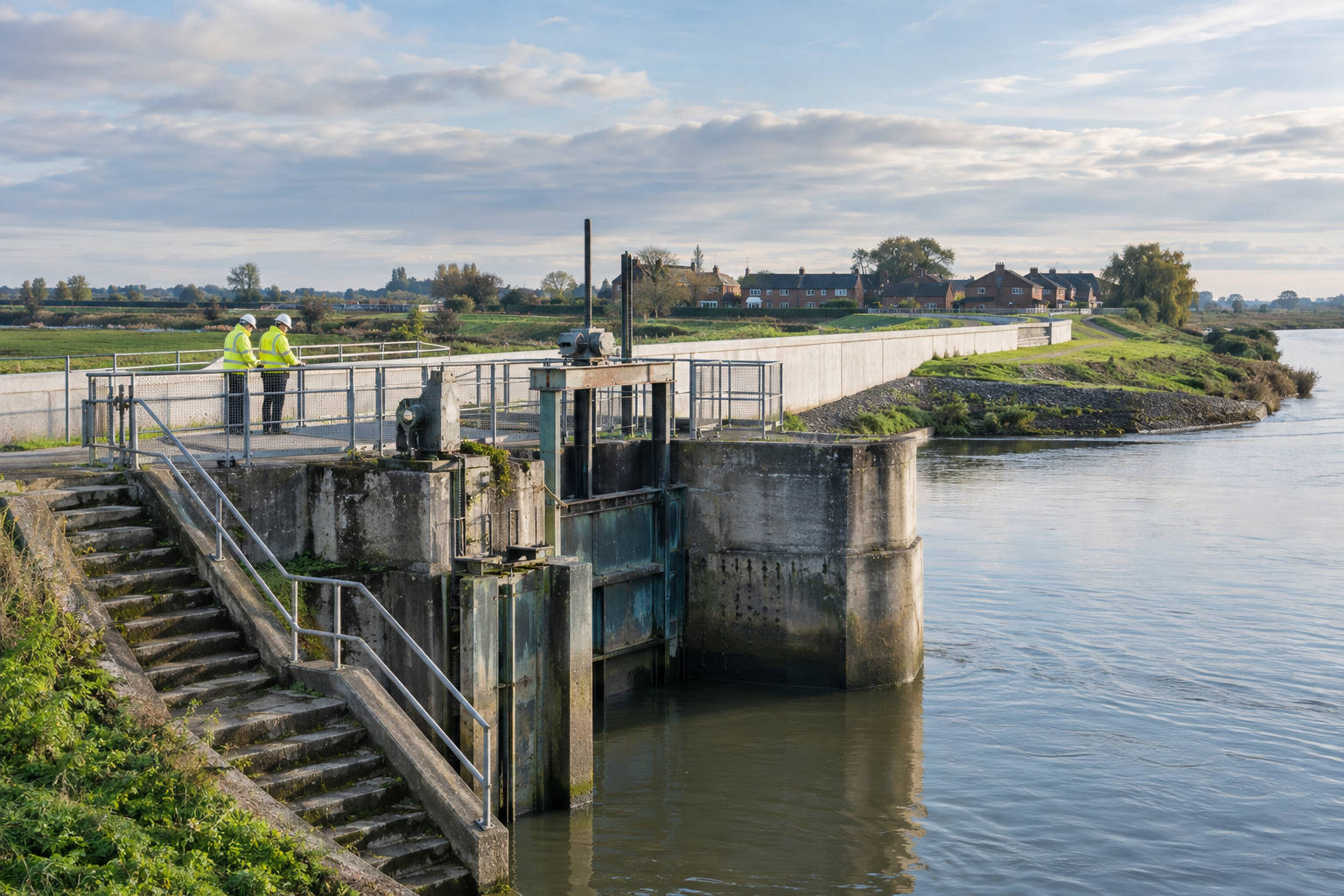
A new flood wall is easy to photograph. A repaired sluice gate or a serviced pumping station rarely attracts the same attention. Yet both can be essential to keeping homes, roads and businesses dry. That difference in visibility sits at the heart of the debate over England’s flood defence spending: building new protection matters, but so does keeping existing assets working.
For civil engineering contractors, developers and drainage professionals, this is more than a question of government budgets. The balance between capital investment and maintenance affects asset reliability, construction planning and the resilience of infrastructure across Lincolnshire, the East Midlands and the wider country. The useful question is not simply how much England spends, but whether that spending supports flood protection throughout its working life.
What headline flood funding figures actually tell us
Flood defence announcements often focus on capital programmes: investment in new schemes, major improvements and the replacement of ageing infrastructure. England’s £5.2 billion flood and coastal erosion risk management programme, originally announced for 2021 to 2027, is a prominent example. That figure described a multi-year capital commitment, not an annual budget for maintaining every flood defence in England.
Routine maintenance is a different part of the funding picture. It can include inspections, vegetation management, servicing mechanical equipment and repairing smaller defects. Major refurbishment or replacement may qualify as capital expenditure, so the distinction is not simply “new construction versus everything else”. Understanding which work sits in which budget is essential before judging whether maintenance is being squeezed.
More money does not automatically mean more protection
Construction inflation can reduce what a capital programme delivers even when its headline allocation remains unchanged. Higher material, labour and energy costs, alongside design changes and delivery constraints, can mean fewer schemes or a narrower scope. The National Audit Office’s 2023 report on resilience to flooding highlighted both reduced expectations for the capital programme and concerns about maintaining existing defences.
That does not establish that every pound spent on a new scheme has been taken from maintenance. It does show why funding announcements need to be tested against delivery and condition data. Capital allocations, completed schemes and functioning assets are three different measures. A credible assessment needs all three, alongside the consequences of failure at individual locations.
Why maintenance is part of flood protection, not an optional extra
Flood defence systems depend on more than their most visible structures. An embankment may rely on outfalls, gates, pumps and connecting drainage infrastructure to perform as intended. Deterioration in one component can undermine the wider system, particularly during prolonged rainfall, high river levels or tidal conditions that restrict discharge.
In low-lying parts of Lincolnshire and the surrounding Fens, that interdependence is especially important. Where drainage relies on pumping and controlled water levels, mechanical reliability and access for maintenance are fundamental operational requirements. A substantial new defence cannot, by itself, compensate for every weakness elsewhere in the drainage network.
Responsibility is spread across several organisations
There is no single organisation maintaining every flood-related asset. The Environment Agency has a strategic overview role and carries out work on main rivers and sea defences. Lead local flood authorities manage local flood risk responsibilities, while internal drainage boards undertake drainage and water-level management functions within their districts. Highway authorities, water companies and private owners also have responsibilities for particular assets and systems.
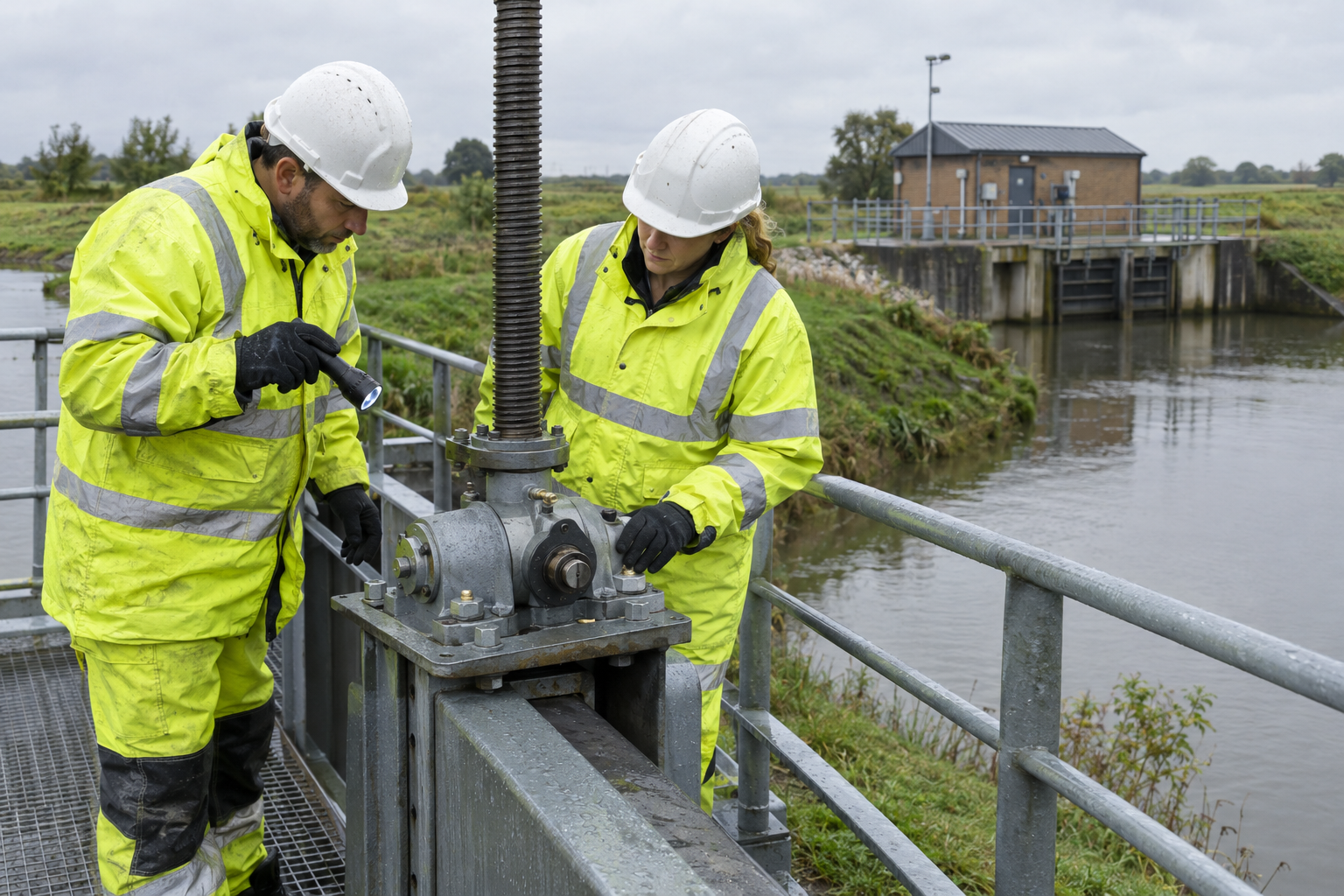
For project teams, the practical lesson is to establish ownership, maintenance duties and access arrangements early. A drainage design needs a realistic inspection regime, maintainable components and clarity over who funds future work. Otherwise, a scheme can reach practical completion without a convincing plan for keeping it effective.
Maintenance should also be risk-based rather than reduced to a blanket demand for more dredging or vegetation clearance. The appropriate intervention depends on hydraulic performance, asset condition, environmental requirements and the consequences of failure. Sometimes the priority is repairing a gate or restoring pump reliability, rather than undertaking the most visible work.
What the evidence says about the maintenance gap
The National Audit Office’s 2023 report, Resilience to flooding, provides a useful benchmark. It reported that, at March 2023, 93.5% of the Environment Agency’s high-consequence flood defence assets were at their required condition, against a target of 98%. These are assets where failure would have particularly serious consequences. The gap matters because the condition of existing infrastructure affects the protection available today, not just what a future programme might deliver.
Those figures need careful interpretation. An asset below its required condition has not necessarily failed, nor does it automatically offer no protection. It means its condition falls short of the standard required for its role. Equally, a defence assessed as being in good condition can still be overtopped by an event exceeding its design standard. Asset condition and the level of protection provided are related, but they are not interchangeable.
A maintenance backlog is not just a list of outstanding repairs
Deferred work can change the nature and cost of an intervention. A localised defect in an embankment might initially require a relatively modest repair. If deterioration continues, the eventual work could involve more extensive earthworks, access improvements and temporary measures to maintain protection during construction. With mechanical equipment, delays can also create difficulties obtaining replacement parts for ageing installations.
There is an operational cost too. An asset requiring closer monitoring may consume staff time, trigger temporary arrangements or need additional attention during a flood warning. Those demands do not always appear in a straightforward comparison between the price of repairing an asset now and replacing it later.
The important question is whether deferred maintenance represents a managed risk or an accumulating liability. Answering that requires reliable inspections, a clear understanding of likely failure modes and realistic estimates of the consequences. The age of a structure alone is not enough to decide its priority.
Are new schemes actually taking money away from maintenance?
The evidence supports concern about maintaining existing assets, but the phrase “new schemes at the expense of maintenance” needs qualification. Capital and revenue budgets are allocated and controlled differently. Cancelling a proposed flood wall does not necessarily release money that an asset manager can immediately spend on pump servicing or routine inspections.
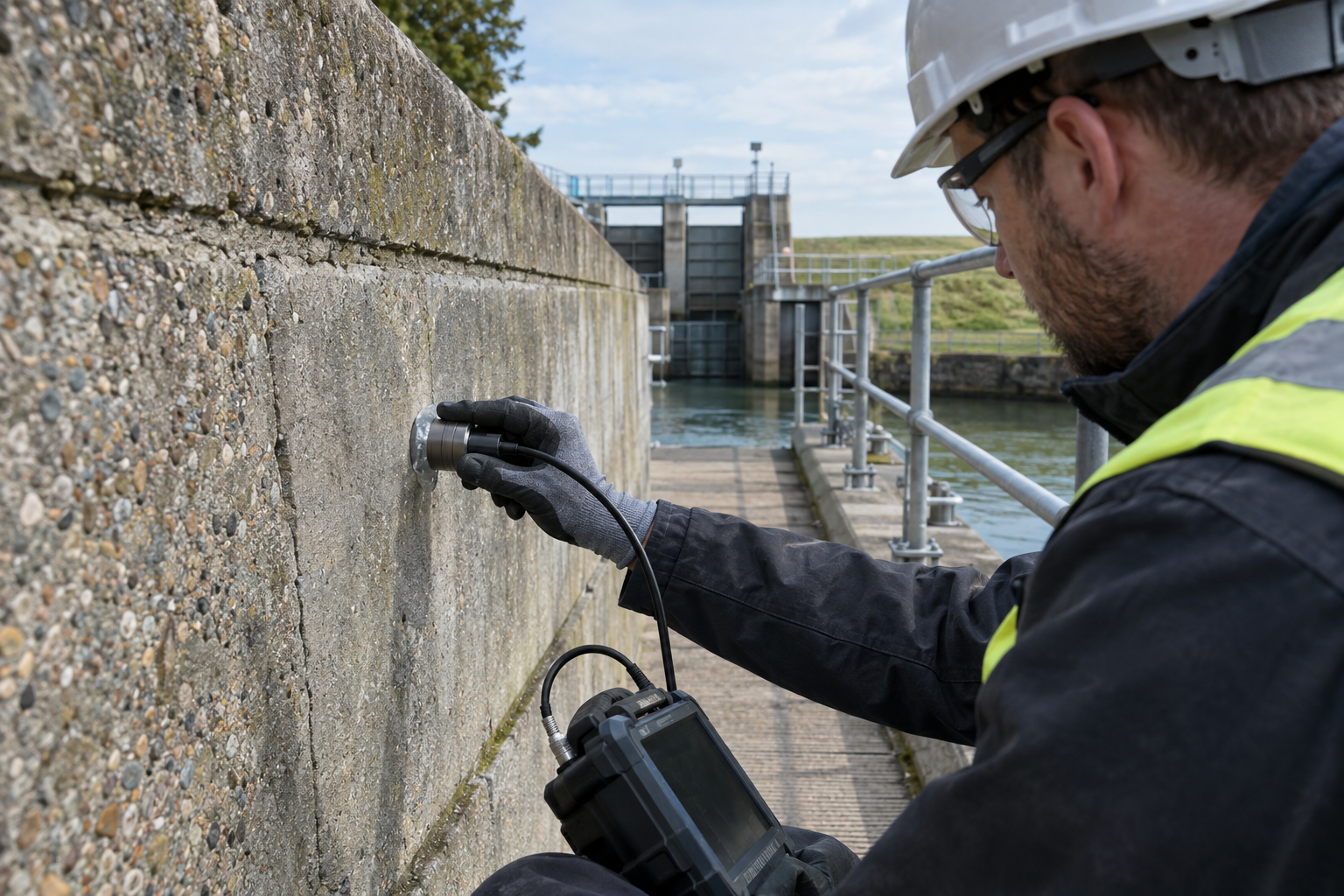
Nevertheless, the balance is ultimately a policy choice. Decisions about spending settlements determine how much capacity exists to build, operate, inspect and repair the flood defence estate. Expanding that estate without providing for its ongoing costs can create a widening gap between the infrastructure delivered and the resources available to look after it.
New infrastructure brings new maintenance commitments
Consider a hypothetical scheme combining a flood storage area, an embankment and a controlled outlet. Its capital budget might cover land, design, construction and commissioning. Its working life will also involve inspecting the embankment, checking the outlet for obstruction, maintaining access and managing vegetation appropriately. Monitoring equipment and mechanical components may need replacement before the main earthworks reach the end of their service life.
If those commitments are not reflected in the operator’s future resources, the scheme starts with an unresolved operational problem. That is why whole-life costing should influence option selection, rather than appearing only as a supporting calculation after the preferred design has been chosen.
This does not mean choosing the option with the smallest maintenance bill regardless of performance. A pumping solution may be necessary where gravity drainage cannot provide the required service. The task is to make its energy use, servicing needs, resilience arrangements and replacement costs explicit before approval.
Why Lincolnshire makes the funding debate particularly practical
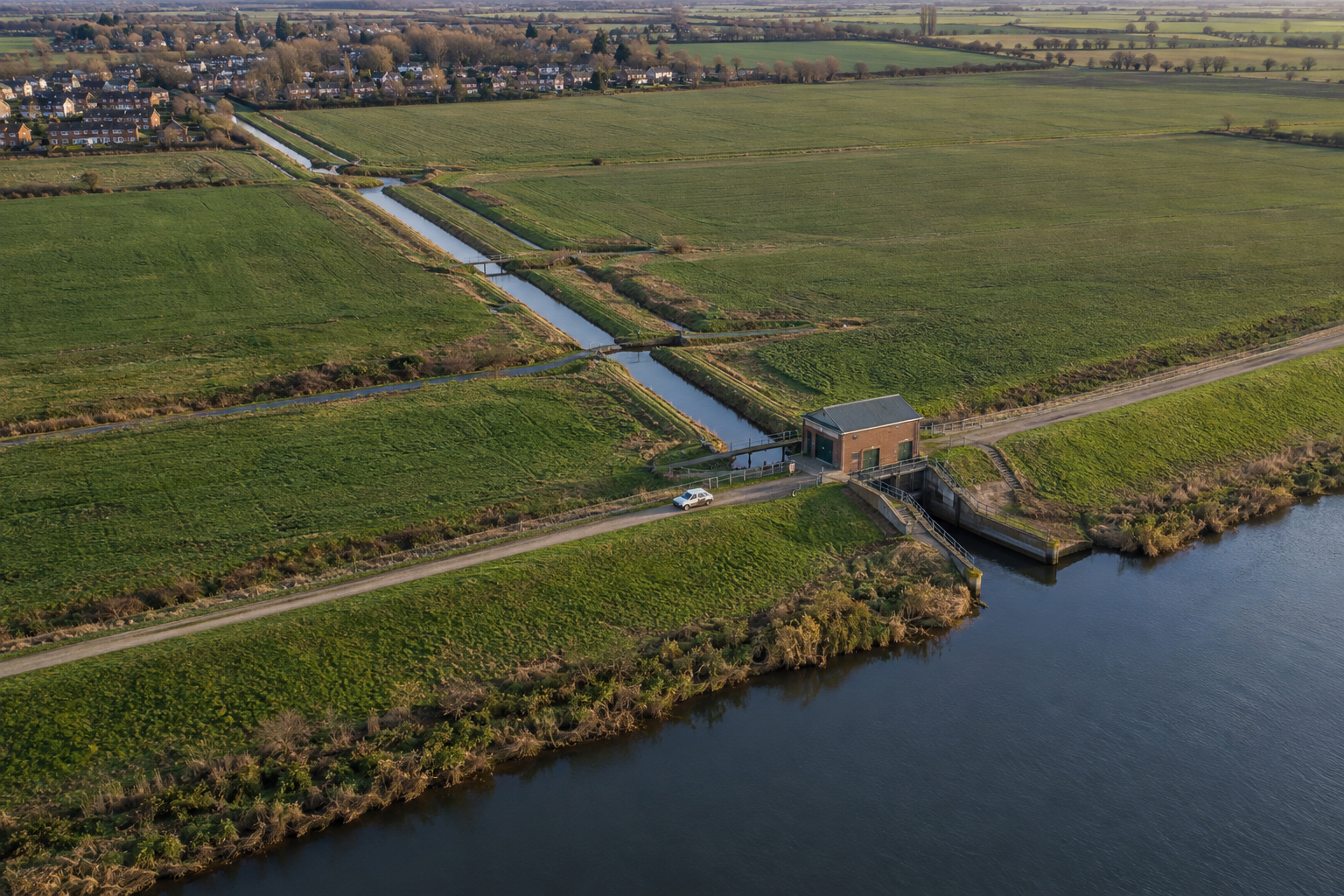
Across low-lying areas of Lincolnshire and the Fens, flood risk management involves a network of coastal and river defences, drainage channels, control structures and pumping installations. The performance of one asset can depend on conditions elsewhere. A local drainage system may be functioning correctly but face restricted discharge when the receiving watercourse is high.
For contractors and developers, that makes it risky to assess resilience only at the site boundary. An outfall connection does not establish that water can leave a development freely in every relevant event. Design teams need to understand receiving water levels, discharge restrictions and the potential effects of pump outages or tide-locking where applicable.
Look at the system, not just the individual asset
A useful assessment follows the route of water from the development or protected area through to its eventual discharge. It identifies who operates each significant component, where capacity is constrained and what happens if a critical element becomes unavailable. In some locations, a relatively small control structure may warrant substantial attention because of the area dependent on it.
Maintenance access deserves the same scrutiny. A pumping station or outfall might be accessible in ordinary conditions but difficult to reach during flooding. Access routes, safe working areas and arrangements for bringing in replacement equipment should therefore be considered as part of operational resilience, not merely construction logistics.
Coordination also matters when planning works. Taking a gate, pump or channel section out of service can temporarily change the protection available. Appropriate sequencing, weather monitoring and contingency arrangements need to reflect that exposure, particularly where several organisations are working on connected systems.
What a better funding test would look like
I would judge a flood spending programme by more than its announced value or the number of schemes entering construction. A useful assessment would show whether the existing network is becoming more reliable, whether new investment addresses the greatest risks and whether operators have the resources to sustain the resulting protection.
Report condition alongside delivery
Capital delivery figures should sit alongside trends in asset condition, overdue critical work and the time taken to resolve significant defects. National averages are useful, but they can obscure local concentrations of risk. Reporting should distinguish between minor shortcomings and defects affecting assets with serious consequences of failure.
It should also explain changes in the data. More thorough inspections can reveal previously unidentified defects, making reported condition appear worse without implying that deterioration happened entirely within that reporting period. Transparent explanations are more useful than a single percentage presented without context.
Make future operating costs visible at approval
Each new scheme should have a credible maintenance and renewal plan, with a named responsible organisation and a clear funding route. Estimates should include inspection, access, energy where relevant, routine work and periodic replacement of shorter-lived components. Handover documentation should translate those assumptions into practical tasks and intervals that the operator can use.
For construction teams, maintainability reviews are an opportunity to challenge details before they become expensive constraints. Can a gate be isolated safely? Can lifting equipment reach a pump? Can an outlet be inspected without unnecessary confined-space entry? These questions are often easier to resolve during design than after commissioning.
Give planned maintenance a workable delivery horizon
Predictable work programmes allow asset owners and contractors to organise specialist labour, surveys, materials and plant more efficiently. Short-notice spending pressures can make that harder, especially where works depend on suitable river conditions, environmental permissions or seasonal restrictions.
Multi-year visibility would not remove the need for emergency repairs. It would, however, help distinguish genuinely unforeseeable failures from work repeatedly postponed until it becomes urgent. That distinction is central to understanding whether England is investing in lasting flood resilience or simply carrying an increasing repair liability alongside its new construction programme.